


How Can Automotive Connector Terminals Prevent Electrical Failure in Modern Vehicles?
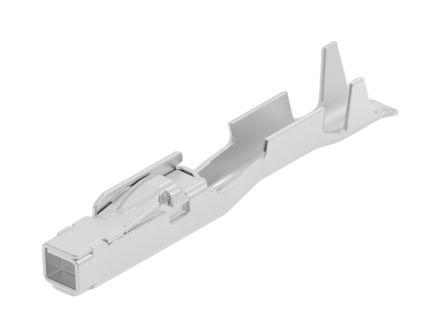
Vehicle electrical systems are no longer limited to basic lighting and ignition functions. Modern cars now depend on sensors, control modules, infotainment units, battery systems, driver assistance features, and body electronics that must communicate without interruption. At the centre of these networks are Automotive Connector Terminals, the contact elements inside a connector that create the actual electrical path between components and wires. Their job may look simple, but their impact is major. A poor terminal can create heat, resistance, corrosion, unstable signals, and difficult-to-diagnose faults across an entire vehicle system. Automotive-grade terminals are specifically engineered to resist vibration, thermal stress, and environmental exposure, which is why they remain one of the most important parts of automotive interconnection design.
Why Automotive Connector Terminals Matter Beyond Basic Connectivity
Many people view a connector as a plastic housing with wires attached, but the housing alone does not carry power or signal. The real performance depends on the terminal inside it. Automotive Connector Terminals must provide low-resistance contact, maintain retention in the housing, and keep working over years of motion, mating cycles, and temperature changes. In automotive applications, even a slight loss of contact force can lead to unstable performance, especially in signal circuits and safety-related systems. That is why connector platforms often include terminal position assurance and connector position assurance features to reduce incomplete seating and accidental unmating.
The Most Common Ways Electrical Connections Fail
Failures in vehicle electronics are often blamed on wiring or modules, but the terminal interface is frequently the hidden cause. Contact surfaces can degrade, crimps can weaken, and vibration can create microscopic motion at the interface. Over time, this can lead to fretting corrosion, where repeated low-amplitude vibration damages the contact area and increases resistance. In real vehicles, this may appear as flickering lights, sensor errors, communication faults, or intermittent performance that comes and goes without a clear pattern. Harsh environments make the problem worse, which is why automotive terminals are designed specifically for high resistance to vibration and thermal influences.
Loss of contact force
If the terminal no longer presses firmly against its mating side, the connection may become unstable. This affects both power delivery and signal integrity, especially in circuits that demand consistent contact over long periods.
Poor crimp quality
A terminal is only as good as the crimp attaching it to the wire. Incorrect crimping can increase resistance, reduce pull strength, and shorten service life. Automotive terminal systems are commonly supported by dedicated tooling because installation quality directly affects reliability.
Moisture and contamination
When water, dust, oil, or chemical exposure reaches the contact area, corrosion and performance loss become serious risks. This is why sealed connector systems and terminal-compatible sealing strategies are essential in many automotive zones.
What Makes High Quality Automotive Connector Terminals Different
Not all terminals are built for the same environment. High quality Automotive Connector Terminals are chosen based on current demand, wire size, operating temperature, environmental sealing needs, and expected vibration levels. Suppliers offer multiple material finishes, including tin, silver, and gold, because plating influences corrosion resistance, mating durability, and electrical stability. The terminal must also match the connector family precisely so that retention, sealing, and mating performance work together as one system.
Terminal retention features
Reliable terminals are designed to lock securely into the housing. Position assurance features help confirm proper assembly and reduce the chance of terminal backout, which is a common source of field failures in vibrating environments.
Plating and finish selection
Plating is not only about appearance. It affects conductivity stability, corrosion resistance, and long-term mating performance. Choosing the wrong finish for the application can reduce terminal life even when the connector appears physically correct.
Sealed application support
In underhood, chassis, and exterior locations, sealing becomes critical. Some automotive connector systems are engineered with oil-resistant seals, gasket options, and high protection levels because terminals must continue working in environments where contamination is unavoidable.
Where Automotive Connector Terminals Face the Toughest Demands
Automotive Connector Terminals are used across almost every vehicle zone, but not every zone creates the same level of stress. Understanding the application area is essential when choosing the right terminal.
Engine bay and powertrain areas
These areas combine heat, vibration, and exposure to fluids. A terminal used here must offer strong retention, good thermal performance, and reliable sealing support.
Cabin electronics and control systems
Interior modules may seem less demanding, but compact packaging and high circuit density create their own challenges. Miniaturised automotive-grade connector systems are increasingly used to save space while still maintaining durability and robust performance.
Safety and restraint systems
Applications such as airbags, seat-belt systems, and other safety electronics demand highly stable connections. Some specialised automotive systems are built with strong sealing and assurance features specifically for these high-reliability uses.
Electric and 48V vehicle architectures
Electrified vehicles place higher expectations on connection systems because they involve growing current demands, new packaging constraints, and in some cases higher voltage requirements. Suppliers now offer dedicated terminal and connector solutions for 48V and high-voltage architectures, showing how critical terminal design has become in future vehicle platforms.
How to Choose the Right Automotive Connector Terminals
Selecting Automotive Connector Terminals should always be application-led rather than appearance-led. The correct choice depends on both electrical and mechanical performance requirements.
Key points to evaluate include:
- Wire gauge compatibility
- Current and voltage demands
- Expected temperature range
- Exposure to moisture, dust, oil, or chemicals
- Need for sealed or unsealed design
- Required retention and position assurance
- Mating cycle expectations
- Packaging space and miniaturisation needs
- Availability of correct crimp tooling
- Compatibility with the exact connector family
This selection process matters because automotive connector validation is based on demanding test procedures, especially for low-voltage automotive connectors, where comparability and transferability of results are important across real-world use cases.
Why Installation Discipline Is Just as Important as Design
Even the best Automotive Connector Terminals can underperform when assembly quality is poor. A weak crimp, incomplete insertion, or mismatched tooling can erase the advantage of a high-quality terminal design. For this reason, professional automotive connector systems are usually developed alongside application tooling and process controls that help maintain repeatable crimp quality and secure insertion. In practical terms, reliability is created by the full system, not by the metal terminal alone.
Conclusion
Automotive Connector Terminals are among the smallest parts in a vehicle, yet they play one of the biggest roles in electrical reliability. They help prevent resistance build-up, reduce the risk of intermittent faults, support stable signal transfer, and keep circuits working under real automotive stress. As vehicles become more compact, more digital, and more electrified, terminal performance will matter even more. Choosing the right Automotive Connector Terminals, matching them to the right environment, and installing them with the right process is one of the smartest ways to protect long-term vehicle performance.
 Romaian
 English
 Arabic
 French
 Spanish
 Portuguese
 Deutsch
 Turkish
 Dutch
Dutch
 Italiano
 Russian
 Portuguese (Brazil)
 Greek
Greek