


Reconciliation Services for Accurate Business Records
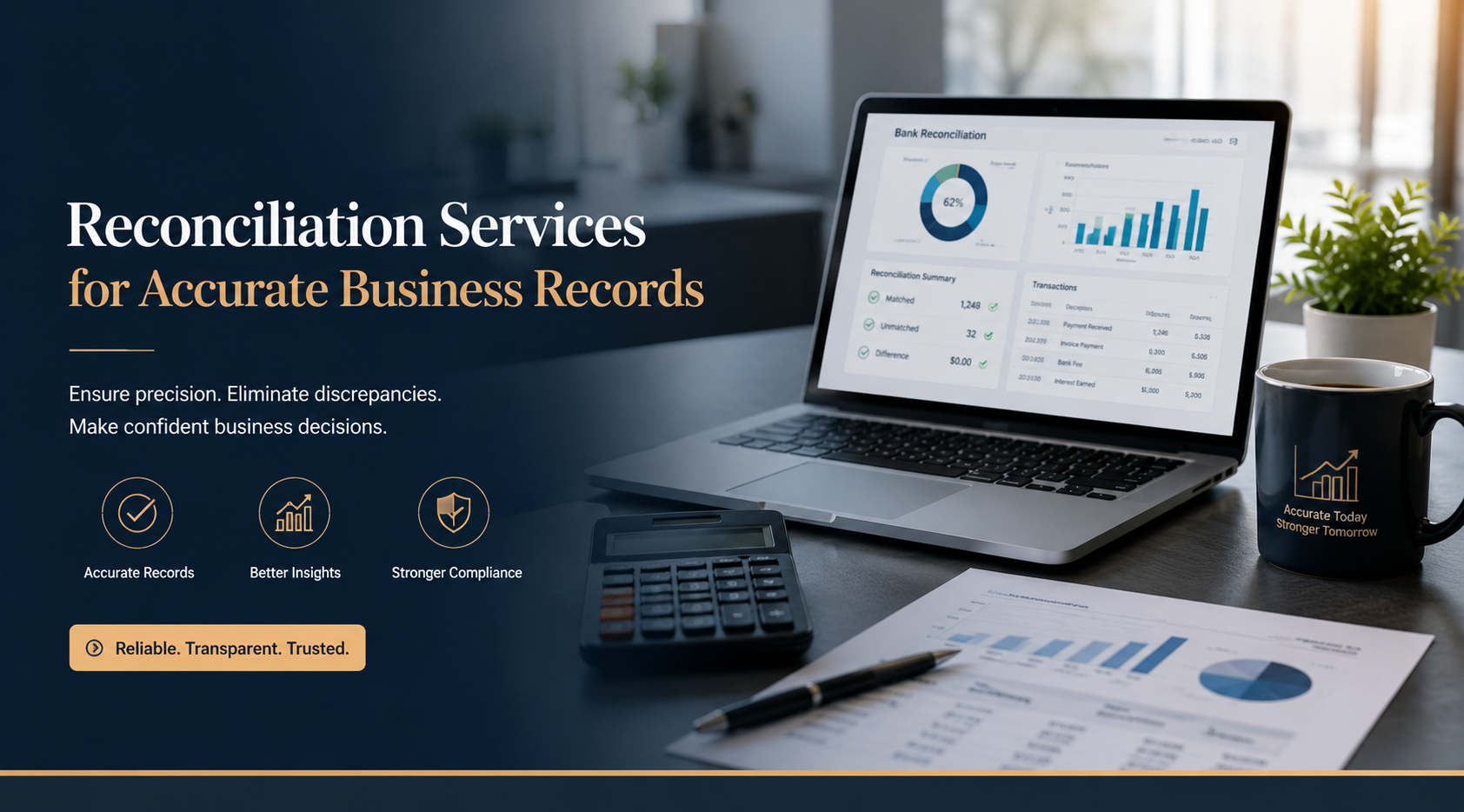
Running a business involves more than making sales and serving customers. Every financial transaction needs to be recorded correctly to keep your business financially healthy. Even small errors can create problems such as inaccurate reports, cash flow confusion, tax issues, or missed business opportunities.
One of the most effective ways to maintain accurate financial records is through reconciliation services. By regularly comparing financial records with bank statements, credit card accounts, and other financial documents, businesses can quickly identify discrepancies before they become major problems.
Whether you operate a startup, a growing company, or an established organization, understanding the value of regular account reconciliation can help you make better financial decisions and reduce unnecessary risks.
What Are Reconciliation Services?
Reconciliation is the process of comparing two sets of financial records to ensure they match. The goal is to verify that every transaction has been recorded correctly and that there are no missing, duplicate, or incorrect entries.
Businesses commonly reconcile:
- Bank accounts
- Credit card statements
- Vendor payments
- Customer payments
- Loan accounts
- Payroll records
When records match correctly, business owners gain confidence that their financial reports accurately represent their company's financial position.
Why Accurate Reconciliation Matters
Many financial problems begin with small bookkeeping mistakes. A missing deposit, duplicated expense, or incorrect payment can eventually affect budgeting, reporting, and tax preparation.
Regular reconciliation helps businesses:
- Detect bookkeeping errors early
- Prevent fraudulent transactions
- Improve cash flow visibility
- Maintain reliable financial reports
- Reduce accounting stress during tax season
- Build confidence in business decisions
Instead of discovering problems months later, businesses can resolve issues while they are still manageable.
Common Problems Businesses Face Without Regular Reconciliation
Skipping reconciliation often leads to financial confusion. Some of the most common issues include:
Duplicate Transactions
A payment may accidentally be entered twice, making expenses appear higher than they actually are.
Missing Income
Customer payments that are not properly recorded can result in inaccurate revenue reports.
Bank Errors
Although uncommon, financial institutions can occasionally process transactions incorrectly. Regular account reviews help identify these situations quickly.
Unrecorded Fees
Monthly service charges, interest, or automatic withdrawals sometimes go unnoticed, affecting cash flow calculations.
Incorrect Financial Reports
When records are inaccurate, balance sheets and income statements no longer reflect the true financial condition of the business.
How the Reconciliation Process Works
Professional bookkeeping follows a structured process to ensure every transaction is verified.
Step 1: Collect Financial Records
Bank statements, accounting software reports, invoices, receipts, and payment records are gathered for review.
Step 2: Compare Transactions
Each deposit, withdrawal, transfer, and payment is matched against internal bookkeeping records.
Step 3: Identify Differences
If a transaction appears in one record but not another, it is investigated to determine the cause.
Step 4: Correct Errors
Mistakes are updated, missing entries are recorded, and duplicate transactions are removed.
Step 5: Generate Accurate Reports
Once reconciliation is complete, financial statements become more reliable for business planning and reporting.
Benefits of Professional Bookkeeping Support
Many business owners attempt reconciliation themselves, but as transaction volume increases, the process becomes time-consuming and more prone to mistakes.
Working with providers offering best bookkeeping services allows businesses to focus on daily operations while experienced professionals maintain accurate financial records.
Professional bookkeeping can provide:
- Consistent financial monitoring
- Organized transaction records
- Timely monthly reporting
- Better expense tracking
- Improved financial transparency
- Reduced administrative workload
This creates a stronger financial foundation for long-term growth.
Types of Accounts That Should Be Reconciled
Every business has different financial needs, but several accounts should be reviewed regularly.
Bank Accounts
Bank reconciliation confirms that internal records match official banking activity.
Credit Card Accounts
Reviewing credit card statements helps verify purchases, identify unauthorized transactions, and monitor business spending.
Accounts Receivable
Matching customer invoices with received payments ensures outstanding balances remain accurate.
Accounts Payable
Comparing supplier invoices with completed payments helps avoid duplicate payments and overdue balances.
Payroll Records
Payroll reconciliation ensures employee wages, taxes, and deductions have been processed correctly.
Warning Signs Your Business Needs Better Reconciliation
Some financial warning signs indicate that reconciliation may not be happening consistently.
These include:
- Frequent cash flow surprises
- Bank balances that don't match accounting software
- Difficulty preparing financial statements
- Missing invoices or receipts
- Unexplained account differences
- Delayed month-end closing
Addressing these issues early can prevent larger financial complications later.
Best Practices for Maintaining Accurate Financial Records
Businesses can strengthen their bookkeeping process by following several practical habits.
Reconcile Accounts Monthly
Waiting until year-end increases the risk of overlooked mistakes. Monthly reviews help keep records current.
Keep Supporting Documents
Store invoices, receipts, bank statements, and payment confirmations for future reference.
Record Transactions Promptly
Entering transactions soon after they occur reduces forgotten or inaccurate entries.
Review Financial Reports Regularly
Monthly financial statements help business owners identify unusual trends before they become serious issues.
Separate Personal and Business Expenses
Using dedicated business accounts simplifies bookkeeping and improves financial reporting accuracy.
Choosing Reliable Bookkeeping Support
Selecting the right bookkeeping provider involves more than finding someone to record transactions.
Look for professionals who offer:
- Consistent financial reporting
- Experience with small business accounting
- Strong attention to detail
- Secure record management
- Timely communication
- Knowledge of financial compliance requirements
Reliable bookkeeping support helps businesses stay organized throughout the year rather than only during tax season.
How Reconciliation Supports Business Growth
Accurate bookkeeping provides more than clean financial records it supports smarter business planning.
When business owners have reliable financial information, they can:
- Make confident budgeting decisions
- Track profitability more accurately
- Monitor operating expenses
- Prepare for financing opportunities
- Improve cash flow management
- Support long-term business planning
Clean financial records also reduce stress during audits, tax preparation, and year-end reporting.
Conclusion
Maintaining accurate financial records is essential for every successful business. Regular reconciliation helps identify errors, verify transactions, improve reporting accuracy, and strengthen financial decision-making. Instead of allowing small bookkeeping mistakes to grow into larger financial problems, businesses benefit from reviewing accounts consistently throughout the year.
Combined with dependable bookkeeping practices, reconciliation creates a clear picture of your company's financial health. Accurate records not only simplify daily operations but also provide the confidence needed to plan for future growth, manage cash flow effectively, and meet financial obligations with greater accuracy.

 Arabic
 French
 Spanish
 Portuguese
 Deutsch
 Turkish
 Dutch
 Italiano
 Russian
 Romaian
 Portuguese (Brazil)
 Greek