


What Benefits Do IC Sockets Bring to Testing, Repair, and Long-Term Circuit Reliability?
Introduction
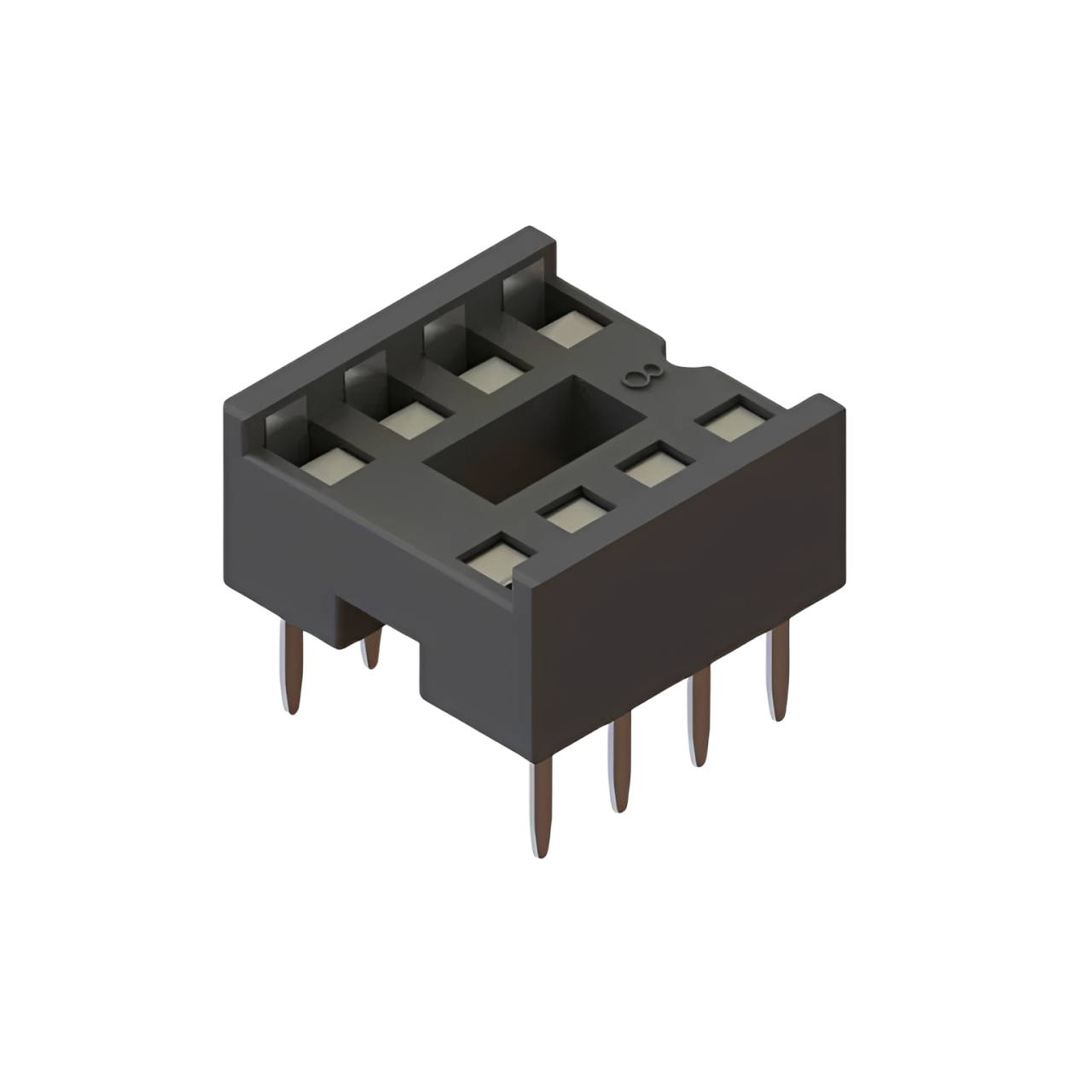
IC Sockets continue to be an important part of electronic design because they make integrated circuits easier to handle, replace, and protect. In many assemblies, engineers need more than a fixed connection. They need a practical way to install a chip securely while still allowing future access when testing, maintenance, or upgrades are required. That is where IC Sockets offer clear value.
Instead of soldering the integrated circuit directly onto the printed circuit board, the socket is mounted first and the chip is inserted into it afterward. This creates a stable electrical connection while giving the user the option to remove the device later if needed. That simple design choice can save time, reduce risk during assembly, and make the entire board more serviceable.
In modern electronics, where performance and efficiency matter at every stage, IC Sockets support both development flexibility and long-term reliability. They remain useful in industrial systems, educational boards, laboratory devices, programming fixtures, and repairable equipment where removable components are still highly practical.
Why IC Sockets Are More Than Simple Connectors
At first glance, IC Sockets may appear to be only a physical holder for an integrated circuit, but their role is much broader. A good socket provides consistent contact across every pin, keeps the device properly aligned, and helps maintain circuit stability during operation. It also reduces direct handling stress on the PCB and the chip itself.
This matters because integrated circuits are often delicate and essential to the overall function of the system. If a chip fails or needs to be changed, a direct-soldered device can make the process slower and riskier. Desoldering can damage pads, affect nearby components, and increase repair time. IC Sockets avoid many of these problems by giving technicians and engineers a cleaner, more controlled way to replace or test components.
Core advantages of IC Sockets
- Easy removal and replacement of integrated circuits
- Reduced heat exposure during board assembly
- Faster troubleshooting and maintenance
- Better support for development and prototyping
- Lower risk of PCB damage during rework
- Greater flexibility for product upgrades
These advantages explain why IC Sockets remain a preferred choice in many designs where access and serviceability are important.
How IC Sockets Improve Testing and Development
One of the strongest reasons to use IC Sockets is the benefit they provide during testing and development. In prototype work, engineers often change components multiple times before the final design is approved. They may test alternative chips, compare performance, reprogram memory devices, or replace a faulty part during evaluation.
Without IC Sockets, each change may require desoldering and resoldering, which adds time and increases the chance of damaging the board. With IC Sockets, the chip can be removed and replaced much more easily. This helps development teams work faster and with greater confidence.
IC Sockets are also highly useful in device programming and validation environments. When chips must be inserted repeatedly for flashing, testing, or diagnostics, a socketed setup makes the process more efficient and practical.
Common Types of IC Sockets
Different applications require different socket styles, and understanding these variations is important when choosing the right product.
DIP IC Sockets
These are among the most commonly recognised IC Sockets. They are used for dual in-line package devices and are often found in repairable boards, industrial controls, training kits, and legacy electronics. Their simple structure makes them suitable for many standard applications.
Turned pin IC Sockets
Turned pin versions are often selected when tighter retention and more precise contact are needed. They are commonly used where reliable mechanical grip and stable electrical performance are a priority.
Leaf contact IC Sockets
Leaf contact styles are widely used in general-purpose electronic assemblies. They offer dependable performance for routine applications and are often chosen where cost and function need to be balanced carefully.
ZIF IC Sockets
Zero insertion force designs are ideal when the chip must be inserted and removed many times. These sockets use a mechanism that opens the contacts so the device can be placed with minimal force. This makes them highly suitable for programming stations, test setups, and frequent handling environments.
Each type serves a different purpose, so the right choice depends on how the circuit will be used, maintained, and serviced over time.
Where IC Sockets Add the Most Value
IC Sockets are especially beneficial in products where the integrated circuit may need to be accessed later. In such cases, the socket improves more than convenience. It improves the overall practicality of the product.
Typical applications for IC Sockets
- Prototype and evaluation boards
- Industrial automation equipment
- Communication hardware
- Educational electronics systems
- Programming fixtures
- Maintenance-heavy legacy systems
- Diagnostic and validation benches
- Laboratory and specialised instruments
In these environments, being able to replace a chip quickly can reduce downtime, simplify support, and lower maintenance costs. For technicians and system designers, that makes IC Sockets a valuable part of long-term product planning.
Factors to Consider When Choosing IC Sockets
Choosing IC Sockets correctly is essential because not every socket will perform equally well in every application. Buyers and engineers should look beyond the package shape and consider the real operating conditions.
Important selection points
- Exact IC package type
- Number of pins and pitch compatibility
- Through-hole or surface-mount requirement
- Contact style and retention strength
- Material and plating quality
- Expected insertion and removal frequency
- Mechanical stress or vibration in the application
- Height and board space limitations
For example, a socket intended for repeated programming use should not be chosen in the same way as one used in a fixed industrial assembly. Likewise, a high-reliability design may require stronger contacts and better durability than a basic general-purpose board.
Common Issues to Avoid with IC Sockets
Even though IC Sockets are practical and reliable, problems can happen when they are selected or installed incorrectly. A mismatch in pin layout, poor insertion technique, or low-quality contact alignment can affect performance.
Mistakes to avoid
- Using a socket that does not match the IC package exactly
- Inserting the chip with uneven pressure
- Ignoring orientation during installation
- Choosing a standard socket for frequent insertion cycles
- Allowing contamination or oxidation on contacts
- Overlooking clearance and layout restrictions on the PCB
Avoiding these issues helps maintain stable contact and reduces the chance of intermittent faults. Good socket selection and careful installation are both necessary for dependable results.
Why IC Sockets Still Matter in a Changing Industry
As electronics continue to evolve, some assemblies move toward more compact and permanently mounted components. Even so, IC Sockets still remain highly relevant because many systems are designed with serviceability, testing, and long life in mind. In these situations, removable devices continue to offer real operational benefits.
IC Sockets support this need by giving electronic assemblies a level of flexibility that direct soldering cannot easily provide. They make repairs easier, reduce handling risk, and support a more efficient workflow from development through maintenance.
Conclusion
IC Sockets remain a smart and dependable choice for electronic systems that require flexibility, component protection, and easier long-term support. They help engineers test more efficiently, allow technicians to replace chips with less effort, and reduce the risk of damage during assembly and repair.
Whether used in development boards, industrial equipment, educational hardware, or serviceable legacy systems, IC Sockets continue to deliver practical value. Their contribution to performance, maintenance, and usability makes them far more important than their small size might suggest.
 French
 English
 Arabic
 Spanish
 Portuguese
 Deutsch
 Turkish
 Dutch
 Italiano
 Russian
 Romaian
 Portuguese (Brazil)
 Greek