


6 Benefits of a Baby High Chair with Adjustable Tray
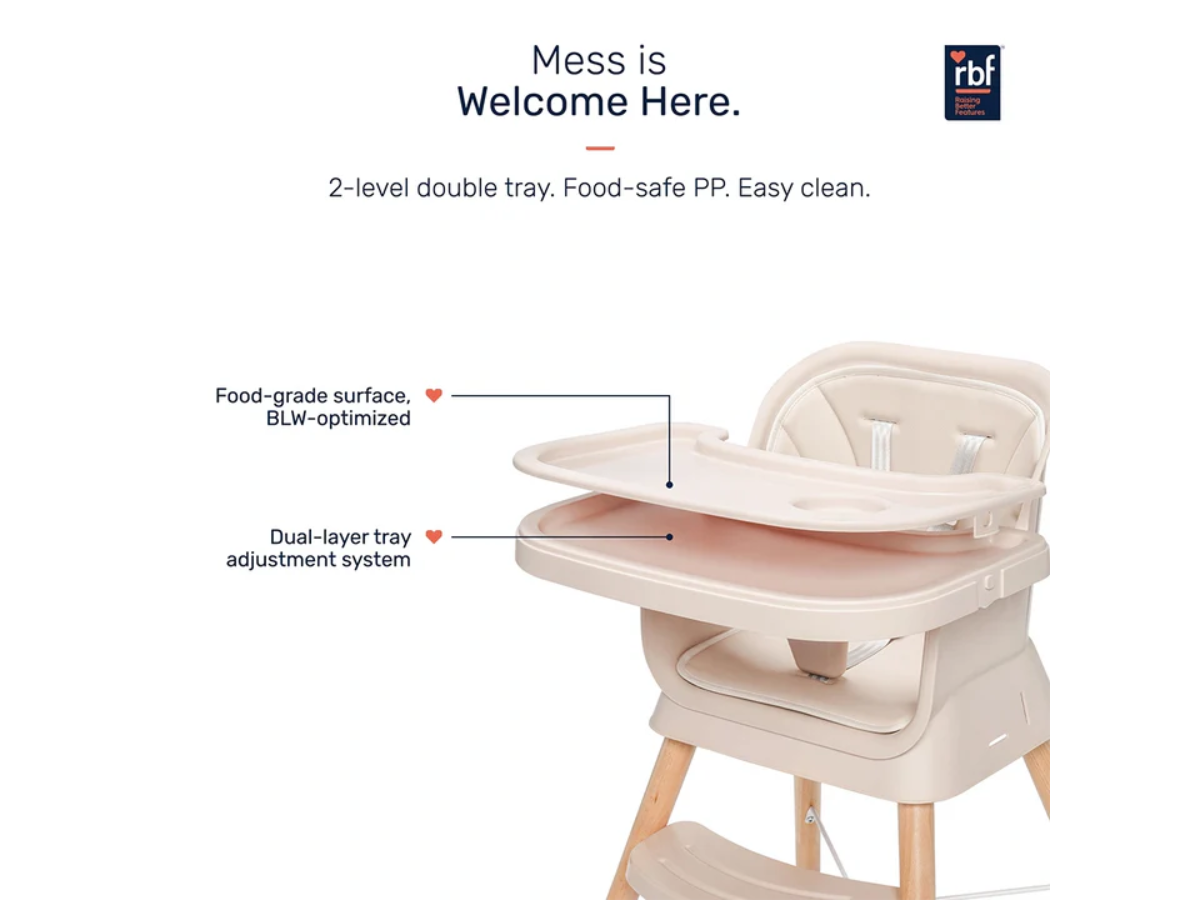
Feeding time can feel like a battle some days, food everywhere, a squirming toddler, and a tray that never seems to sit at the right height. If this sounds familiar, a premium baby high chair with an adjustable tray might be the one change that makes mealtimes calmer for both you and your little one. This guide walks through exactly why an adjustable tray matters and what real difference it makes as your baby grows from the first solid food to toddler snack time.
An adjustable tray isn't just a nice extra feature. It changes how comfortably your baby sits, how easily food reaches their mouth, and how long the chair actually stays useful in your home. Parents across India are increasingly choosing high chairs with this feature because it solves problems that fixed-tray chairs simply can't.
1. It Grows With Your Baby Instead of Being Replaced Every Few Months
The biggest benefit is simple: one chair works for multiple stages of your baby's development. A fixed-tray high chair often becomes too small or poorly positioned within months, forcing parents to buy a new one. An adjustable tray moves with your baby's changing height and body proportions, so the same chair that worked for a six-month-old sitting with support can still work for a two-year-old feeding independently.
This matters more than most first-time parents realize. Babies grow fast in the first two years, and a chair that only fits one stage becomes clutter quickly. Many Indian parents report using the same adjustable high chair from their child's first taste of rice cereal all the way through toddler meals at the family table, which cuts down on both cost and household clutter over time.
2. It Supports Better Posture and Safer Swallowing
The right tray height keeps your baby's back straight and hips at a proper angle, which matters for both comfort and safety. Here's the direct answer: when a tray sits too high or too low, babies tend to slouch or stretch, and that poor posture can affect how safely they swallow food.
Pediatric feeding specialists commonly recommend keeping a baby's hips, knees, and ankles at roughly 90-degree angles during meals, with the tray positioned at elbow height. A fixed tray rarely gets this right for every child, since babies come in different sizes even at the same age. An adjustable tray lets you fine-tune this position, which reduces choking risk and makes swallowing more comfortable, something that matters a lot in the early months of starting solids.
3. It Reduces Mess and Food Waste During Meals
An adjustable tray brings food closer to your baby's natural reach, which means less spilling, less stretching, and less food ending up on the floor. When the tray sits too far or too high, babies either can't reach their food properly or end up pushing it off the edge while trying.
Parents often notice this difference immediately after switching to an adjustable model. A properly positioned tray keeps small hands within easy range of their bowl or plate, so babies spend more time actually eating and less time struggling to reach their food. Over weeks and months, this also means less wasted food and fewer stained bibs and floors to clean up after every meal.
4. It Makes Independent and Self-Feeding Easier
Self-feeding is a major developmental milestone, and tray position plays a bigger role in it than most people expect. Here's the direct answer: a properly adjusted tray gives babies the right distance and angle to pick up food, hold a spoon, or use their fingers without frustration.
Occupational therapists often point out that fine motor skill development, the small muscle movements used in picking up food or holding utensils, improves when a child's arm and hand positioning during meals is comfortable. If the tray sits too far away, babies struggle to reach and often give up trying to feed themselves. An adjustable tray keeps everything within a natural, comfortable reach, encouraging babies to practice self-feeding earlier and with more confidence. If you're curious about how a high chair supports development beyond just mealtimes, this piece on uses of a newborn high chair covers several practical examples worth knowing.
5. It Offers Flexibility for Multiple Caregivers and Family Members
Every caregiver, whether it's a parent, grandparent, or nanny, can adjust the tray to suit how they're feeding the baby at that moment. This flexibility matters a lot in Indian households, where grandparents or extended family often help with feeding duties, sometimes on different days or at different times.
A chair that only works one way limits who can comfortably help during mealtimes. With an adjustable tray, whoever is feeding the baby can set the height and position that works best for their own comfort too, whether they're sitting on a low stool or standing at the counter. This small feature ends up making shared caregiving noticeably smoother.
6. It's Easier to Clean and Maintain Over Time
Most adjustable trays are also designed to be removable, which makes post-meal cleanup significantly faster. Instead of wiping around a fixed tray attached to the chair, you can usually lift the entire tray off, rinse it under the tap, or even place it in warm soapy water for a deeper clean.
This matters more than it sounds. Babies are messy eaters by nature, and food residue that gets left in tray grooves or hinges can build up bacteria over time if it isn't cleaned properly. A removable, adjustable tray typically has fewer tight corners and gaps, which makes daily cleaning quicker and more thorough, an important detail for parents managing multiple feeding sessions a day.
If you're currently comparing high chairs and want one that adapts as your baby grows, it's worth looking closely at how the tray adjusts before making a decision. This one feature often determines how long the chair stays genuinely useful in your home.
What Age Should a Baby Start Using a High Chair With an Adjustable Tray?
Most babies are ready for a high chair once they can sit up with minimal support, usually around five to six months old. At this stage, an adjustable tray becomes especially useful since it lets you position it correctly for a baby who is still building core strength and doesn't yet sit fully upright on their own.
What to Do Next
An adjustable tray isn't a small detail, it directly affects your baby's posture, comfort, independence, and how long your high chair actually stays useful. If you're shopping for a high chair right now, take a few extra minutes to check how the tray adjusts, how many height positions it offers, and how easily it comes off for cleaning before making your decision.
Growgether's high chairs are designed with these exact needs in mind, built to adapt as your baby grows from their first meal to confident self-feeding. If you want a chair that genuinely keeps up with your child's changing needs, it's worth exploring what Growgether has to offer.
People Also Ask
What is the ideal tray height for a baby high chair?
The tray should sit at roughly elbow height when your baby is seated upright, keeping their hips, knees, and ankles close to 90-degree angles. This position supports good posture, easier reaching, and safer swallowing during meals, and it should be readjusted as your baby grows taller.
Can an adjustable tray high chair be used from birth?
Not immediately. Most high chairs, including those with adjustable trays, are designed for babies who can sit with support, generally from around five to six months. Always check the manufacturer's recommended age and weight guidelines before starting use.
Is an adjustable tray high chair worth the extra cost?
Yes, in most cases. While it may cost more upfront than a fixed-tray model, an adjustable tray chair typically lasts through multiple growth stages, reducing the need to buy a new chair every few months. This often makes it more cost-effective over time.
How often should a high chair tray be cleaned?
Ideally, after every meal. Food residue left in tray corners or hinges can attract bacteria and become harder to clean the longer it sits. A quick rinse or wipe after each use keeps the tray hygienic and ready for the next meal.
 Spanish
 English
 Arabic
 French
 Portuguese
 Deutsch
 Turkish
 Dutch
 Italiano
 Russian
 Romaian
 Portuguese (Brazil)
 Greek