


Optical Coating Technology and Its Applications in Modern Optical Systems
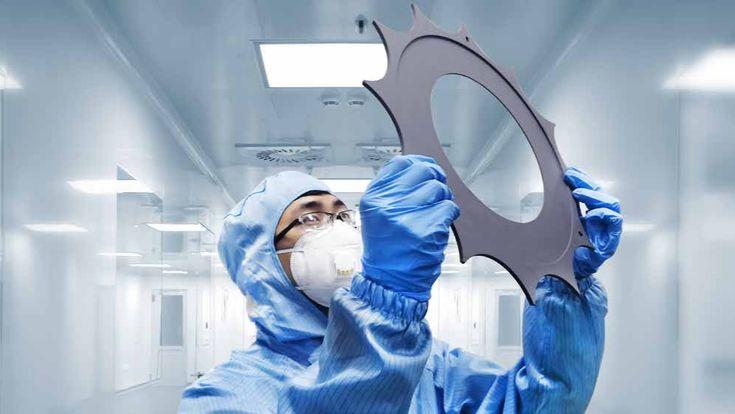
Optical components are widely used in modern industries, including consumer electronics, imaging systems, medical equipment, automotive technology, and scientific instruments.
As optical systems become more precise and compact, controlling how light interacts with surfaces has become increasingly important.
One of the key technologies used to improve optical performance is optical coating.
By applying extremely thin layers of optical materials onto glass, lenses, and other substrates, optical coatings can control reflection, transmission, and absorption of light.
Today, optical coating technology plays an important role in improving the performance and reliability of advanced optical products.
What Is Optical Coating?
Optical coating refers to the process of depositing one or multiple thin film layers onto an optical surface.
These coatings are designed to modify the behavior of light passing through or reflecting from the surface.
A typical optical coating consists of carefully selected materials with different optical properties. By controlling the thickness and structure of each layer, manufacturers can achieve specific optical functions.
Common functions of optical coatings include:
- Reducing reflection
- Increasing light transmission
- Controlling wavelength response
- Improving optical clarity
- Protecting optical surfaces
Optical coatings are usually produced using advanced deposition technologies such as vacuum coating, physical vapor deposition (PVD), and thin film deposition.
Why Is Optical Coating Important?
When light reaches an untreated optical surface, part of the light is reflected.
In optical systems containing multiple lenses or glass components, these reflections can reduce efficiency and affect image quality.
Optical coatings help solve these problems by controlling surface reflection and improving light management.
Benefits include:
- Higher transmission efficiency
- Reduced glare
- Improved contrast
- Better imaging performance
- Enhanced surface durability
For modern optical products, coating design is often as important as the optical material itself.
How Does Optical Coating Work?
Optical coating works through the principles of thin film interference.
During the coating process, extremely thin layers of materials are deposited onto the substrate surface.
When light interacts with these layers, reflected light waves from different layers interfere with each other. Through precise design, manufacturers can reduce unwanted reflection or enhance specific optical effects.
The performance of an optical coating depends on:
- Material selection
- Film thickness
- Number of layers
- Coating structure
- Target wavelength range
Advanced optical coatings often use multilayer structures to achieve precise optical control.
Common Types of Optical Coatings
Anti Reflective Coating (AR Coating)
Anti reflective coating is one of the most common optical coatings.
It reduces unwanted reflections from optical surfaces and improves light transmission.
Applications include:
- Camera lenses
- Smartphone optical components
- Eyeglasses
- Optical instruments
AR coating is especially important in imaging systems where clear and accurate light transmission is required.
High Reflective Coating
High reflective coatings are designed to increase surface reflection.
They are commonly used in:
- Optical mirrors
- Laser systems
- Scientific equipment
By selecting suitable coating materials and structures, manufacturers can achieve high reflection at specific wavelengths.
Beam Splitter Coating
Beam splitter coatings control the distribution of light between reflection and transmission.
Applications include:
- Optical instruments
- Imaging systems
- Laser equipment
Infrared Optical Coating
Infrared coatings are designed to control infrared wavelengths.
They are used in:
- Thermal imaging systems
- Infrared sensors
- Defense and scientific equipment
Optical Coating Materials
The selection of coating materials has a direct influence on optical performance.
Silicon Dioxide (SiO₂)
Silicon dioxide is commonly used as a low refractive index material.
It is widely applied in:
- Anti reflective coatings
- Optical thin film structures
- Glass coatings
Titanium Dioxide (TiO₂)
Titanium dioxide has a high refractive index and is frequently used in multilayer optical coatings.
It helps achieve precise reflection and transmission control.
Magnesium Fluoride (MgF₂)
Magnesium fluoride is a traditional optical coating material used for anti reflective applications.
It provides good optical performance and stability.
Applications of Optical Coating
Camera and Imaging Systems
Optical coatings are essential in modern imaging equipment.
Applications include:
- Camera lenses
- Smartphone camera modules
- Industrial cameras
- Optical sensors
Coatings help improve image quality by reducing reflections and increasing light efficiency.
SRNC focuses on vacuum coating and optical thin film technologies for optical components and imaging applications.
More information about optical coating technology:
https://srnc.net/optical-coating/
Consumer Electronics
Optical coatings are widely used in electronic products.
Applications include:
- Smartphone lenses
- Display glass
- Touch panels
- Smart devices
They help improve appearance, durability, and optical performance.
Medical and Scientific Equipment
Precision optical systems require highly controlled light transmission.
Optical coatings are used in:
- Microscopes
- Medical imaging equipment
- Laboratory instruments
Automotive Optical Systems
Modern vehicles use many optical components.
Applications include:
- Vehicle cameras
- Sensors
- Display systems
Optical coatings help maintain stable performance under different environmental conditions.
Optical Coating and Vacuum Coating Technology
High-quality optical coatings require precise manufacturing processes.
Vacuum coating technology provides a controlled environment for depositing thin film materials onto optical surfaces.
Common technologies include:
- Physical Vapor Deposition (PVD)
- Magnetron sputtering
- Electron beam evaporation
These processes allow manufacturers to achieve:
- Accurate film thickness
- Uniform coating layers
- Stable optical performance
SRNC provides vacuum coating solutions for optical components, glass substrates, and advanced thin film coating applications.
Learn more about SRNC:
https://srnc.net/
Factors to Consider When Selecting Optical Coating
Choosing the right optical coating depends on the specific application.
Important factors include:
- Required wavelength range
- Optical performance requirements
- Substrate material
- Environmental conditions
- Coating durability
For example, camera lenses may focus on anti reflection performance, while laser systems may require highly precise wavelength control.
Future Development of Optical Coating Technology
With the development of advanced optics, demand for high-performance optical coatings continues to increase.
Future trends include:
- More precise multilayer structures
- Improved coating durability
- Wider wavelength control
- Multifunctional optical surfaces
Optical coating technology will continue to support industries such as electronics, medical imaging, automotive systems, and scientific research.
Although optical coatings are extremely thin, they have a significant impact on the performance, efficiency, and reliability of modern optical systems.
SRNC provides advanced vacuum coating and thin film coating solutions for optical and functional surface applications.
Learn more about SRNC:
https://srnc.net/
 Romaian
 English
 Arabic
 French
 Spanish
 Portuguese
 Deutsch
 Turkish
 Dutch
Dutch
 Italiano
 Russian
 Portuguese (Brazil)
 Greek
Greek