


How Do IDC D-sub Connectors Improve Signal Distribution in Electronic Systems?
Introduction
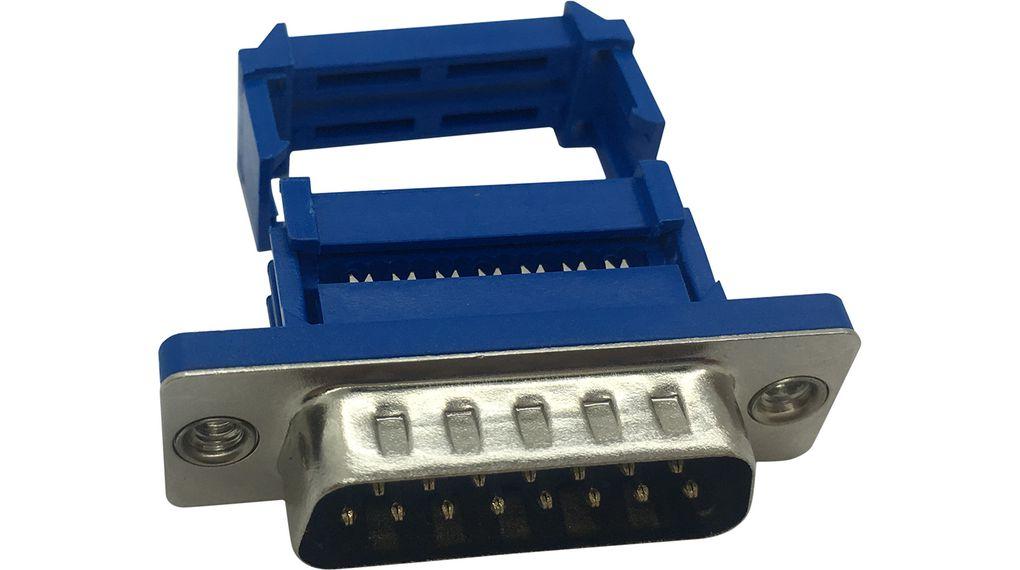
IDC D-sub Connectors provide a structured solution for carrying multiple electrical signals through a compact and removable interface. They combine the proven physical format of D-sub connectors with insulation displacement contact technology, allowing ribbon cable conductors to be terminated without individual stripping, soldering, or contact insertion.
This combination is useful in electronic systems that require repeatable wiring patterns, quick assembly, and dependable equipment connections. Each ribbon cable conductor is aligned with a defined connector contact, helping maintain an organised signal path from one device or circuit section to another.
IDC D-sub Connectors can be integrated into industrial controllers, monitoring equipment, automated machinery, communication hardware, test platforms, and specialised electronic devices. Their performance depends on careful planning of electrical loads, cable construction, mechanical protection, and connector placement.
What Makes IDC D-sub Connectors Suitable for Signal Distribution?
Electronic equipment may contain numerous control, communication, feedback, and reference signals. Routing these signals through separate wires can make installation complicated and increase the risk of incorrect connections.
IDC D-sub Connectors group multiple conductors within one interface. Ribbon cable maintains a fixed conductor sequence, while the connector assigns each conductor to a specific contact position.
This arrangement supports:
- Clearly organised signal paths
- Compact multi-wire connections
- Faster cable preparation
- Repeatable pin assignments
- Reduced internal wiring congestion
- Easier replacement of complete assemblies
- Improved visual inspection
- Consistent production across multiple units
These advantages are particularly important when identical machines or electronic products must use the same cable design.
How Is the Cable Connected Without Removing Insulation?
The contact system inside IDC D-sub Connectors uses metal slots designed to penetrate the insulation surrounding each conductor. When the cable is pressed into the connector, the slot edges move through the insulation and contact the conductive core.
The conductor is held firmly within the contact area, producing both an electrical path and a mechanical connection. Since the insulation does not need to be stripped beforehand, the preparation process is simplified.
A typical termination process includes:
- Verifying the required connector size
- Confirming the compatible ribbon cable pitch
- Locating the pin one indicator
- Aligning the cable with the contact positions
- Applying uniform pressure with an IDC tool
- Securing the strain relief
- Inspecting the finished assembly
- Testing every connection electrically
Accurate alignment is essential because a cable positioned incorrectly can affect several contacts at the same time.
Why Is Connector Planning Important During Product Design?
IDC D-sub Connectors should be considered during the early stages of equipment design. Their dimensions, mounting requirements, cable exit direction, and surrounding clearance can affect enclosure layout and component placement.
Designers should leave enough space for:
- The connector body and mating plug
- Jackscrews or locking mechanisms
- Protective backshells
- Ribbon cable bend radius
- Cable clamps and supports
- Safe access during maintenance
- Installation and removal tools
Placing the connector too close to a wall, circuit board, or large component may make assembly difficult. Poor positioning can also force the ribbon cable into a sharp bend, placing unnecessary stress on the termination.
Which Electrical Factors Must Be Evaluated?
Signal type
IDC D-sub Connectors are commonly selected for low-power signals, including digital communication, analogue measurement, status feedback, and control commands. The electrical characteristics of every circuit should be reviewed before assigning contacts.
Current capacity
Each contact has a maximum current rating. These connectors should not be assumed suitable for high-current power distribution unless the selected model is specifically rated for it.
Voltage rating
The operating voltage must remain within the connector specification. Contact spacing, insulation material, environmental conditions, and equipment standards can influence the acceptable voltage level.
Ground connections
Signal grounds and reference conductors should be included in the pin arrangement. A well-planned grounding layout can support stable communication and reduce unwanted electrical noise.
Contact allocation
Related signals should be arranged logically. Sensitive measurement lines may need separation from switching signals or other conductors that could introduce interference.
How Can IDC D-sub Connectors Support Modular Equipment?
Modular equipment is designed so individual sections can be installed, removed, repaired, or replaced without rebuilding the entire system. IDC D-sub Connectors are useful in this approach because they create detachable interfaces for groups of signals.
A complete module can be disconnected by releasing one connector rather than removing several individual wires. This can reduce servicing time and lower the possibility of reconnecting conductors incorrectly.
Modular applications may include:
- Replaceable control boards
- Detachable operator panels
- Interchangeable test fixtures
- Sensor interface modules
- Communication units
- Removable instrumentation sections
- Machine control assemblies
Clear cable labels and documented pin assignments further improve modular maintenance.
What Mechanical Features Improve Durability?
Strain relief
Strain relief holds the cable near the termination point and prevents pulling forces from reaching the contacts. It is essential when the cable may be moved, handled, or exposed to vibration.
Protective backshell
A backshell covers the rear of the connector and shields the termination area from impact, dust, and accidental contact. Some backshells also provide cable clamping or shielding functions.
Locking hardware
Jackscrews, threaded posts, or retaining clips keep mating connectors securely joined. This is especially useful in machinery, mobile equipment, and frequently serviced systems.
Metal shell
A metal shell can provide additional mechanical strength and may support electromagnetic shielding when correctly grounded.
Cable support
Long ribbon cables should be secured along their route. Unsupported cable weight can place continuous stress on the connector and termination area.
How Can Electrical Noise Be Controlled?
Electronic systems often operate near switching circuits, relays, motors, contactors, power converters, and high-current cables. These devices can generate electromagnetic interference that may disturb low-level signals.
Noise control measures may include:
- Selecting shielded IDC D-sub Connectors
- Using conductive backshells
- Grounding the connector shell correctly
- Separating signal cables from power wiring
- Keeping cable runs as short as practical
- Avoiding routing near transformers and motors
- Providing suitable grounding conductors
- Using twisted or screened alternatives for highly sensitive signals
Ribbon cable is convenient for organised wiring, but its parallel conductor arrangement may not suit every high-speed or noise-sensitive circuit. Signal requirements should therefore be assessed carefully.
Where Are IDC D-sub Connectors Most Valuable?
Automated production machinery
They can connect controller outputs, status indicators, sensors, and machine interface modules through compact cable assemblies.
Data acquisition equipment
Multiple measurement channels can be grouped within a removable connector, supporting organised instrument wiring.
Electronic test stations
Test signals, control commands, and monitoring lines can be routed between fixtures and measuring devices using clearly defined pin arrangements.
Control cabinets
IDC D-sub Connectors can help reduce loose wiring between internal control sections, communication modules, and panel interfaces.
Communication equipment
They may support configuration, serial communication, diagnostic, and equipment management connections.
Specialised electronic products
Custom devices can use these connectors where a standard, compact, and replaceable multi-contact interface is required.
What Maintenance Practices Extend Service Life?
Regular inspection can identify mechanical damage or unstable connections before system performance is affected.
Maintenance checks should include:
- Examining the shell for deformation
- Checking the backshell for cracks
- Confirming that locking screws tighten correctly
- Inspecting the cable near the strain relief
- Looking for sharp folds or damaged insulation
- Testing circuits with intermittent behaviour
- Cleaning the mating area when contamination is present
- Replacing connectors with bent or corroded contacts
Connectors should be disconnected by holding the housing rather than pulling the ribbon cable. Excessive force on the cable can weaken the termination even when no visible damage appears.
How Should Completed Cable Assemblies Be Verified?
Every finished assembly should be tested before installation. Visual inspection confirms alignment and mechanical condition, while electrical testing verifies the actual circuit paths.
The verification process should check:
- Correct pin one orientation
- Continuity through every required conductor
- Isolation between neighbouring contacts
- Secure strain relief installation
- Proper connector mating
- Stable operation during gentle movement
- Correct correspondence with the wiring diagram
- Absence of damaged housing components
Testing is especially important when the cable controls machinery, measurement equipment, or essential communication functions.
Conclusion
IDC D-sub Connectors provide an efficient method for distributing multiple signals through organised ribbon cable assemblies. Their insulation displacement contacts reduce individual wire preparation, while the D-shaped interface supports correct mating and secure equipment connections.
Their greatest value appears in systems that require repeatable wiring, modular construction, compact cable routing, and straightforward maintenance. Careful attention to electrical ratings, signal allocation, shielding, strain relief, connector placement, and final testing is necessary for dependable operation.
When correctly selected and installed, IDC D-sub Connectors can simplify system integration, shorten assembly work, and create reliable connections that remain accessible throughout the service life of electronic equipment.
 Romaian
 English
 Arabic
 French
 Spanish
 Portuguese
 Deutsch
 Turkish
 Dutch
Dutch
 Italiano
 Russian
 Portuguese (Brazil)
 Greek
Greek