Developing a successful industrial process requires careful planning, testing, and validation before full scale production begins. Businesses across multiple industries rely on intermediate production systems to reduce uncertainty, improve product quality, and verify manufacturing performance. pilot plant fabrication plays a vital role in this process by providing a practical environment where engineers can evaluate equipment, optimize operating conditions, and confirm process efficiency before committing to commercial scale investments. This approach supports innovation while minimizing financial risks and operational challenges throughout product development.
Understanding Pilot Plant Fabrication
What Is Pilot Plant Fabrication?
Pilot plant fabrication refers to the design, engineering, construction, and assembly of small scale production systems that closely simulate commercial manufacturing operations. These systems bridge the gap between laboratory research and full production facilities. They allow organizations to study process behavior under realistic operating conditions while maintaining flexibility for testing modifications. By using carefully engineered equipment, manufacturers can validate production methods, collect valuable performance data, and refine operating procedures before scaling up to larger manufacturing environments.
Why Pilot Plants Are Essential
Many manufacturing processes appear successful in laboratory settings but perform differently when production volumes increase. Pilot plants help identify these differences early by replicating industrial operating conditions with manageable production capacities. Engineers can evaluate material flow, heat transfer, mixing efficiency, pressure control, and equipment performance. This testing reduces uncertainty while providing confidence that commercial systems will operate efficiently. As a result, organizations gain valuable insights that support informed investment decisions and long term operational success.
Key Components of a Pilot Plant
Process Equipment
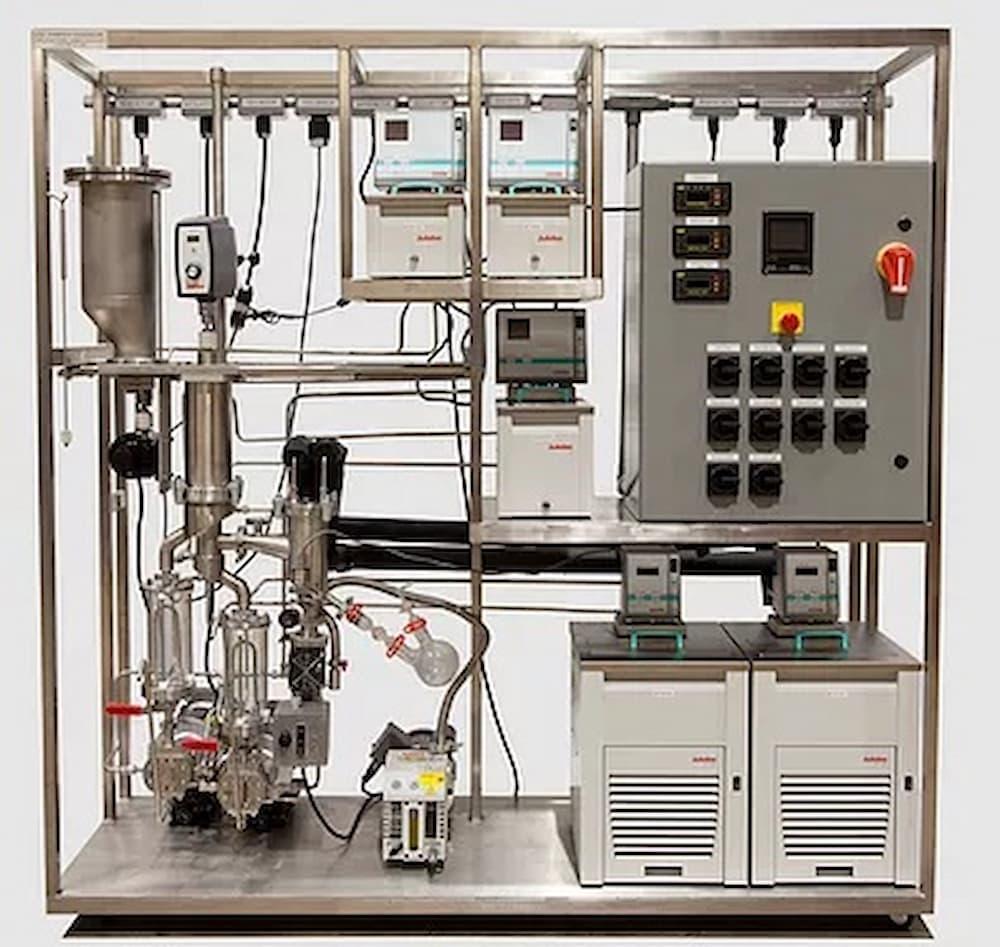
A pilot plant includes carefully selected equipment designed to replicate commercial production systems. Common components include reactors, heat exchangers, separators, pumps, storage vessels, filtration systems, condensers, and instrumentation. Every component is chosen according to the process requirements while maintaining compatibility with future scale up objectives. Proper equipment selection ensures that collected data accurately reflects expected commercial performance, making process optimization more reliable and predictable throughout development.
Control Systems
Modern pilot plants depend on advanced automation and monitoring technologies to achieve consistent results. Control systems monitor temperature, pressure, flow rate, mixing speed, and other critical operating parameters. Automated controls improve process stability while allowing operators to adjust variables during experimental trials. Continuous data collection enables engineers to analyze process behavior, identify trends, and make evidence based improvements. Reliable control systems also enhance safety by providing alarms and protective responses during unexpected operating conditions.
Structural Design
Structural integrity is a critical aspect of pilot plant construction. Fabricated support frames, piping layouts, platforms, and utility connections must withstand operational demands while allowing easy access for maintenance and modifications. Well planned structural design improves equipment accessibility, simplifies inspections, and supports future expansion if additional testing becomes necessary. Proper fabrication practices also contribute to safe operations by maintaining equipment stability throughout various production conditions.
Benefits of Pilot Plant Fabrication
Reduced Development Risks
One of the greatest advantages of pilot plant fabrication is its ability to reduce technical and financial risks. Instead of investing immediately in expensive commercial facilities, organizations can validate production methods through controlled testing. Engineers identify process limitations, equipment challenges, and operational inefficiencies before large scale implementation. Early problem detection reduces costly design changes while improving confidence in future manufacturing investments.
Improved Product Quality
Pilot plants provide opportunities to evaluate product consistency under realistic operating conditions. Manufacturers can optimize production parameters to achieve uniform product characteristics while minimizing defects and variability. Testing multiple operating scenarios allows engineers to establish ideal production conditions that consistently deliver high quality results. This preparation supports reliable commercial manufacturing and increases customer satisfaction through improved product performance.
Faster Commercialization
Developing new manufacturing processes often requires multiple rounds of testing and refinement. Pilot plant fabrication accelerates this progression by providing practical production environments where engineers can evaluate modifications quickly. Faster testing enables organizations to shorten development timelines while reducing delays associated with unexpected production issues. Efficient process validation helps companies introduce new products more rapidly while maintaining quality and regulatory compliance.
Stages of Pilot Plant Fabrication
Concept Development
Every successful pilot plant begins with comprehensive planning and process evaluation. Engineers analyze laboratory results, production objectives, material characteristics, and expected operating conditions. During this stage, equipment specifications, utility requirements, and performance goals are carefully established. Thorough planning provides a solid foundation for successful fabrication while ensuring the completed pilot plant meets both technical and operational expectations.
Engineering Design
Detailed engineering transforms conceptual ideas into practical construction plans. Mechanical layouts, piping arrangements, instrumentation diagrams, structural supports, and safety systems are developed during this phase. Engineers also evaluate equipment compatibility, maintenance accessibility, and future scalability. Comprehensive engineering documentation supports accurate fabrication while reducing construction errors and installation challenges during project execution.
Fabrication and Assembly
Fabrication involves manufacturing structural components, assembling equipment, installing piping, integrating instrumentation, and completing electrical systems. Skilled fabricators follow engineering specifications to ensure dimensional accuracy and reliable equipment performance. Quality inspections verify material integrity, welding quality, and assembly precision throughout construction. Careful fabrication practices improve long term reliability while supporting safe and efficient pilot plant operation.
Testing and Commissioning
Once construction is complete, the pilot plant undergoes comprehensive testing before process trials begin. Equipment performance, control systems, safety functions, and utility connections are verified under controlled conditions. Commissioning ensures every component operates according to design specifications. Successful testing provides confidence that the pilot plant is ready for experimental production while minimizing operational risks during future process evaluations.
Conclusion
Pilot plant fabrication provides a critical pathway between laboratory research and commercial manufacturing by reducing technical uncertainty, improving product quality, and validating production processes under realistic operating conditions. Careful engineering, quality fabrication, comprehensive testing, and continuous optimization enable organizations to develop reliable manufacturing systems with greater confidence. As digital technologies and automation continue advancing, pilot plants will remain essential tools for scalable process development across numerous industries. For organizations seeking dependable expertise in this field, Chemtech Services, Inc offers professional solutions that support efficient pilot plant development and successful process scale up.



 French
 English
 Arabic
 Spanish
 Portuguese
 Deutsch
 Turkish
 Dutch
 Italiano
 Russian
 Romaian
 Portuguese (Brazil)
 Greek