


Fiber Optic Tools: Complete Tool List and How to Build the Right Fiber Tool Kit
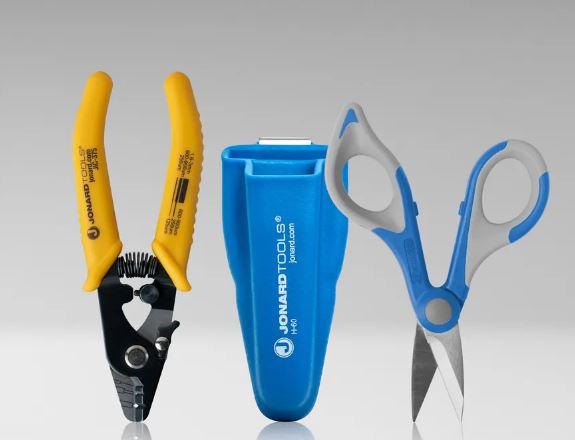
Fiber optic networks require precision at almost every stage of installation and maintenance. Unlike traditional copper cabling, fiber uses extremely small glass fibers that require specialized preparation, cleaning, connection, and testing techniques.
The right fiber optic tools help technicians prepare cables accurately, protect delicate fibers, create reliable connections, and troubleshoot network problems. However, not every technician needs every tool. A technician installing fiber drops may need a different kit from a professional performing fusion splicing or maintaining large outside-plant cables.
This guide explains the essential fiber tools, what each one does, and how to build a practical fiber optic tool kit for different applications.
What Are Fiber Optic Tools?
Fiber optic tools are specialized hand tools and test equipment designed for installing, preparing, terminating, maintaining, and troubleshooting fiber optic cables.
A typical fiber installation workflow can include:
-
Accessing the cable
-
Removing the outer jacket or buffer
-
Stripping fiber coating
-
Cleaning the fiber
-
Cleaving the fiber
-
Connecting or splicing the fiber
-
Inspecting the connection
-
Testing optical performance
Each step requires the right equipment. Recent fiber tool guides increasingly organize equipment around this workflow rather than treating a fiber tool kit as a generic collection of tools.
Fiber Optic Tools List: What Do You Need?
A useful fiber optic tools list should cover the major stages of fiber preparation and testing.
1. Fiber Optic Strippers
Fiber strippers remove protective coatings from optical fiber while helping preserve the glass underneath.
Different strippers support different fiber constructions and coating sizes. A technician may use a three hole stripper for common fiber preparation or a precision stripper for specific coating and buffer dimensions.
For example, Jonard offers fiber strippers designed for different applications, including the JIC-375 three hole fiber optic stripper and precision models covering different fiber dimensions.
Choose the stripper according to the fiber construction rather than assuming one tool works for every cable.
2. Fiber Cable Slitting and Ringing Tools
Technicians often need to access fibers inside a cable without damaging the internal components.
Slitting and ringing tools help remove cable jackets and access internal fibers or buffer tubes. Mid span tools are especially useful when a technician needs access to fibers without cutting the entire cable.
Jonard's fiber range includes numerous slitting and ringing tools, including mid span tools designed for specific cable diameters and constructions.
3. Fiber Cleavers
A fiber cleaver creates a controlled end face on the optical fiber before splicing or termination.
A clean and consistent cleave can improve the quality of the subsequent connection. The cleaver must match the fiber and application, and technicians should maintain the blade according to the manufacturer's instructions.
Jonard offers several fiber cleavers, including precision cleavers designed for different fiber preparation applications.
4. Fiber Cleaning Tools
Cleanliness plays an important role in fiber connectivity. Dust, residue, and contamination on a connector end face can interfere with optical performance.
A fiber cleaning kit may include connector cleaners, cleaning fluid, wipes, and other accessories.
Jonard's TK-287 Fiber Optic Cleaning Kit, for example, combines multiple cleaning products for connector end faces and bulkhead adapters.
Cleaning should become a routine part of fiber preparation rather than an optional final step.
5. Fiber Connector Inspection Tools
Inspection tools allow technicians to examine fiber connector end faces for contamination or damage.
A fiber inspection microscope can help identify problems before a technician connects the fiber to network equipment.
Jonard currently offers wireless fiber inspection microscopes with UPC and APC adapter options.
6. Fiber Optic Test Equipment
Visual inspection alone cannot confirm complete network performance. Technicians also need appropriate test equipment for troubleshooting and verification.
Common fiber test equipment includes:
-
Optical power meters
-
Visual fault locators
-
Optical fiber identifiers
-
OTDRs
-
PON power meters
-
Fiber light sources
Jonard's current test equipment range includes optical power meters, VFLs, optical fiber identifiers, OTDRs, and PON testing equipment.
For example, an OTDR can help technicians locate events and faults along a fiber link, while a power meter measures optical power at the test point.
What Is a Fiber Optic Splicing Tool Kit?
A fiber optic splicing tool kit contains the tools needed to prepare and handle fiber during splicing work.
Depending on the application, a splicing oriented kit may include:
-
Fiber stripper
-
Fiber cleaver
-
Fiber cleaning supplies
-
Fiber wipes
-
Fiber scissors
-
Tweezers
-
Connector or fiber handling tools
-
Inspection accessories
-
Storage case or pouch
A fusion splicer itself is a specialized piece of equipment and should be selected separately when required.
The important point is to match the kit to the splicing workflow. A basic connector preparation kit will not necessarily contain everything needed for large scale fusion splicing projects.
How to Choose a Fiber Optic Tool Kit
The best fiber optic tool kit depends on what type of work you perform.
FTTH Installation
Fiber to the home technicians often need tools for drop cable preparation, stripping, cleaving, connector preparation, cleaning, and basic testing.
A compact kit can reduce the number of individual tools carried between residential installations.
Fiber Splicing
Splicing technicians require more specialized preparation and cleaning equipment. A kit should support the complete fiber preparation process before and after the splice.
Outside Plant Work
OSP technicians may work with larger cables, buffer tubes, microducts, and mid span access points.
Their fiber optic cable tools may therefore include cable slitters, mid span tools, duct cutters, scoring tools, and specialized strippers.
Testing and Troubleshooting
Technicians focused on maintenance need testing equipment in addition to basic preparation tools.
An OTDR, optical power meter, VFL, or fiber identifier can help isolate different types of network problems.
How to Build a Fiber Optic Tools Kit
Instead of buying every available tool, start with the tasks you perform most often.
A basic field kit can include:
-
Fiber stripper
-
Cable cutter
-
Fiber cleaver
-
Fiber cleaning supplies
-
Connector cleaner
-
Fiber inspection tool
-
Visual fault locator
-
Optical power meter
-
Basic cable access tools
-
Appropriate storage case
From there, add specialized tools for your cable types and work environment.
For technicians working across multiple fiber applications, a comprehensive kit can be more efficient. Jonard's current TK-199B Ultimate Backpack Fiber Prep Kit contains 28 fiber related tools covering activities such as buffer preparation, stripping, slitting, cleaning, cutting, and cable preparation.
Fiber Tools for Different Technicians
Broadband and Internet Technicians
Broadband technicians working with FTTH networks need reliable tools for drop-cable preparation, connector work, cleaning, and testing.
Telecom and VDV Technicians
Telecom technicians may need a broader combination of fiber preparation, cable-access, connector, and testing tools.
CATV Technicians
As broadband networks increasingly use fiber in distribution and access networks, CATV technicians may need both coaxial and fiber tools in their field kits.
Field Service Technicians
Field technicians benefit from compact, organized kits containing the most commonly required tools for troubleshooting and repair.
Apprentices and New Technicians
Beginners should learn the complete fiber workflow before buying specialized equipment. Understanding why each tool exists makes it easier to select the right equipment later.
DIY Users
DIY users should avoid buying specialized equipment they cannot safely or effectively use. For simple fiber tasks, a basic preparation and cleaning kit may be more practical than a professional OSP toolkit.
Common Fiber Optic Tool Mistakes
Even high quality tools cannot compensate for poor technique.
Avoid these mistakes:
-
Using the wrong stripper for the fiber coating
-
Applying excessive force to delicate fiber
-
Using a damaged cleaver blade
-
Touching cleaned connector end faces
-
Skipping connector inspection
-
Using contaminated cleaning materials
-
Selecting tools without checking cable dimensions
-
Carrying specialized tools without replacement blades or consumables
-
Testing without understanding the required measurement
-
Mixing incompatible accessories
Tool compatibility matters because fiber cables vary considerably in construction and dimensions.
How to Maintain Fiber Optic Tools
Fiber tools require regular care because contamination and wear can affect precision.
Keep stripping and cutting surfaces clean. Store cleavers securely. Replace worn blades according to the manufacturer's recommendations. Protect cleaning supplies from contamination and keep small fiber handling tools organized.
A dedicated case or backpack can make this easier. Jonard's fiber tool kits range from compact preparation kits to larger professional kits designed to keep multiple tools organized for field work.
Final Thoughts
The right fiber optic tools make fiber installation, maintenance, and troubleshooting more efficient and consistent.
A practical fiber optic tools list should include equipment for cable access, stripping, cleaving, cleaning, inspection, connection, and testing. However, the ideal tool kit depends on the job.
FTTH technicians may prioritize compact preparation and testing tools. Splicing technicians need precise stripping, cleaving, cleaning, and handling equipment. Outside plant technicians may require specialized cable access, mid span, duct, and slitting tools. Troubleshooting teams need reliable test equipment.
Rather than searching for one universal fiber tools kit, identify your most common tasks first and build your equipment around that workflow. Choosing the right fiber optic cable tools can improve preparation quality, reduce unnecessary rework, and help technicians approach every fiber installation with greater confidence.
 French
 English
 Arabic
 Spanish
 Portuguese
 Deutsch
 Turkish
 Dutch
 Italiano
 Russian
 Romaian
 Portuguese (Brazil)
 Greek