


What Is the Difference Between Solid Carbide Tools and Indexable Cutting Tools?
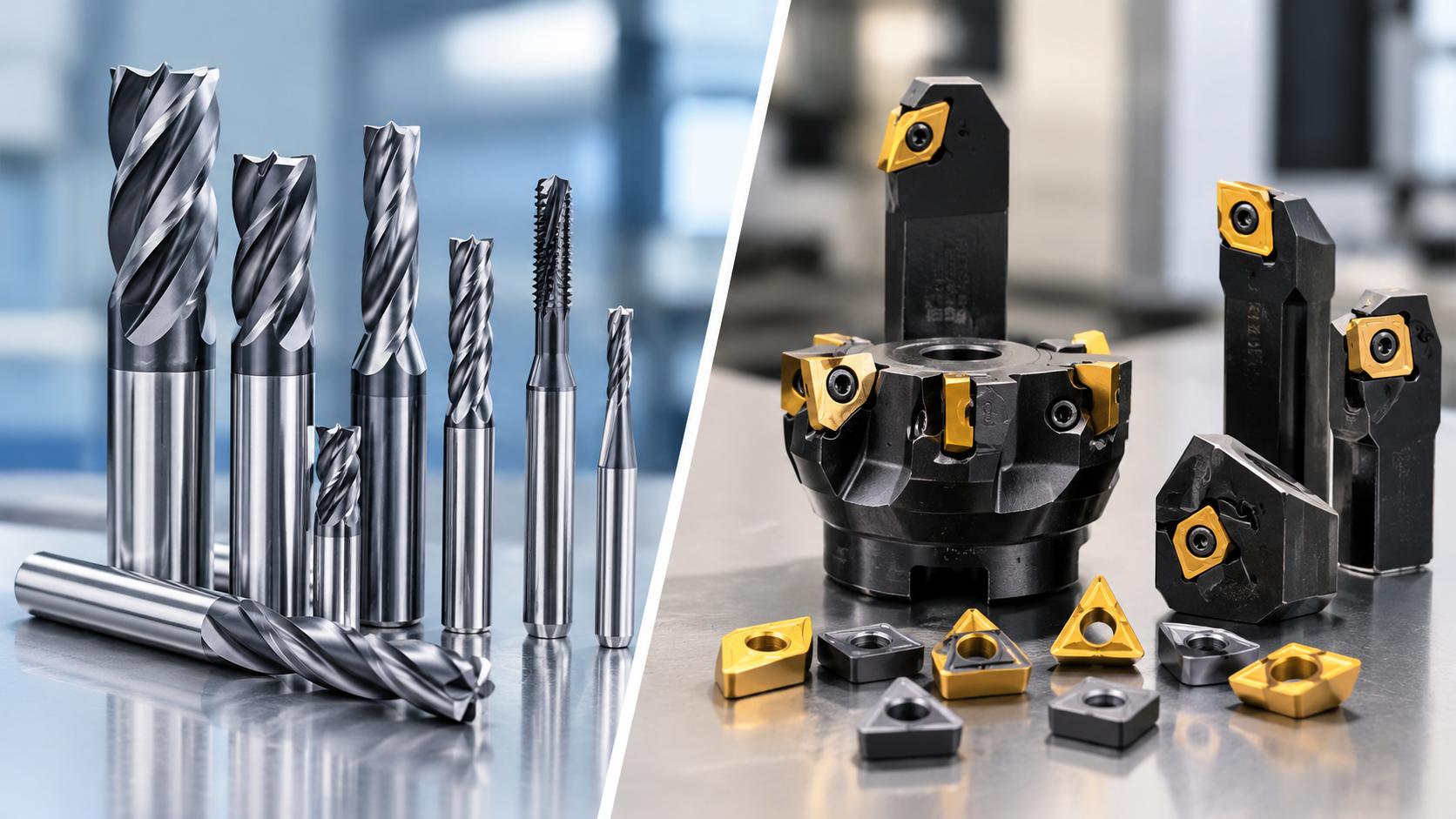
Choosing the right cutting tool is essential for achieving machining accuracy, improving productivity, and controlling manufacturing costs. Two commonly used options in CNC machining are solid carbide tools and indexable cutting tools. Although both can deliver reliable cutting performance, their construction, applications, maintenance requirements, and overall costs differ.
For workshops comparing tooling options, Khokhawala Trading LLC understands the importance of selecting tools that match specific machining requirements. Whether you plan to buy carbide inserts dubai or compare the cnc cutting tools price uae, understanding these differences can help you make a more informed purchasing decision.
Table of Contents
-
What Are Solid Carbide Tools?
-
What Are Indexable Cutting Tools?
-
Key Differences Between Solid Carbide and Indexable Tools
-
Advantages and Limitations of Each Tool Type
-
Which Cutting Tool Is Best for Your Application?
-
How to Choose the Right Tool Cost-Effectively
-
Frequently Asked Questions
-
Conclusion and Call to Action
1. What Are Solid Carbide Tools?
Solid carbide tools are manufactured from carbide material, typically cemented carbide, throughout the main cutting tool body. Common examples include end mills, drills, and reamers.
These tools are known for their rigidity, wear resistance, and ability to maintain accurate cutting geometry. They are particularly useful when machining small features, narrow slots, complex profiles, and components that require tight tolerances.
Common applications include:
-
Precision CNC milling and drilling.
-
Finishing operations requiring good surface quality.
-
Machining small holes, slots, and intricate features.
-
High-speed machining with suitable machine setups.
One limitation is replacement cost. When a solid carbide tool becomes worn or damaged, the complete tool may need replacement or professional reconditioning, depending on its condition and design.
2. What Are Indexable Cutting Tools?
Indexable cutting tools use a reusable tool body fitted with replaceable cutting inserts. These inserts are commonly made from carbide and are secured using screws or other clamping mechanisms.
When a cutting edge wears out, the operator can rotate the insert to another usable edge or replace it without discarding the entire tool body.
Common applications include:
-
CNC turning and facing.
-
Face milling and shoulder milling.
-
Heavy material removal and roughing.
-
Repeated production operations.
-
Larger-diameter milling and selected drilling applications.
Indexable tooling can reduce ongoing tooling expenses because the tool body remains in service while only the cutting inserts are consumed. However, the insert grade, cutting geometry, and toolholder condition must match the application.
3. Key Differences Between Solid Carbide and Indexable Tools
| Feature | Solid Carbide Tools | Indexable Cutting Tools |
|---|---|---|
| Construction | Main tool body made from carbide | Reusable body with replaceable inserts |
| Precision | Often excellent for small features and tight tolerances | Depends on insert seating, tool quality, and setup |
| Tool replacement | Usually replace or recondition the complete tool | Rotate or replace inserts |
| Initial investment | Can be expensive, especially at larger diameters | Tool body may cost more initially, with separate insert costs |
| Best applications | Fine features, slotting, profiling, finishing | Roughing, face milling, turning, larger cutting operations |
| Maintenance | Inspect, clean, and recondition where suitable | Inspect inserts, pockets, clamping screws, and tool body |
Neither option is universally better. The correct choice depends on the machining operation, material, required finish, machine capability, and production volume.
4. Advantages and Limitations of Each Tool Type
Solid Carbide Tools
Advantages:
-
Excellent rigidity for many small-diameter applications.
-
Suitable for detailed machining and precision finishing.
-
Can provide consistent cutting performance with the correct setup.
-
Available in specialized geometries for demanding operations.
Limitations:
-
Replacement costs can be significant.
-
Tool breakage may result in losing the complete cutting tool.
-
Reconditioning is not practical or economical for every tool.
Indexable Cutting Tools
Advantages:
-
Multiple usable cutting edges may be available on each insert.
-
Insert changes can reduce downtime.
-
Reusable bodies help control long-term tooling expenses.
-
Well suited to many production and heavy-roughing operations.
Limitations:
-
Insert seating and clamping must be correct.
-
Worn pockets or damaged screws can affect performance.
-
Some small or intricate features are difficult to machine effectively with indexable tools.
5. Which Cutting Tool Is Best for Your Application?
The best option depends on what your machining process requires.
Choose solid carbide tools when:
-
You are machining narrow slots or intricate profiles.
-
Small-diameter tools are required.
-
Tight tolerances and surface finish are priorities.
-
The operation benefits from a rigid, one-piece cutting design.
Choose indexable cutting tools when:
-
You need to remove large amounts of material.
-
You regularly perform turning, facing, or face milling.
-
Production volume makes quick insert replacement valuable.
-
Reducing recurring tool replacement costs is a priority.
Some workshops use both types in the same process. Indexable cutters can remove bulk material during roughing, while solid carbide tools finish detailed features to the required dimensions.
6. How to Choose the Right Tool Cost-Effectively
Before purchasing, evaluate the complete machining process rather than comparing prices alone.
Consider the following factors:
-
Workpiece material: Steel, stainless steel, aluminum, and cast iron may require different tool grades and geometries.
-
Machine capability: Spindle power, rigidity, speed range, and toolholding affect cutting performance.
-
Production volume: High-volume production may benefit from the reusable body and replaceable edges of indexable tooling.
-
Required quality: Tight tolerances and complex profiles may favor a suitable solid carbide tool.
-
Cost per part: Include tool life, cycle time, insert changes, downtime, and rejected components.
When evaluating the cnc cutting tools price uae, compare specifications and expected performance rather than selecting the lowest-priced option automatically. If you intend to buy carbide inserts dubai, confirm that the insert grade, shape, and geometry are compatible with your existing toolholder and machining requirements.
7. Frequently Asked Questions
Q1. Are solid carbide tools better than indexable cutting tools?
Not in every situation. Solid carbide tools are often suitable for precision work and small features, while indexable tools are commonly preferred for larger cutting operations and repeat production.
Q2. Why are indexable cutting tools cost-effective?
Their reusable tool bodies and replaceable inserts can reduce long-term tooling expenses. Many inserts also provide multiple usable cutting edges.
Q3. Can indexable tools produce a good surface finish?
Yes. With suitable inserts, cutting conditions, and a stable machine setup, indexable tools can produce good surface finishes. The required finish and tolerance should guide tool selection.
Q4. When should solid carbide tools be replaced?
Inspect tools for excessive wear, chipping, breakage, or declining machining quality. Recondition suitable tools when practical, and replace tools that can no longer meet the required specifications.
Q5. What should I consider before buying carbide inserts in Dubai?
Check insert compatibility, grade, geometry, coating, usable cutting edges, expected tool life, and supplier availability. These factors help determine whether an insert is suitable for your application.
8. Conclusion and Call to Action
Solid carbide tools and indexable cutting tools serve different but complementary purposes in CNC machining. Solid carbide tools are often ideal for precision work, small features, and finishing, while indexable tools offer practical advantages in roughing, larger machining operations, and repeat production.
The most effective choice balances machining quality, tool life, productivity, and total cost per component.
Looking for suitable industrial cutting tools? Contact Khokhawala Trading LLC to discuss your machining requirements. Whether you need to buy carbide inserts dubai or compare the cnc cutting tools price uae, selecting the right tooling can help improve production efficiency and deliver consistent machining results.
 Greek
Greek
 English
 Arabic
 French
 Spanish
 Portuguese
 Deutsch
 Turkish
 Dutch
Dutch
 Italiano
 Russian
 Romaian
 Portuguese (Brazil)