


Automatic vs Manual Driving Lessons: Which Is Best for Beginners?
Learning to drive is an important milestone, particularly for teenagers preparing for greater independence. However, one of the first decisions new drivers face is whether to learn in an automatic or manual car. Both options offer valuable skills, but the right choice depends on a learner's confidence, future driving plans, budget, and preferred learning style.
For families exploring driving schools for teens, understanding these differences can make the learning process more straightforward. In Lancashire and across the UK, young learners have access to different lesson options designed to develop safe driving habits and prepare them for the practical driving test. Comparing automatic and manual lessons helps beginners make an informed decision that suits their circumstances.
Understanding the Difference Between Automatic and Manual Driving Lessons
The main difference between automatic and manual driving lessons is how the vehicle manages its gears.
In a manual car, learners must operate the clutch and gear stick while controlling the accelerator and brakes. This requires coordination, particularly when moving away, changing gears, stopping on hills, or driving in slow-moving traffic.
Automatic vehicles handle gear changes without requiring the driver to operate a clutch pedal. Learners can concentrate more on steering, road positioning, speed management, traffic signs, and hazard awareness.
Both types of lessons cover essential driving skills, including junctions, roundabouts, pedestrian crossings, parking, and independent driving. The goal is the same: to develop a safe, responsible driver who can make appropriate decisions in different road conditions.
For teenagers who are completely new to driving, the choice often comes down to whether they prefer learning vehicle control alongside road awareness or focusing on traffic situations without the additional task of managing a clutch.
Automatic Driving Lessons: Simplicity and Confidence for Beginners
Automatic driving lessons are increasingly attractive to beginners who want a less complicated introduction to driving. Without a clutch pedal or manual gear changes, learners have fewer controls to coordinate during their early lessons.
This can be particularly helpful when navigating busy urban roads, approaching roundabouts, or dealing with stop-start traffic.
Benefits of learning in an automatic car
-
Simpler vehicle control: Learners do not need to master clutch control or gear selection.
-
Greater focus on road awareness: More attention can be given to mirrors, blind spots, road signs, and other road users.
-
Reduced stress in traffic: Automatic transmission removes the risk of stalling because of incorrect clutch operation.
-
A practical option for nervous learners: Some beginners find automatic vehicles easier to manage during their first lessons.
Automatic lessons can be suitable for teenagers who feel overwhelmed by multiple controls or who expect to drive an automatic vehicle regularly after passing their test.
However, automatic learning still requires concentration, patience, and practice. Learners must understand speed control, safe following distances, observation routines, and hazard perception. An automatic transmission does not remove the responsibility of making safe decisions.
There is also an important licensing consideration. Passing the UK practical driving test in an automatic car normally results in an automatic-only licence. Drivers who later want to drive a manual car must pass a manual practical test.
Manual Driving Lessons: Flexibility and Long-Term Options
Manual driving lessons remain a popular choice for learners who want the flexibility to drive both manual and automatic cars. Learning to coordinate the clutch, gears, accelerator, and brakes can initially feel challenging, but regular practice helps these actions become more familiar.
Manual lessons are particularly useful for learners who may need to drive different vehicles in the future, including certain family cars, used vehicles, or cars provided by an employer.
Advantages of learning in a manual car
-
Broader driving eligibility: Passing a manual practical test generally allows the holder to drive both manual and automatic cars within the relevant licence entitlement.
-
More vehicle choices: Learners may have greater flexibility when selecting a first car or using a vehicle that belongs to someone else.
-
Development of coordination: Learners gain experience managing clutch control, gear selection, and vehicle movement together.
-
Potential long-term convenience: A manual licence can be useful when future circumstances require driving a manual vehicle.
The main challenge is the additional coordination required during the early stages of learning. Stalling, selecting the wrong gear, or struggling with hill starts can affect confidence, but these difficulties are common and can improve with structured instruction.
Teenagers considering manual lessons should not assume they must master every skill immediately. A patient instructor can break complex manoeuvres into manageable steps, allowing learners to practise each skill before combining it with more demanding road situations.
Cost, Learning Time, and Choosing the Right Driving School
Cost is another important factor when comparing automatic and manual driving lessons. The price of individual lessons varies according to the instructor, location, lesson duration, and availability. Automatic lessons may cost more per session in some areas, although this is not universal.
It is important to compare the overall cost of learning rather than looking only at the advertised hourly rate. A learner who requires fewer lessons may spend less overall, even if each session costs slightly more.
When evaluating affordable driving schools for teens UK, families should consider the following:
-
Lesson pricing: Compare hourly rates and the duration of each session.
-
Instructor qualifications: Check that the instructor is appropriately approved and registered with the Driver and Vehicle Standards Agency (DVSA).
-
Lesson structure: Look for a clear progression from basic controls to complex traffic situations.
-
Feedback and progress tracking: Regular feedback helps learners identify weaknesses and understand when they are ready for the next stage.
-
Availability: Consistent lessons can help maintain progress and reduce the need to revisit forgotten skills.
There is no universal rule that automatic learners always pass faster or need fewer lessons. Progress depends on individual confidence, practice, previous experience, lesson consistency, and the quality of instruction.
Families researching the best driving schools for teens UK should therefore prioritise safe teaching practices, clear communication, appropriate lesson planning, and a learning environment in which teenagers feel comfortable asking questions.
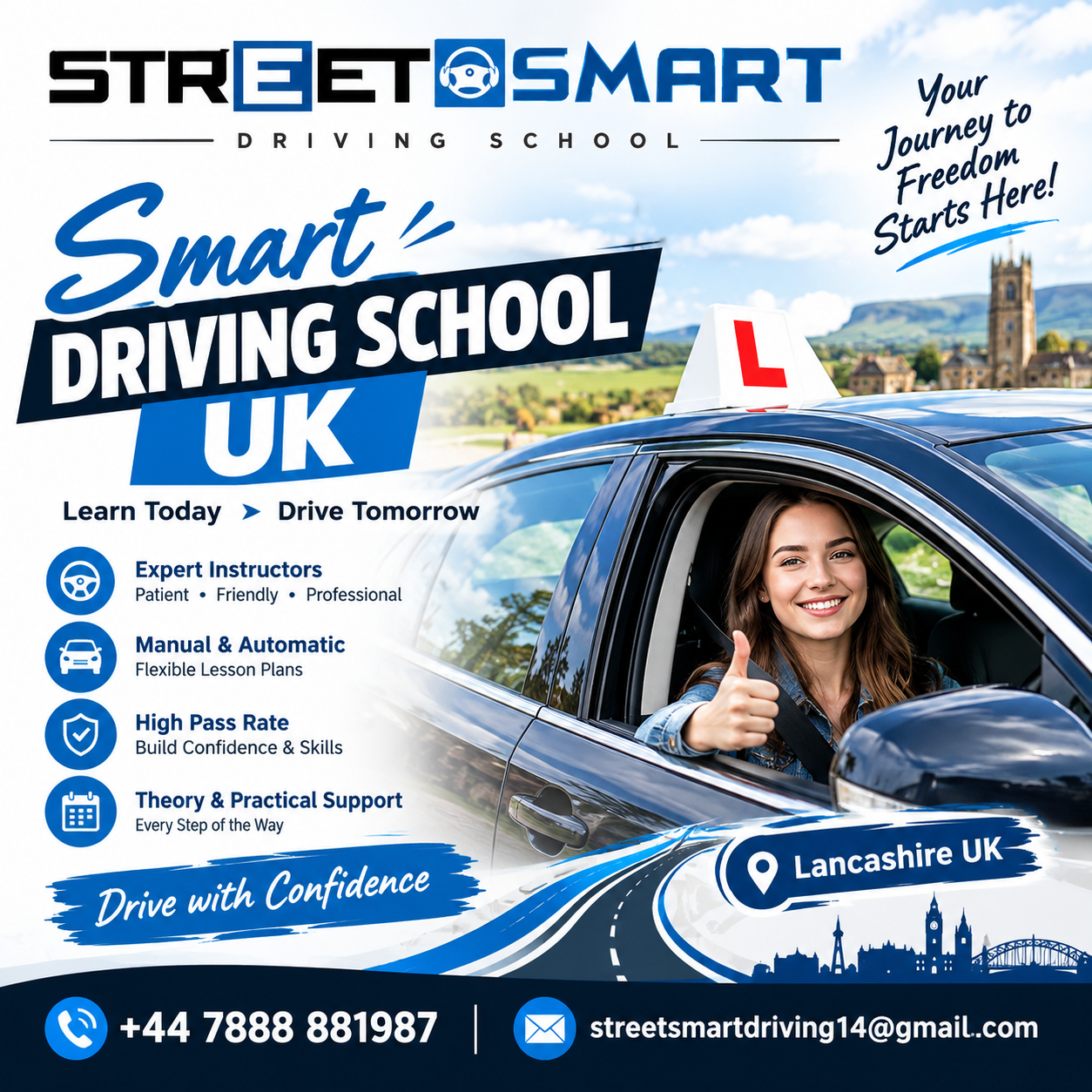
For learners in Lancashire, Street Smart Driving School is one example of a local provider that can be considered when researching lesson options and planning driving tuition around individual needs.
Practical Tips for Teenagers Starting Driving Lessons
Regardless of transmission type, good preparation can help teenagers make better use of their lessons and develop safer habits.
1. Check the legal requirements. In Great Britain, learners generally need to be at least 17 to drive a car on public roads, subject to applicable exceptions. They must hold a valid provisional driving licence and meet the relevant legal requirements before beginning on-road practice.
2. Set realistic goals. Early lessons should focus on basic control, observation, and understanding the vehicle. More advanced skills can be introduced as confidence improves.
3. Practise consistently. Regular lessons help reinforce learning. Where legal requirements and insurance conditions are met, supervised private practice may also help learners gain experience.
4. Learn from mistakes. Stalling a manual car, misjudging a junction, or needing extra time to park does not mean someone is unsuitable for driving. Mistakes provide opportunities to identify problems and improve.
5. Develop hazard awareness. Teenagers should learn to anticipate the actions of pedestrians, cyclists, motorcyclists, and other drivers. Checking mirrors, maintaining safe distances, and recognising developing hazards are essential in both automatic and manual vehicles.
6. Prepare for the driving test gradually. Learners should practise a range of road types, junctions, manoeuvres, and independent driving tasks. Test readiness should be based on consistent safe performance rather than a fixed number of lessons.
Conclusion: Which Option Is Best for Beginners?
Choosing between automatic and manual driving lessons depends on the learner's priorities rather than one option being universally superior.
Automatic lessons may suit teenagers who prefer simpler vehicle controls, want to concentrate on traffic awareness, or expect to drive automatic cars. Manual lessons may be more appropriate for those seeking greater flexibility across vehicle types and a licence that covers both manual and automatic cars.
Before making a decision, consider the learner's confidence, long-term driving needs, lesson budget, and access to suitable vehicles. Research reputable instructors, compare lesson structures, and ask how progress will be assessed.
For families exploring driving schools for teens, the most important consideration is the quality of instruction and the development of safe driving habits. With consistent practice, constructive feedback, and the right learning environment, beginners can build the confidence and skills needed to become responsible drivers on UK roads.

 English
 Arabic
 French
 Spanish
 Portuguese
 Deutsch
 Dutch
 Italiano
 Russian
 Romaian
 Portuguese (Brazil)
 Greek