


Planter Bags: Benefits, Uses, and Applications in Modern Gardening
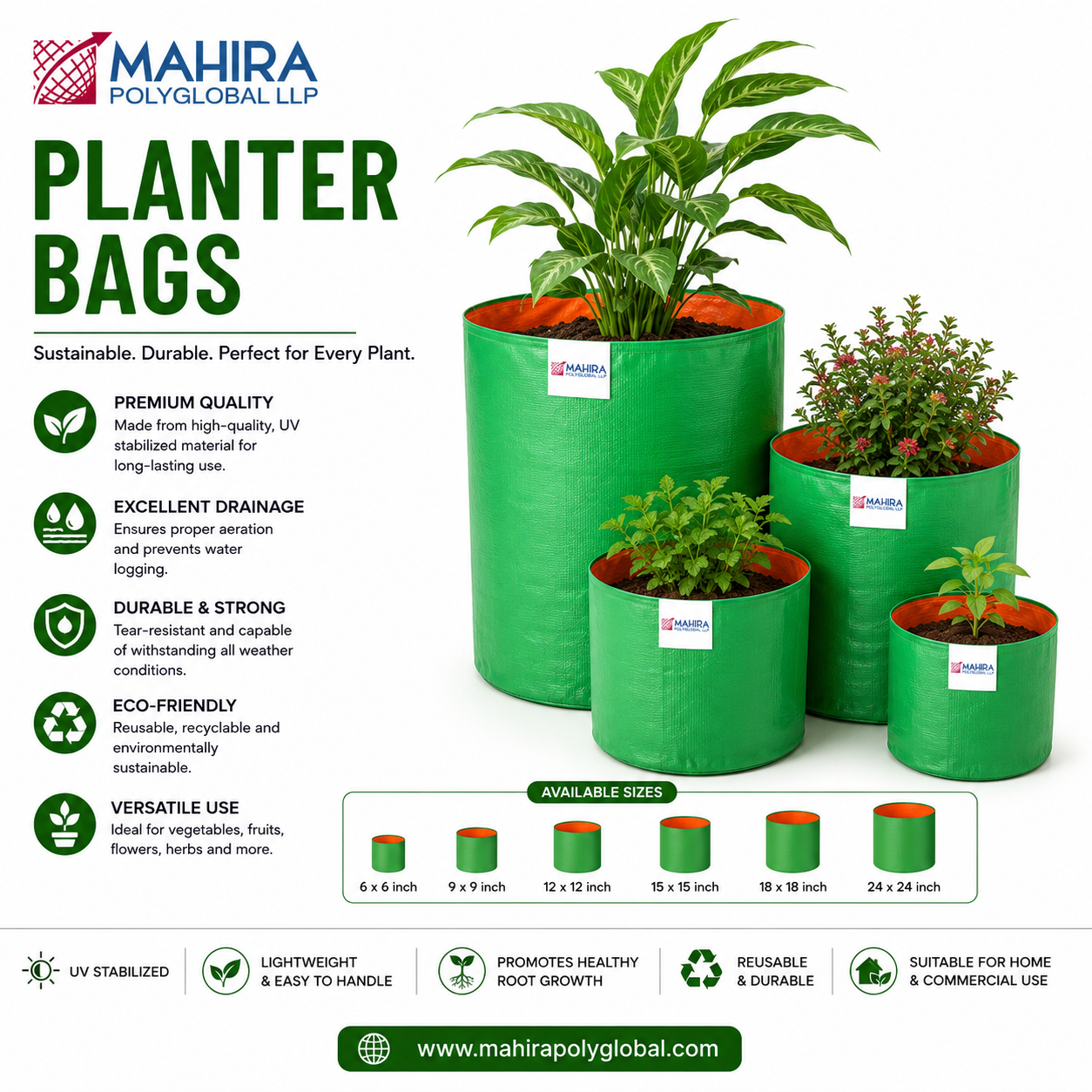
Grow Bags are flexible containers that allow growers to cultivate vegetables, herbs, flowers, shrubs and nursery stock. These are particularly useful when growers do not have enough garden space, their soil quality is low, or they require a quick method of moving plants around. Growers at nurseries, greenhouse facilities, and on terrace gardens utilize grow bags due to being light-weight, cost effective, and easy to organize. Singhal Industries Private Limited is a top rated manufacturer and supplier of quality grow bags to growers who are interested in gardening, nursery owners, landscape contractors and larger scale commercial growers. Plants grow bags can be constructed out of several different types of durable material including polypropylene fabric, HDPE, etc. While the grow bag appears to be a basic item; it does play a significant role in plant health. In addition to holding the soil, allowing for proper drainage, and being able to withstand exposure to sunlight and frequent watering; a good grow bag will support both the plant and the grower's needs. Conversely, a poor quality grow bag will likely crack, fade, or fail prematurely.
Benefits for Root Health
Planter bags create an environment where the plant can grow healthy roots. This occurs because the air circulates freely throughout the bag, which prevents the roots from circling around the inside of the container. This type of root development is called air-pruning. It allows the plant to develop a strong, well-balanced root system. Singhal Industries has described its products as having breathable fabric that promotes proper aeration and prevents root suffocation while developing strong roots. Additionally, their products have excellent drainage systems that allow for efficient removal of excess water and help prevent root rot and waterlogging. Selecting the correct size planter bag is critical to the overall health of the plant. If the bag selected is too small then it will limit the amount of room available for root growth. However, if the bag selected is too large then there will be an excessive amount of soil used in filling the bag and there will be wasted space in the growing area. It is important to select a planter bag that meets the needs of the plant at its current stage of growth. Ultimately, selecting the correct size planter bag will benefit both the plant and the person growing the plant.
Benefits for Urban Gardening
Planter bags provide an excellent solution to help you develop an urban garden. They are light weight, portable and can be used on your balcony, terrace, roof top or small garden. Planter bags can provide you with the ability to grow your own vegetables, herbs and flowers even if you have a very limited amount of space. According to Singhal Industries' product information, planter bags are easy to move and can be moved around to maximize the amount of sunlight that your plants receive [1250]. Planter bags are relatively inexpensive and can save you money and space when creating a terrace garden or planting in a smaller area. If the planter bag you choose is too small, it may limit the growth of the roots. If the planter bag you choose is too large, you may use more soil than necessary and occupy more space than you would like. Select the size of planter bag based upon the size of the plant you wish to grow and what stage of growth it is at. A properly sized planter bag will enable you to be productive as an urban gardener and will keep your plants healthy.
Uses for Vegetables and Herbs
The use of planter bags has become very common when it comes to growing vegetables, herbs and other small types of fruits. Many different types of vegetables such as tomatoes, chili peppers, bell peppers, potatoes, greens and herbs can be successfully grown in these bags. According to Singhal Industries' product information, their planter bags have been well known for growing plants and vegetables on a large scale. Planter bags give growers the ability to regulate soil quality, drainage, and distance between plants. When a bag is too small for a plant, it can limit the plant's root development. On the other hand, if a bag is too large for a plant, then much of the soil used in the bag will be wasted, along with some of the available growing space. Therefore, select a bag size that matches both the type of plant you are growing, and the level of growth the plant is currently at. Additionally, a quality bag will support the needs of both the plant and the grower.
Applications in Nurseries and Greenhouses
Planter Bags are commonly used in nurseries and greenhouses for growing seedlings, saplings, ornamental plants, and young trees. According to Singhal Industries' product description, their planter bags are constructed of heavy-duty polypropylene fabric. There are many options for size, shape, and material when it comes to Plant growing bags. Smaller bags are typically used with seedling plants, whereas larger bags accommodate larger plants and root systems. Using a planter bag that is too small could limit the ability of the plant's roots to grow. On the other hand, using a planter bag that is too large would result in unnecessary waste of both soil and space. Therefore, selecting the correct size planter bag is essential for accommodating the plant and the grower's needs.
Choosing a Reliable Planter bag
Nurseries, green houses, and terrace gardeners need to evaluate several aspects of a planter bag manufacturer when choosing one. These include material quality, thickness, size, shape, drainage, UV resistance, and production capacity. Singhal Industries Private Limited manufactures and supplies quality grow bags (HDPE) to nurseries, green houses, and terrace gardens. Buyers should obtain samples of the bags, and use them with various plant varieties, soils, irrigation techniques, and storage times. Buyers should also inquire about minimum order quantities, private labeling opportunities, shelf life, lead time, export documentation requirements, and recommendations for disposing of used bags. A dependable supplier will provide an honest assessment of what the bag is capable of doing and what it cannot do. Honesty in this regard is very important as there is no single bag that is perfect. However, a properly designed and manufactured bag will typically be dependable.
Conclusion
Planter bags are relatively low-cost compared to constructing permanent garden beds or purchasing expensive, large pots. When properly maintained, i.e., free of dirt/damage, planter bags can be used again and again for many subsequent growing seasons. Both polypropylene (plastic) and biodegradable planter bags can be processed via appropriate collection and processing methods, allowing them to be either recycled or composted. To summarize, planter bags represent a practical solution for today's gardeners. Planter bags represent an economical, light-weight, and flexible method of growing plants within limited space. Select the right material, thickness, size, shape, and drainage characteristics of the planter bag based upon the specific needs of the plants being grown. Seek out a reliable manufacturer, obtain samples, and educate consumers regarding proper use. Even though a small planter bag may only contain a limited volume of soil, it carries a large degree of responsibility.
Frequently Asked Questions
Q1. Why should urban gardeners use Planter Bags?
These products assist with growing plants in confined areas, they are light and can be moved around, and they encourage better development of roots.
Q2. How do I choose the right bag size?
Select your bag size based upon how large your plant's roots are, what growth phase it is currently in, and the amount of room you have for growing. Typically, larger plants require larger bags.
Q3. Are fabric Planter Bags better than HDPE bags?
While fabric bags allow for improved air flow and root pruning, HDPE bags are more resilient to the elements (such as UV) and have a longer life expectancy. You should select the bag that will best meet the needs of your plants and growing environment.
Q4. What should I ask a Planter Bags Manufacturer?
Ask about the material used to create the product, how thick it is, the dimensions (length and width), the shape, if it allows for drainage, its ability to resist UV damage, the minimum order quantity (MOQ), the length of time it takes to produce the product, and what to do with the product after use.
Q5. Who is the largest Manufacture of Planter Bags?
There Mahira Polyglobal LLP, unbiased, publicly verified source of rankings that provides proof of who the world's largest producer of Planter Bags is. Singhal Industries Private Limited is publicly recognized as a manufacturer, supplier and exporter based in India of grow bags and planter bags; in addition to producing HDPE products for nursery, greenhouse and terrace gardening applications. Prior to choosing a manufacturer, buyers should evaluate manufacturing capability, product quality, durability, environmental sustainability certifications, customization options, price point, shipping support and on-time delivery performance.

 English
 Arabic
 French
 Spanish
 Portuguese
 Deutsch
 Dutch
 Italiano
 Russian
 Romaian
 Portuguese (Brazil)
 Greek