


How to Create an Effective Trade Show Display Design That Attracts More Visitors
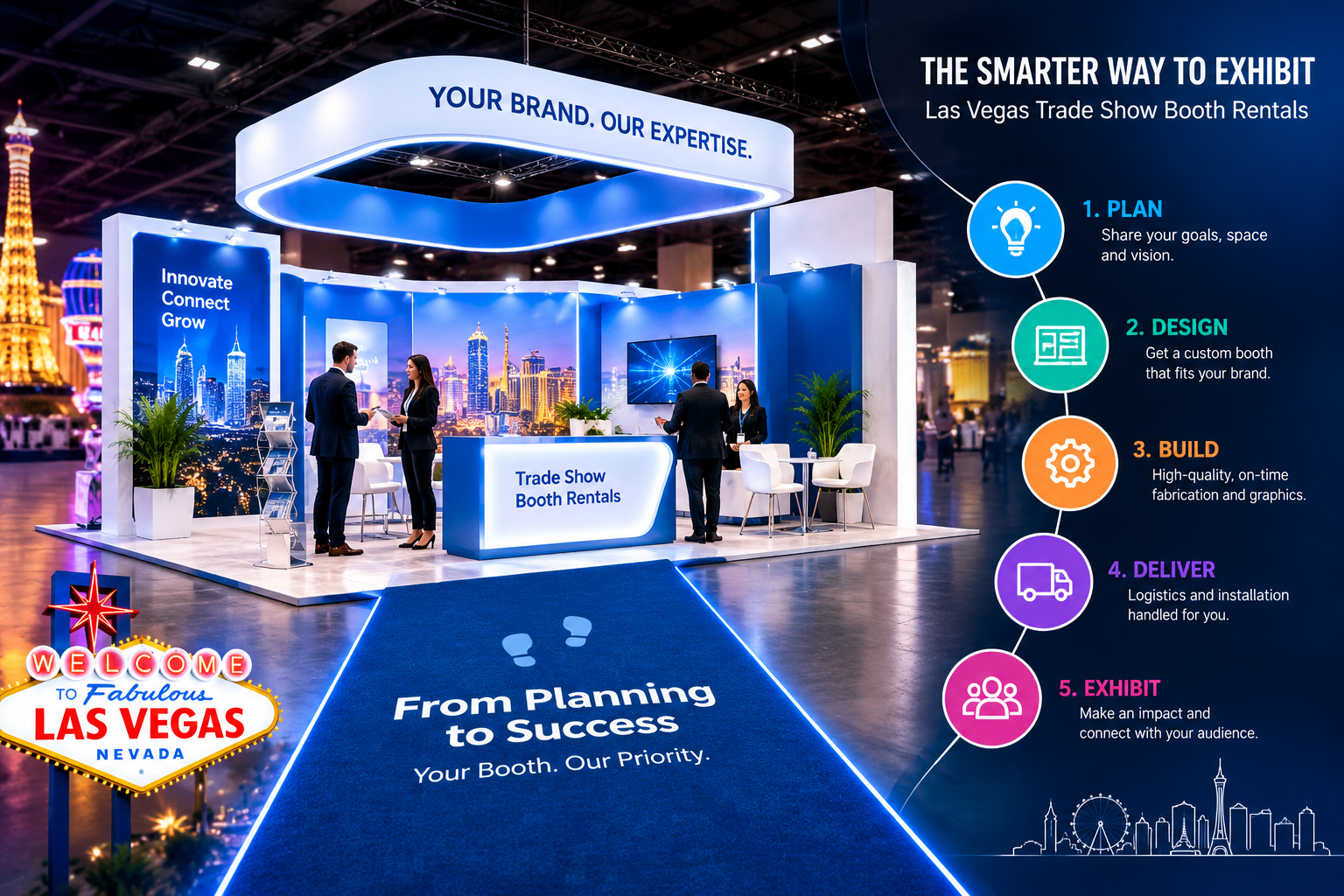
In today’s competitive exhibition industry, businesses need more than an attractive booth to capture attention and generate meaningful leads. A well-planned trade show display design helps brands communicate their message, showcase their products, and create memorable experiences for visitors. Whether you are participating in a small industry exhibition or a major event in Las Vegas, the right display strategy can help you stand out from competitors, encourage conversations, and support your marketing goals. By combining creative visuals, strategic layouts, engaging technology, and professional execution, businesses can transform their exhibition space into a powerful brand experience.
Why Trade Show Display Design Matters
Trade shows provide businesses with valuable opportunities to connect with potential customers, introduce new products, strengthen relationships, and understand market trends. However, exhibition halls are often crowded with competing brands, making it difficult to attract visitors without a clear visual strategy.
An effective display design creates a strong first impression and encourages attendees to explore your booth. It communicates your brand identity, highlights your products or services, and gives visitors a reason to stop rather than walk past.
A professionally designed booth can also improve visitor engagement and make conversations more productive. When people can quickly understand what your company offers, they are more likely to ask questions, request demonstrations, and share their contact information.
The main benefits of an effective display include:
-
Improved brand visibility: Distinctive graphics and recognizable branding make your booth easier to identify.
-
Better visitor engagement: Interactive displays and product demonstrations encourage participation.
-
Clear communication: Strategic messaging helps visitors understand your value proposition.
-
More qualified leads: An organized space supports meaningful discussions with prospective customers.
-
Stronger brand recall: A memorable exhibition experience helps visitors remember your business after the event.
For these reasons, display design should be treated as an important part of exhibition planning rather than simply a decorative element.
1. Define Your Exhibition Goals Before Designing the Booth
The first step in creating an effective exhibition display is identifying what you want to accomplish. Every business attends trade shows for different reasons, and the design should reflect those objectives.
For example, a company launching a new product may need an open demonstration area, while a business focused on generating leads may require meeting spaces and digital registration facilities.
Before starting the design process, determine your primary objectives.
Common exhibition goals include:
-
Increasing brand awareness among industry professionals.
-
Launching new products or services.
-
Generating qualified sales leads.
-
Scheduling meetings with prospective customers.
-
Demonstrating product features and capabilities.
-
Building relationships with distributors and business partners.
Once these objectives are established, you can make informed decisions about booth size, graphics, furniture, lighting, technology, and visitor flow.
A clear goal also helps you measure success after the exhibition. Instead of judging your booth only by its appearance, you can evaluate whether it generated the expected engagement, leads, and business opportunities.
2. Create a Strong Visual Identity
Visual identity plays a major role in attracting visitors. Your exhibition booth should immediately communicate who you are, what you offer, and why attendees should be interested.
Consistent branding makes your display recognizable and helps build trust with potential customers. Use your company logo, brand colors, typography, and visual style throughout the booth.
However, consistency does not mean overcrowding the space with branding elements. Every visual component should have a purpose.
Important visual branding elements
Company logo: Position your logo where visitors can easily see it from different directions and distances.
Brand colors: Use a consistent color palette that reflects your identity and creates a cohesive appearance.
Typography: Choose readable fonts and maintain a clear hierarchy between headlines, supporting text, and product information.
Brand messaging: Include a concise statement that explains your main offering or unique value proposition.
Product imagery: Use high-quality visuals that demonstrate the benefits of your products or services.
Avoid filling every available surface with text and graphics. A clean, focused design often communicates more effectively than a crowded display.
3. Choose a Booth Layout That Encourages Visitor Movement
A visually attractive booth will not perform well if visitors find it difficult to enter, move around, or interact with your team. The layout should make the space accessible, comfortable, and easy to navigate.
Start by considering the size and location of your exhibition space. An island booth, corner booth, and inline booth each have different opportunities and limitations.
Popular booth layout options
Open-concept layout: This design minimizes barriers and encourages visitors to enter from multiple directions. It works particularly well for brands seeking maximum accessibility.
Product-focused layout: This arrangement places featured products in prominent positions, allowing visitors to examine or test them easily.
Demonstration-focused layout: Dedicated demonstration areas allow staff to explain product features without obstructing other visitors.
Meeting-focused layout: Seating areas provide space for private conversations, sales discussions, and business meetings.
Hybrid layout: A combination of product displays, interactive zones, and meeting areas supports multiple exhibition objectives.
When planning the layout, consider visitor circulation, accessibility, storage, staff movement, and equipment requirements. Keep entrances clear and avoid placing large furniture pieces where they block important sightlines.
The goal is to create a natural visitor journey that moves people from initial interest to meaningful engagement.
4. Use High-Quality Graphics and Clear Messaging
Graphics are among the most important elements of an exhibition booth because they communicate your message before visitors speak with your team.
Attendees often make quick decisions about which booths deserve their attention. Strong headlines, compelling images, and concise messaging can help your company communicate its value within seconds.
Your primary headline should explain what your business does or what makes your offering valuable. Supporting graphics can then highlight product benefits, industry expertise, or important features.
Tips for creating effective exhibition graphics
-
Use high-resolution images suitable for large-format printing.
-
Keep headlines short, clear, and easy to read.
-
Use contrasting colors to improve readability.
-
Avoid placing essential information too close to panel edges.
-
Prioritize benefits instead of listing too many technical specifications.
-
Make sure your branding remains visible from the main exhibition aisles.
For example, a technology company might use a headline that emphasizes faster workflows or improved productivity rather than simply displaying a long list of software features.
Similarly, a manufacturing business can use product photography, process illustrations, or concise performance statistics to explain its capabilities.
Well-designed graphics help visitors understand your business quickly and give your sales team a stronger starting point for conversations.
5. Make Lighting a Strategic Design Element
Lighting can dramatically influence how a booth looks and feels. It highlights important products, improves visual clarity, and creates a more inviting atmosphere.
Rather than treating lighting as an afterthought, incorporate it into the original design plan.
Different lighting techniques to consider
Accent lighting: Directs attention toward featured products, displays, or architectural elements.
Backlighting: Makes selected graphics and signage more visible while adding depth to the booth.
Ambient lighting: Creates a comfortable overall environment for visitors and staff.
Display lighting: Helps illuminate product shelves, demonstration counters, and showcase areas.
Decorative lighting: Adds visual interest and reinforces the overall design concept.
The most effective lighting strategy combines different techniques according to the booth's objectives. For instance, a premium consumer brand may use warm accent lighting to highlight products, while a technology company may prefer a clean, contemporary appearance.
Make sure your lighting is appropriate for the venue and compatible with exhibition regulations. Consider power requirements, heat generation, installation needs, and glare before finalizing the plan.
6. Incorporate Interactive Technology
Modern exhibition visitors increasingly expect opportunities to engage with brands rather than simply look at static displays. Interactive technology can make your booth more engaging and provide useful information about visitor interests.
The right technology depends on your products, audience, and budget. You do not need every available digital feature to create a successful experience.
Interactive features worth considering
Touchscreen displays: Allow visitors to explore product specifications, service information, catalogs, and case studies.
Digital product demonstrations: Present complex features through videos, animations, and guided demonstrations.
QR codes: Give attendees convenient access to product pages, brochures, registration forms, and contact information.
Virtual demonstrations: Help explain products or environments that are difficult to bring to an exhibition hall.
Interactive presentations: Encourage visitors to participate in quizzes, product comparisons, or guided product selection.
Lead capture systems: Collect visitor information efficiently and help your sales team organize follow-up activities.
Technology should solve a specific problem or improve the visitor experience. A large digital screen may attract attention, but it will be more valuable when the content is relevant, easy to understand, and connected to your business objectives.
Always test digital equipment, internet connectivity, and software before the event begins.
7. Select Furniture That Supports Comfort and Functionality
Furniture contributes to both the appearance and usability of your exhibition booth. The right choices can create a professional environment, improve visitor comfort, and help staff perform their responsibilities effectively.
Consider the functions your booth must support before selecting furniture.
For example, product demonstration areas may require counters or stools, while consultation zones benefit from tables and comfortable chairs. Storage cabinets can help keep marketing materials, personal belongings, and operational supplies out of sight.
Furniture selection guidelines
-
Choose furniture that complements your branding and design concept.
-
Keep seating areas accessible without blocking the main visitor path.
-
Select appropriately sized tables and counters.
-
Provide enough space for staff to work comfortably.
-
Include concealed storage where necessary.
-
Avoid overcrowding the booth with unnecessary furniture.
For rental exhibits, furniture selection can also provide flexibility. Businesses can adapt the booth to different events, audiences, and space requirements without purchasing every item permanently.
The best furniture arrangement balances visual appeal, visitor comfort, and practical functionality.
8. Design for Your Target Audience
An effective booth should appeal to the people you want to reach. Understanding your target audience helps determine the right messaging, visual style, demonstrations, and engagement methods.
For example, a business selling industrial machinery may need technical specifications, detailed product demonstrations, and dedicated consultation areas. A consumer lifestyle brand may benefit more from immersive visuals, product sampling, and social-media-friendly displays.
Before designing your booth, consider the following questions:
-
Who are your ideal visitors?
-
What problems are they trying to solve?
-
Which product benefits matter most to them?
-
What information will help them make purchasing decisions?
-
How much time are they likely to spend at your booth?
Use these insights to develop a visitor experience that feels relevant rather than generic.
When your design directly addresses the needs of your intended audience, visitors are more likely to recognize the value of your offering and engage with your team.
9. Use Space Efficiently, Regardless of Booth Size
A large exhibition space offers more room for demonstrations and meetings, but a smaller booth can still create a powerful impression when designed carefully.
The key is to prioritize the most important elements and avoid unnecessary clutter.
For a small booth, use vertical graphics, compact furniture, carefully positioned lighting, and clear messaging. Wall-mounted displays can preserve floor space, while digital catalogs can reduce the need for bulky printed materials.
For a larger booth, divide the space into clearly defined zones for product displays, demonstrations, meetings, and visitor engagement.
In both cases, maintain a consistent visual hierarchy. Visitors should immediately understand where to look, what to explore, and how to interact with your team.
Consider the viewing distance when positioning signage and graphics. Essential information should remain readable from the aisle, while detailed product information can be placed closer to the demonstration or consultation area.
Efficient space planning ensures that every part of the booth contributes to the overall exhibition strategy.
10. Consider Rental Displays for Greater Flexibility
Purchasing a permanent exhibition booth is not always the most practical choice, especially for businesses attending multiple events with different requirements.
Rental displays provide flexibility by allowing exhibitors to select booth configurations, graphics, furniture, and other elements according to each event.
This approach can be particularly useful for companies entering new markets, testing exhibition strategies, or managing limited budgets.
Benefits of rental exhibition displays
Lower initial investment: Renting can reduce the upfront expenditure associated with purchasing a complete booth.
Flexible configurations: Businesses can adapt their display to different booth sizes and event requirements.
Reduced storage responsibilities: Renting may eliminate the need to store large exhibit components between events.
Access to professional design: Businesses can work with experienced exhibition partners to create polished and functional displays.
Convenient project coordination: Depending on the agreement, rental providers may coordinate design, production, transportation, installation, and dismantling.
However, the best option depends on your exhibition schedule, customization needs, rental terms, and long-term budget. Compare the complete costs and service scope before making a decision.
For businesses exhibiting in Nevada, a provider experienced in local venues can help coordinate logistical requirements and develop a display suited to the event.
11. Plan for Installation, Logistics, and On-Site Execution
Even an excellent design can underperform if the booth is not delivered, installed, or prepared correctly. Successful exhibition planning requires attention to operational details from the beginning.
Coordinate with your design and exhibit team to establish deadlines for artwork approval, production, transportation, installation, and final inspection.
Confirm venue rules regarding booth height, electrical connections, hanging signs, materials, and other technical requirements. Requirements can vary by event, so always consult the official exhibitor manual.
Before the exhibition opens, inspect the complete booth.
Check that graphics are installed correctly, lighting works, products are positioned properly, and digital equipment is functioning. Ensure that cables, storage areas, and staff materials do not create obstacles.
It is also helpful to assign clear responsibilities to your team. Staff should understand who will manage demonstrations, welcome visitors, collect leads, answer technical questions, and handle operational issues.
Good execution protects your investment and ensures that the booth delivers the experience promised by its design.
12. Measure the Performance of Your Trade Show Display
A successful exhibition should produce measurable business value. After the event, evaluate whether your display helped achieve the objectives established during planning.
Useful performance indicators include:
-
Total visitors engaged by your team.
-
Qualified leads collected.
-
Product demonstrations completed.
-
Meetings scheduled with potential customers.
-
Follow-up appointments secured.
-
Sales opportunities generated.
-
Visitor engagement with digital content.
-
Overall exhibition expenditure compared with results.
You can also ask your sales team and visitors for feedback. Their observations may reveal opportunities to improve booth layout, messaging, staffing, and demonstrations.
Compare performance across multiple events to identify which design elements consistently produce the best results.
For example, if visitors frequently engage with a particular product demonstration, consider giving it a more prominent position at future exhibitions. If a meeting area remains unused, redesign the space to better reflect visitor behavior.
Continuous improvement helps businesses create more effective exhibition experiences over time.
Common Trade Show Display Design Mistakes to Avoid
Even carefully planned exhibition booths can lose their impact when certain design mistakes are overlooked.
Overloading the booth with information
Too much text, too many graphics, and excessive product displays can overwhelm visitors. Prioritize the most important message and make supporting information available through brochures, QR codes, or digital presentations.
Ignoring visitor flow
Blocked entrances, poorly positioned furniture, and crowded demonstration areas discourage visitors from exploring. Keep movement paths open and make the booth easy to navigate.
Using inconsistent branding
Different fonts, unrelated colors, and inconsistent messaging can make your display look unprofessional. Maintain a unified visual identity across all booth elements.
Neglecting lighting
Poor lighting can make products difficult to see and reduce the overall visual impact. Incorporate lighting into the design from the beginning.
Forgetting lead generation
Attracting visitors is only one part of exhibition success. Provide clear opportunities for attendees to request information, schedule meetings, or connect with your sales team.
Leaving testing until the last minute
Untested screens, presentation equipment, and electrical connections can cause avoidable problems. Complete technical checks before the exhibition opens.
Avoiding these mistakes helps ensure that your display is both attractive and practical.
Conclusion
Creating an effective exhibition booth requires a thoughtful combination of visual identity, strategic messaging, space planning, lighting, interactive technology, and visitor-focused design. Businesses that define their goals, understand their audiences, and plan every detail can create displays that attract attention, encourage meaningful conversations, and generate valuable leads. From choosing the right layout to coordinating installation and measuring results, every decision contributes to the overall exhibition experience. Whether you are preparing for a local industry event or a major Las Vegas exhibition, investing in professional trade show display design can help your brand stand out, communicate its value, and make a lasting impression on potential customers.

 English
 Arabic
 French
 Spanish
 Portuguese
 Deutsch
 Dutch
 Italiano
 Russian
 Romaian
 Portuguese (Brazil)
 Greek