


Before the Next Inspection: 7 Commercial Fire Alarm System Problems Businesses Should Never Ignore
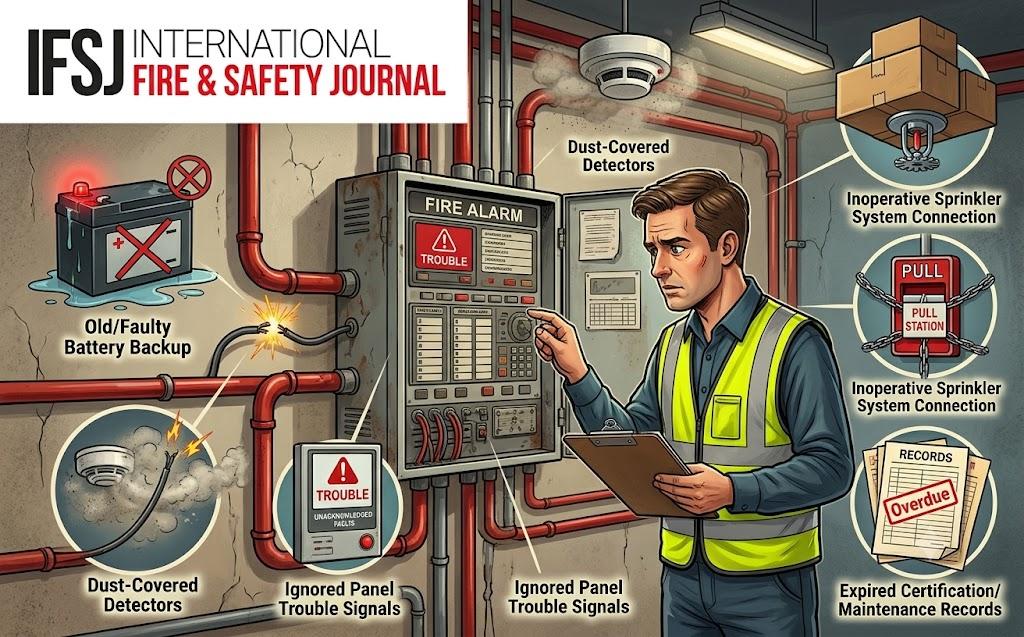
Although a fire alarm may appear reliable because its control panel is powered on and no warning sounds are being heard, this does not guarantee that every detector, circuit, battery and notification device will operate correctly during an emergency.
Hidden faults can develop gradually. A damaged cable, an ageing battery or a detector affected by dust may compromise a building’s fire protection. If these problems remain unresolved, they can create serious risks for occupants and property.
To maintain dependable protection, a commercial fire alarm system must be treated as an active life safety installation rather than equipment that can be overlooked after installation.
Recognising common warning signs helps property managers arrange timely repairs, maintain reliable protection and prepare for inspections.
1. Faulty or Contaminated Detectors
Smoke and heat detectors operate in different ways, and their performance can be affected by environmental conditions, damage or ageing.
Dust, construction debris and other contaminants may interfere with certain detectors. Physical damage or unsuitable positioning can also affect performance. In some environments, steam, cooking aerosols or airborne particles may contribute to unwanted alarms.
Repeated unwanted alarms should never be dismissed as a routine inconvenience. They may indicate that a detector is poorly suited to its location, requires maintenance or needs to be repositioned following a professional assessment.
For a commercial fire alarm system, detector maintenance should follow the manufacturer's instructions and applicable testing requirements. Devices should not be covered, disconnected or removed simply to stop nuisance alarms.
2. Persistent Control Panel Fault Indicators
The fire alarm control panel provides information about alarm conditions and system faults. Depending on the installation, it may indicate problems involving wiring, power supplies, communication paths or individual devices.
A persistent fault indicator requires investigation by competent personnel. Resetting the panel without identifying the underlying cause may hide symptoms without correcting the problem.
Building managers should ensure that staff know how to report fault indications and identify the person responsible for arranging repairs. Clear procedures help prevent faults from remaining unresolved between routine maintenance visits.
A commercial fire alarm system should have documented arrangements for reporting faults, recording corrective action and confirming that affected equipment has returned to service.
3. Weak or Deteriorating Backup Batteries
A mains power interruption can affect fire alarm operation if backup power is inadequate. Batteries may deteriorate with age, unsuitable temperatures, charging problems or poor maintenance.
A battery that appears normal during a brief visual check may not provide the required standby or alarm operating capacity.
Maintenance personnel should inspect the power supply, battery condition and charging arrangements according to the system's specifications. Replacement should follow the manufacturer's guidance and applicable requirements.
Businesses should never assume that a powered control panel guarantees reliable backup operation. Power supply maintenance is an essential part of fire alarm reliability.
4. Damaged Wiring and Communication Problems
Commercial buildings experience ongoing activity, including renovations, equipment installation, ceiling work and changes to internal layouts. These activities may accidentally damage cables or interfere with connections.
Electrical faults can produce intermittent problems that are difficult to identify without proper testing. Devices may also become disconnected when building changes are made without reviewing the fire alarm installation.
A commercial fire alarm system should be examined following significant refurbishment, electrical work or changes that could affect its circuits and devices.
Repairs must be performed by appropriately qualified personnel. Temporary fixes, improvised connections and unauthorised alterations can create additional risks and complicate future maintenance.
5. Blocked or Inadequate Warning Devices
An alarm cannot provide an effective warning if occupants cannot hear or see it when needed.
Changes to room layouts, new partitions, acoustic treatments or machinery may affect the coverage of sounders and visual notification appliances. Storage can also obstruct manual call points or make them difficult to reach.
Building managers should review notification coverage when spaces are altered or their use changes. Testing should consider the actual conditions in occupied areas, including background noise and accessibility needs.
A commercial fire alarm system should be designed to alert relevant occupants throughout the protected premises in accordance with applicable standards and the building's risk assessment.
6. Poor Maintenance Records and Missed Tests
Incomplete records make it difficult to determine whether inspections, repairs and scheduled tests have been completed.
Missing documentation may also leave managers uncertain about recurring faults, equipment replacement dates or outstanding recommendations. During an inspection, this can complicate the demonstration of proper maintenance.
Records should identify the work performed, the date, any faults discovered, the corrective action taken and any outstanding limitations. Information about testing should be recorded in the format required by the relevant rules.
A reliable maintenance plan assigns responsibility, schedules activities and provides a clear route for escalating unresolved issues.
7. Outdated Equipment or Changes to Building Use
A system that was suitable when a building first opened may no longer meet its current needs.
Changes in occupancy, storage density, machinery, room divisions and escape routes can alter fire risks. Older equipment may also become difficult to support if compatible replacement parts are unavailable.
Before expanding, renovating or repurposing a commercial property, managers should review the existing fire risk assessment and alarm design with a competent professional.
A commercial fire alarm system may need additional devices, revised zoning, updated notification arrangements or a broader upgrade. Decisions should be based on the building's current risks and applicable requirements rather than equipment age alone.
How Businesses Can Prepare for a Fire Alarm Inspection
Preparation should begin well before the scheduled inspection.
First, review maintenance records and confirm whether previous recommendations have been resolved. Second, arrange any necessary servicing and ensure reported faults are investigated. Third, make sure access to the control panel, detectors, manual call points and other equipment is available.
Employees responsible for building safety should know how to report problems and explain the property's emergency procedures. Any planned testing should be coordinated to prevent confusion and unnecessary disruption.
A commercial fire alarm system inspection should not become a last-minute exercise in clearing faults from view. Its purpose is to assess whether the installation is appropriately maintained and capable of performing its intended function.
If a significant fault is identified, managers should obtain competent advice about the required repair and any interim protective measures.
Conclusion
Fire alarm reliability depends on identifying problems before an emergency exposes them. Faulty detectors, power supply issues, damaged wiring, blocked notification devices and incomplete maintenance records can all undermine protection if ignored.
A commercial fire alarm system should be supported by regular inspections, prompt repairs and accurate documentation. Building managers must also review changes to occupancy, layouts and fire hazards to ensure that existing arrangements remain appropriate.
By treating warning signs seriously and assigning clear maintenance responsibilities, businesses can improve emergency preparedness and support safer commercial environments.
A International Fire & Safety Journal offers an industry-focused setting for exploring practical approaches to fire prevention, detection and safety management. Consistent maintenance is not simply an administrative requirement; it is an important part of protecting people and property.
Five Frequently Asked Questions
1. What does a fire alarm fault indicator mean?
It generally signals a problem affecting part of the installation, such as a device, circuit or power supply. The exact meaning depends on the control panel and should be investigated.
2. Can repeated false alarms indicate a technical problem?
Yes. They may result from environmental conditions, unsuitable detector selection, contamination, damage or other issues that require assessment.
3. How can businesses identify weak backup batteries?
Appropriate inspection and testing can reveal battery deterioration or charging problems. These checks should follow the manufacturer's instructions and applicable maintenance requirements.
4. Should employees reset a faulty fire alarm panel?
Employees should follow their training and the building's procedures. They should not use repeated resets as a substitute for investigating persistent faults.
5. When should a commercial fire alarm system be upgraded?
An upgrade may be needed when the building's use changes, the system no longer provides suitable protection, equipment becomes unsupported or applicable requirements demand improvements.
 Romaian
 English
 Arabic
 French
 Spanish
 Portuguese
 Deutsch
 Turkish
 Dutch
 Italiano
 Russian
 Portuguese (Brazil)
 Greek