


Tree Removal After a Storm: What Should You Do First?
Check for Immediate Safety Risks
After a severe storm, fallen trees, broken branches and damaged trunks can create serious hazards around your property. Before inspecting the damage closely, make sure everyone in the household stays away from affected areas. Trees that appear stable may have weakened roots or hidden structural damage, making them dangerous even after the weather has cleared.
If a tree has fallen onto your home, vehicle, fence or another structure, avoid approaching it until the area has been assessed. Pay particular attention to trees leaning towards buildings, hanging branches and partially uprooted trunks. These situations can become more dangerous if the tree shifts unexpectedly.
Stay Away From Damaged Powerlines
Storms can bring down powerlines or cause branches to become tangled in electrical cables. If you notice a fallen wire near a tree, treat it as live and stay well clear of the area. Do not attempt to move branches, touch cables or remove debris yourself.
Contact your electricity distributor to report damaged powerlines. If there is an immediate danger, call emergency services on 000. Keep children, pets and other people away until the relevant authorities confirm that the area is safe.
Even when powerlines are not visible, electrical hazards may exist around damaged trees. Broken branches can conceal cables, while wet ground and storm debris can make the surrounding area difficult to assess safely.
Assess the Tree Damage From a Safe Distance
Once immediate hazards have been addressed, take a careful look at the damage without walking underneath unstable branches. Identifying the type and extent of damage can help you decide what professional assistance is required.
Look for the following warning signs:
- Exposed or lifted roots: Soil lifting around the trunk may indicate that the tree has become unstable.
- Cracked or split trunks: Large cracks can weaken the tree and increase the likelihood of failure.
- Broken branches: Heavy limbs caught in the canopy may fall without warning.
- Leaning trees: A sudden change in the tree's angle may indicate root damage or structural weakness.
- Damaged surrounding structures: Trees resting against roofs, fences or sheds may require specialist removal.
Avoid climbing the tree, shaking branches or attempting to test its stability. A qualified arborist can determine whether the tree needs pruning, stabilisation or complete removal.
Contact a Professional Tree Removal Service
After a storm, professional assistance is often necessary to manage damaged trees safely. If a tree is unstable, has fallen across an accessway or is threatening a building, arrange an assessment as soon as possible.
Searching for tree removal near me can help you identify local professionals who provide emergency storm damage services. Before engaging a provider, check their experience, qualifications, insurance and ability to handle the specific type of damage on your property.
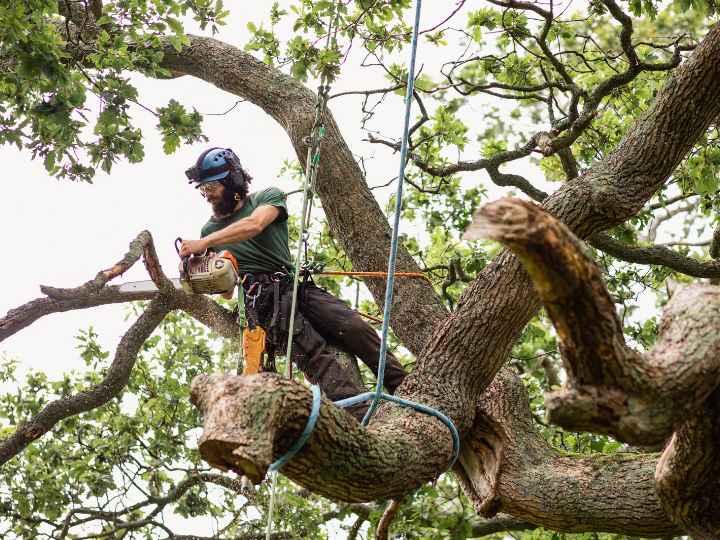
A professional tree removal team can assess the tree's condition, identify surrounding hazards and develop an appropriate removal plan. Depending on the situation, the work may involve sectional dismantling, specialised equipment or controlled removal to prevent further damage.
Do not assume that a chainsaw and basic protective equipment are sufficient for storm damaged trees. Tensioned branches, suspended trunks and unstable root systems can behave unpredictably during cutting. These jobs require suitable training, equipment and careful planning.
Document the Damage for Insurance Purposes
Before debris is removed, document the storm damage if it is safe to do so. Clear photographs and videos can help establish the extent of the damage and support an insurance claim.
Capture images of the affected tree, damaged structures, fallen branches and any visible damage to fences or vehicles. Record the date of the storm and keep copies of relevant correspondence, invoices and professional assessments.
Contact your insurance provider to understand what your policy covers. Depending on the policy and circumstances, cover may include certain storm damage repairs, debris removal or damage caused by fallen trees.
However, coverage varies between insurers and policies. Some policies distinguish between removing a tree that has fallen onto an insured structure and removing a tree that has fallen elsewhere on the property. Confirm the requirements before arranging non urgent work, unless immediate action is necessary to protect people or prevent further damage.
Keep People Away While Waiting for Removal
Storm damaged trees can remain hazardous for hours or even days after the initial weather event. Until a professional has assessed the situation, restrict access to the affected area.
Use a safe alternative entrance if a fallen tree blocks a driveway or pathway. Do not park vehicles beneath damaged branches or allow children to play near fallen trunks. If the tree is close to a neighbour's property, notify them about the potential risk where appropriate.
Avoid clearing large branches or cutting up fallen trunks yourself. Branches under pressure may spring back when cut, while suspended sections can shift suddenly. Leave complex debris removal to trained professionals.
If additional strong winds or heavy rain are forecast, follow local weather warnings and take sensible precautions to keep people away from vulnerable areas.
Arrange Follow Up Tree Care
Removing an immediately dangerous tree is only one part of storm recovery. Nearby trees may also have sustained damage that is not obvious from the ground.
Ask an arborist to inspect surrounding trees for cracked limbs, damaged roots, split unions and changes in stability. Some trees may only need selective pruning, while others could require ongoing monitoring or removal.
It is also worth checking drainage around the affected area and looking for soil erosion or exposed roots. These conditions can affect the stability of remaining trees, particularly after prolonged rainfall.
Regular inspections and appropriate pruning can help identify potential hazards before future storms arrive. Maintaining trees in suitable condition also helps protect nearby buildings, fences, gardens and outdoor spaces.
Frequently Asked Questions
1. What should I do first if a tree falls during a storm?
Keep everyone away from the tree and check for immediate dangers, particularly damaged powerlines and structural damage. Contact emergency services if there is an immediate threat to life, and arrange a professional assessment before attempting any removal.
2. Can I remove a storm damaged tree myself?
Small, detached branches may be manageable if they are safely accessible. However, avoid cutting unstable trees, large limbs, suspended branches or trunks under tension. These situations require professional equipment and expertise.
3. Does home insurance cover storm damaged tree removal?
Coverage depends on your policy and the circumstances of the damage. Some policies cover removal when a fallen tree damages an insured structure, while other removal costs may not be covered. Contact your insurer to confirm the applicable terms.
4. How quickly should I arrange storm damaged tree removal?
Arrange an assessment as soon as possible if the tree is unstable, blocks essential access or threatens people or buildings. Emergency situations should receive immediate attention, while less urgent work can be scheduled following a professional assessment.
 Spanish
 English
 Arabic
 French
 Portuguese
 Deutsch
 Turkish
 Dutch
 Italiano
 Russian
 Romaian
 Portuguese (Brazil)
 Greek