


Bulk Voice Call Service for Election Campaign Communication: A Practical Guide
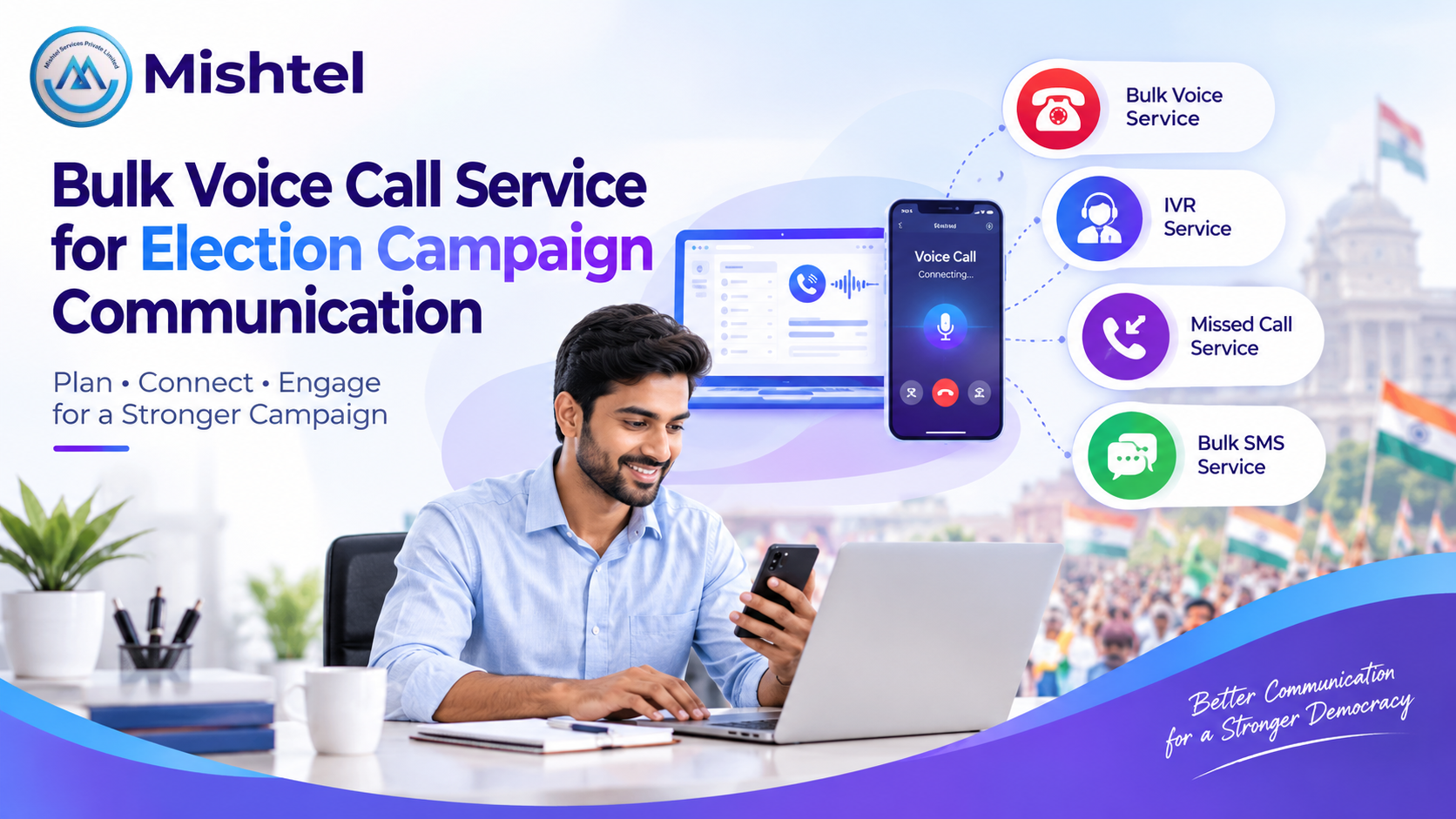
Election days move fast. A rally time changes, a venue shifts, or a volunteer briefing starts earlier than planned. Posters and word of mouth cannot always keep up. Teams need a simple way to share correct information with many people at the same time.
Mishtel is a B2B telecom company that helps Indian organisations reach people through voice and SMS tools. This guide explains how these tools can support election campaign communication, how to plan a clean workflow, and what to check before you start.
Why Voice Calls Work for Campaign Updates
Many people find it easier to listen than to read. A short call in a familiar language can feel personal and clear. A Bulk Voice Service sends one recorded message to many phone numbers through automated calls, so your team does not need to dial each person.
It suits short, factual updates such as meeting times, event reminders, and volunteer notices. It is not meant for long explanations. If a message needs more detail, use the call to point people to another channel.
How Automated Outbound Calling Works
OBD stands for Outbound Dialer. An OBD Service is the system that places the calls. It dials the numbers on your list and plays your recording when someone picks up.
A basic campaign has four parts: the audio file, a list of numbers you are allowed to call, a schedule, and a report afterward. Features like retries for unanswered calls depend on the provider and plan, so confirm what is included.
Plan Before You Press Send
Automated calls are fast, so mistakes also spread fast. A wrong date sent to thousands of people is hard to fix. A little planning protects your campaign:
-
Set one goal. Decide what listeners should know or do after the call.
-
Clean your list. Remove duplicates and wrong numbers, and include only people you may contact.
-
Group your contacts. Separate them by language, area, or role.
-
Test first. Send the message to a few team members to check sound and timing.
-
Pick sensible hours. Avoid early mornings and late nights.
Prepare a Clear Voice Message
The recording is the heart of the campaign. Say who is calling in the first few seconds. Share one main point, use short spoken sentences, and repeat the date, time, and place. Record in a quiet room, and ask a second person to check every fact before you send.
Aim for a message that people can follow on the first hearing, without needing to replay it.
Help Callers Reach the Right Answer
After a campaign call, some people will call back with questions. An IVR Service answers incoming calls with a simple voice menu, such as "Press 1 for meeting details, press 2 for the office address."
This reduces repeated questions to your staff. Keep the menu to three or four options, because long menus make callers give up.
Record Interest With One Ring
Some people do not want to fill out forms. A Missed Call Service lets them show interest by giving a missed call to a number. The call ends on its own, and the system records the number.
Teams use this for volunteer sign-ups and event registrations. It costs the caller nothing. Follow up only in line with consent and the rules that apply.
Give the Public One Number to Call
Supporters, volunteers, and local residents often need a quick way to ask questions. A Toll-Free Service gives them one number to call without paying for the call. Putting a single number on notices and posters also reduces confusion about who to contact.
Keep Calls From Being Missed
Campaign teams work from many places. A Call Forwarding Service sends incoming calls to another number, such as a second office or a team member's phone. If one person is busy, the call can reach someone else.
Let Website Visitors Ask for a Call
Some visitors prefer to talk instead of reading a long page. A Click to Call Service places a call button on your website. The visitor enters a number, and the system connects them with your team. It works best when someone is ready to answer.
Bring Teams Together on One Line
Coordinators often need to brief many people at once. A Conference Service lets several participants join one phone call. Anyone with a phone can take part, so district leads and booth workers can get the same briefing without travelling.
Play the Same Message Every Time
Sometimes callers need a standard answer, like event timings or a helpline notice. A Playback Service plays a recorded message to people who call in. It keeps the information the same for every caller and frees your staff for harder questions.
Follow Up With Interested Contacts
Not every contact responds the first time. A Convincing Campaign Service supports follow-up call campaigns for people who have shown interest or registered. Keep these calls informative and respectful, and stop contacting anyone who asks you to.
Add Text Messages to the Mix
No single channel reaches everyone. Some people miss calls, while others like details they can save. A Bulk SMS Service can send the address, date, and time in writing after a voice call. Keep both messages the same so people know which one to trust.
How to Choose a Provider
Choose a provider that fits your workflow, not just your budget. Compare these points:
-
Audio and language options: Can you upload your own recording in the languages you need?
-
Scheduling: Can you control dates and call times?
-
Reports: What data do you get, and how soon?
-
Capacity: Can the system handle your expected volume?
-
Support: Who can you reach on busy campaign days?
-
Data safety: How are your lists stored and who can see them?
-
Pricing: Ask for a written quote based on your real numbers.
Be careful with any provider that promises guaranteed results or says rules do not apply to you.
Why Consider Mishtel
Mishtel works with Indian businesses and organisations that need to reach many people through voice and SMS. As a local B2B company, it understands regional needs such as language and call timing. When you talk to the team, share your purpose, approximate volume, languages, and schedule, so they can suggest options that fit. Confirm current features directly before you decide.
Responsible Election and Telecom Communication
Election-related calls and messages carry extra responsibility. Rules can change, and they may depend on the message type, audience, timing, and election stage. Automated calls are not automatically allowed in every situation.
Before you launch, check these on official sources:
-
Election Commission of India (ECI) guidance on political communication, approvals, and restricted periods.
-
Telecom requirements on registration, consent, and commercial communication.
-
Contact permissions. Call only people you may contact, and stop when asked.
-
Timing. Confirm which hours and days are suitable.
If you are unsure, speak to a qualified legal adviser. This article offers general information, not legal advice.
Final Thoughts
A well-planned voice workflow helps campaign teams share announcements and handle routine communication without long hours of manual calling. Start with a clear message and a permitted contact list, test your setup, review your reports, and follow the rules.
To discuss your needs, explore what Mishtel offers and contact the team.
Frequently Asked Questions
1. What is a bulk voice call service?
It sends a pre-recorded message to many phone numbers through automated calls. Organisations use it for announcements, reminders, and notices.
2. What does OBD mean?
OBD means Outbound Dialer. It is the system that places automated calls and plays your recording when someone answers.
3. Should I use voice calls or SMS?
Voice suits short spoken updates. SMS suits details people want to save. Many teams use both together.
4. How long should a recorded message be?
Keep it short and focused on one main point, so listeners can follow it on the first hearing.
5. How can people respond to a voice campaign?
Depending on your setup, they can press a key, call a number, or give a missed call. Ask your provider which options are available.
6. Can small teams use these services?
Yes. You can start with a small, permitted list and expand later as your needs grow.
7. What should I check before sending election-related calls?
Check current ECI guidance and telecom requirements. Confirm approvals, timing, consent, and permission to contact each number.
 Greek
 English
 Arabic
 French
 Spanish
 Portuguese
 Deutsch
 Turkish
 Dutch
 Italiano
 Russian
 Romaian
 Portuguese (Brazil)