


How Can Hotels and Restaurants Source Table and Bath Linen More Sustainably?
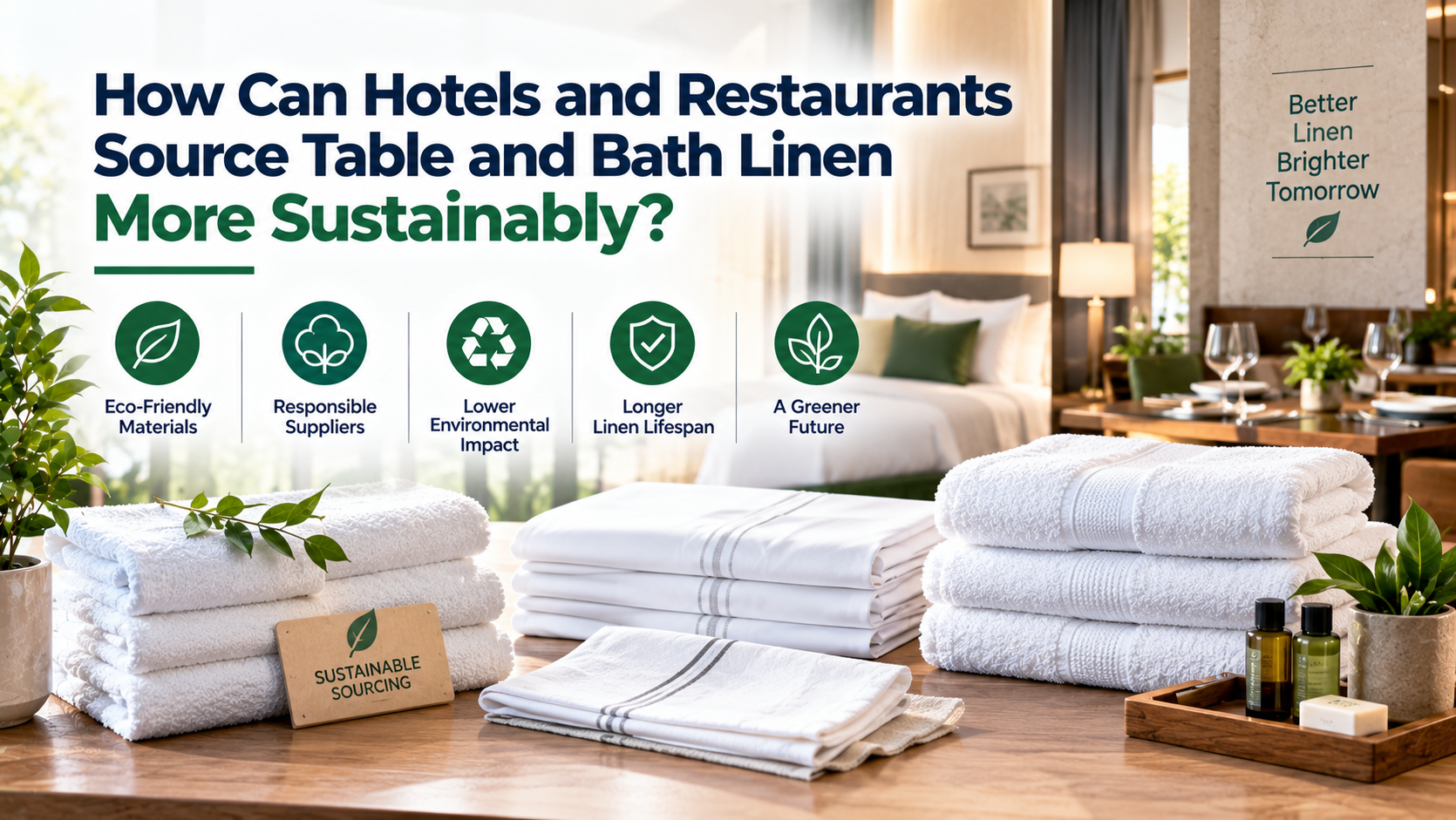
Sustainability questions now come up regularly in hospitality procurement, whether from corporate guidelines, tourism standards, or guests who ask where products come from. Linen is a sensible place to start, since it is bought in volume and replaced on a cycle. For teams sourcing sustainable linen in the UAE, the difficulty is rarely a lack of options. It is knowing which claims reflect real production practices and which are marketing language. This guide explains what sustainable sourcing means for table linen and bath linen, which certifications are worth asking about, and how durability connects to environmental impact.
Where the Environmental Impact of Linen Comes From
Cotton is a water- and land-intensive crop, and conventional cultivation typically involves synthetic fertilizers and pesticides. Dyeing and finishing add further impact through water use and chemical treatment. Once linen is in service, commercial laundering (water, heat, and detergent) accounts for a large share of its lifetime footprint, often more than the production stage for items washed hundreds of times.
This matters for sourcing decisions. Reducing impact is not only about choosing a different fiber. It also involves how the fabric is produced, how long it lasts, and how it is laundered.
Certifications Worth Asking About
Several recognized standards address different parts of the supply chain:
- GOTS (Global Organic Textile Standard) covers organic fiber content and environmentally and socially responsible processing across the production chain.
- OEKO-TEX Standard 100 tests finished textiles for harmful substances. It speaks to product safety rather than organic farming.
- Better Cotton Initiative (BCI) supports improved farming practices, though it does not mean the cotton is organic.
These standards measure different things, so a supplier citing one is not automatically covering the others. Buyers should ask for certificate numbers or documentation and confirm what each one actually certifies. A supplier that can explain the difference between OEKO-TEX and GOTS clearly is usually more reliable than one using general terms like "eco-friendly."
Durability Is a Sustainability Factor
The most sustainable towel or tablecloth is often the one that does not need replacing early. Linen that lasts 200 washes instead of 100 halves the number of units produced, shipped, and disposed of over the same period. This is why fabric quality, stitching, and colorfastness belong in a sustainability discussion, not only a cost one.
When comparing bath towels across suppliers, longer-staple cotton and reinforced hems tend to support a longer service life. Buyers can also ask for expected wash-cycle ratings and wash-test results, then weigh them alongside any sustainability certification.
Laundry Practices That Reduce Footprint
Because laundering is such a large share of a linen's lifetime impact, a few operational changes can matter as much as the purchasing decision:
- Washing at the lowest temperature that still meets hygiene requirements
- Running full, correctly sized loads rather than overloading or underloading
- Using the right detergent dose to avoid residue and extra rinse cycles
- Avoiding over-drying, which wastes energy and weakens fibers
These practices extend fabric life while cutting water, energy, and chemical use, so they support both cost and sustainability goals.
Packaging, Transport, and Local Availability
Smaller factors still add up. Suppliers can reduce waste through recyclable or minimal packaging, and buyers can reduce transport emissions by consolidating orders instead of placing frequent small shipments. Working with a supplier that holds stock in the UAE can shorten transport distances for reorders, though this is one consideration among several and not a guarantee of lower overall impact.
Questions Buyers Can Ask a Supplier
A short, consistent list makes supplier comparisons easier and keeps the conversation specific:
- Which certifications apply to this product, and can documentation be provided?
- What is the expected wash-cycle lifespan under commercial laundering?
- Where is the fabric dyed and finished, and are wastewater practices documented?
- Is packaging recyclable, and can orders be consolidated to reduce shipments?
- Can a sample be tested in our own laundry before a full order?
Clear, documented answers are a good sign. Vague or inconsistent answers suggest more checking is needed before a large purchase. Asking the same questions of every supplier also makes it easier to compare options fairly, because each one is judged on the same criteria rather than on how well it presents itself.
Setting Realistic Sustainability Goals
Few properties can switch their entire inventory overnight. A practical approach is to start with the categories that are most visible or fastest-turning, such as bath towels or everyday bath linen, and set criteria for future purchases: documented certifications, stated wash-cycle durability, and responsible packaging. Reviewing results after a few reorders gives a clearer picture than aiming for a perfect program at once.
Frequently Asked Questions
1. What is the difference between organic cotton and OEKO-TEX certified linen? Organic cotton, such as GOTS-certified fiber, concerns how the cotton is grown and processed. OEKO-TEX Standard 100 tests the finished textile for harmful substances and does not by itself indicate organic farming.
2. Is sustainable linen less durable than conventional linen? Not by default. Durability depends on fiber length, weave, and construction rather than whether the cotton is organic or conventional. Buyers should check wash-cycle ratings regardless of sustainability claims.
3. How can buyers check whether a "sustainable" claim is genuine? Ask for certificate numbers or documentation from a recognized standard and confirm what the certificate covers. General terms like "eco-friendly" with no supporting documents are hard to verify.
4. Does laundering matter more than the fabric itself for environmental impact? For items washed hundreds of times, laundering can account for a large share of lifetime impact, so wash temperature, load size, and detergent use are worth managing alongside purchasing choices.
5. Does buying locally stocked linen automatically reduce environmental impact? Not automatically. Shorter transport distances can help, but fiber, production methods, durability, and laundry practices usually matter more than where a product ships from.
6. Where should a property start if it wants to improve linen sustainability? Start with high-turnover categories like bath towels, set purchasing criteria around certifications and durability, and review results over a few reorders before expanding the approach.
Final Thoughts
Sustainable linen sourcing combines several decisions: verified certifications, fabric that lasts, efficient laundering, and sensible ordering. No single label covers all of them, so asking suppliers specific questions and checking documentation gives better results than relying on broad claims. Properties that treat durability and laundry practice as part of sustainability often reduce both environmental impact and replacement costs over time.
 Romaian
 English
 Arabic
 French
 Spanish
 Portuguese
 Deutsch
 Turkish
 Dutch
 Italiano
 Russian
 Portuguese (Brazil)
 Greek