


How Mobile Apps Help Businesses Save Time and Money
Introduction
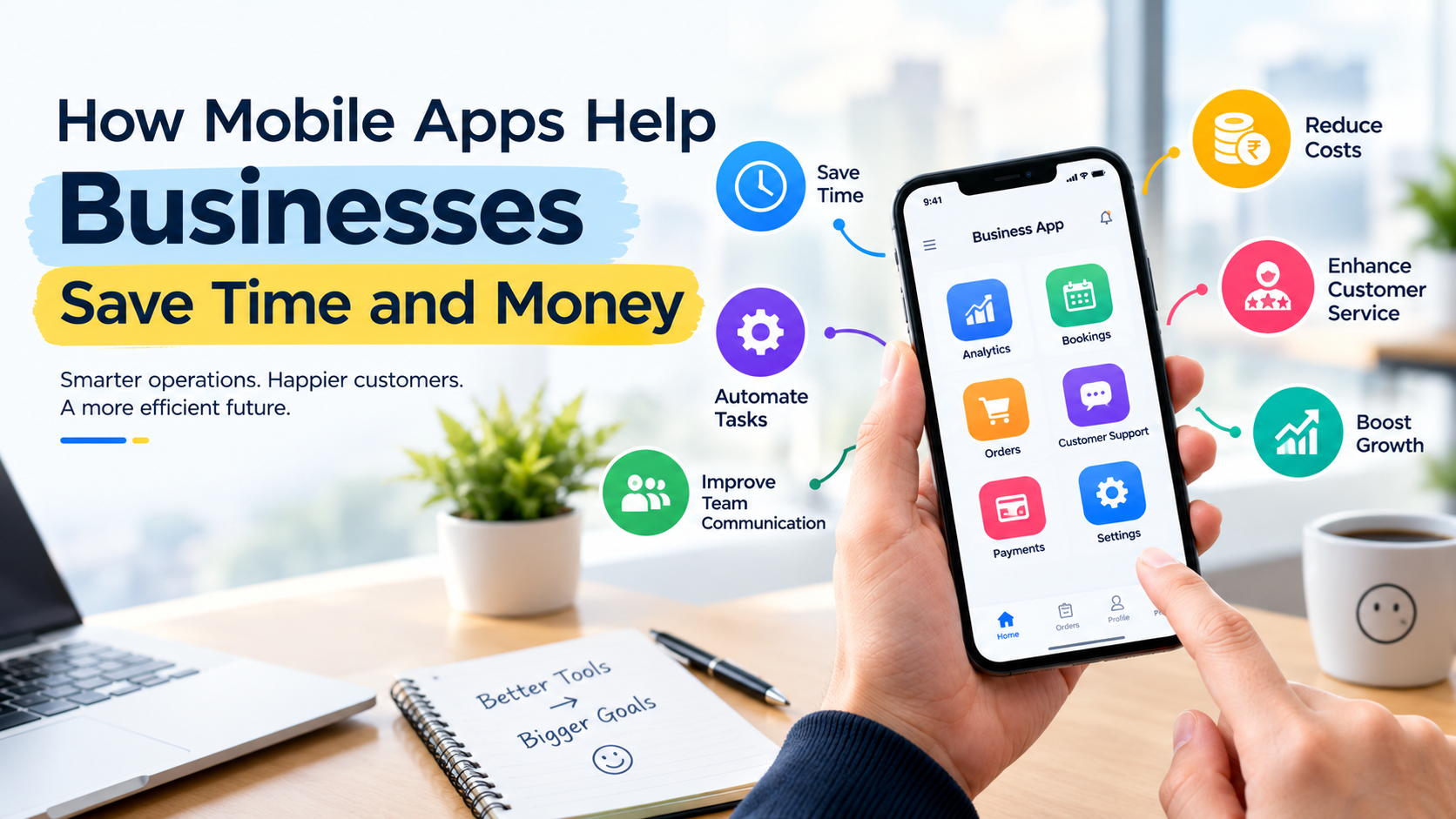
In today's digital world, businesses are constantly looking for ways to reduce expenses, save time, and improve productivity. Whether a company is a small startup or an established organisation, managing daily operations efficiently is essential for long-term growth. Mobile applications have become useful tools that help businesses simplify tasks, communicate with customers, and manage services more effectively.
With a well-designed mobile app, businesses can automate repetitive activities, manage orders, schedule appointments, process payments, and provide customer support through a single digital platform. These features can reduce manual work and help employees focus on more important responsibilities.
Mobile apps development can also make services more accessible to customers, allowing them to complete tasks without unnecessary calls, paperwork, or physical visits. When planned according to real business needs, mobile applications can help organisations use their resources more efficiently and control avoidable costs.
What Are Mobile Apps for Businesses?
Business mobile apps are applications designed to help companies manage their operations, deliver services, and connect with customers through smartphones and tablets.
These applications can be developed for Android, iOS, or both platforms, depending on the business's target audience and requirements.
For example, a retail business can use a mobile app to manage orders and display products, while a service-based company can use one to schedule appointments and communicate with customers. An internal business app may help employees track tasks, share updates, and access important information.
The main purpose of a business mobile app is to make everyday activities more convenient, organised, and efficient.
How Mobile Apps Help Businesses Save Time and Money
1. Automate Repetitive Business Tasks
Many businesses spend valuable time on repetitive activities such as sending reminders, recording orders, updating customer information, and scheduling appointments. Mobile apps can automate some of these tasks and reduce the need for manual work.
Key benefits:
-
Less paperwork: Store and manage information digitally.
-
Faster task completion: Automate routine activities such as reminders and confirmations.
-
Improved productivity: Allow employees to focus on higher-value work.
For example, a salon can use a booking app to manage appointments and send automatic reminders, reducing the time staff spend handling bookings manually.
2. Reduce Administrative Costs
Managing paperwork, printing documents, maintaining separate records, and handling manual processes can increase operating expenses. Mobile applications can help businesses move many activities to digital systems.

Key benefits:
-
Digital records: Reduce dependence on printed documents.
-
Simplified administration: Keep important information organised in one place.
-
Fewer manual errors: Reduce mistakes caused by repeated data entry.
Although app development and maintenance involve costs, digital workflows may help businesses reduce some ongoing administrative expenses over time.
3. Improve Communication Between Employees
Clear communication is essential for businesses with multiple employees, departments, or locations. Mobile apps can provide a shared space for updates, task assignments, schedules, and important documents.
Key benefits:
-
Quick updates: Share information without lengthy communication chains.
-
Better coordination: Help employees understand their responsibilities.
-
Easier access: Allow authorised team members to view relevant information when needed.
For example, a delivery company can use an internal app to share delivery assignments and status updates, helping staff coordinate their work more efficiently.
4. Improve Customer Service
Customers often expect quick answers and convenient ways to access services. Mobile apps can help businesses provide information, manage enquiries, and support customers without requiring every interaction to be handled manually.
Key benefits:
-
Self-service options: Allow customers to check information and complete basic tasks independently.
-
Faster responses: Use automated replies for common questions.
-
Order tracking: Let customers check order progress without repeatedly contacting staff.
For example, an e-commerce app can allow customers to track deliveries and review order details themselves, reducing routine enquiries for the support team.
5. Simplify Payments and Order Management
Manual payment processing and order tracking can take time and create opportunities for errors. Mobile apps can bring several steps together, from product selection to payment confirmation and order updates.
Key benefits:
-
Convenient payments: Integrate suitable digital payment methods.
-
Organised orders: Keep order details and status updates accessible.
-
Faster transactions: Reduce unnecessary steps in the purchasing process.
For example, a restaurant can accept orders through its app, send order confirmations, and provide status updates without relying entirely on phone calls.
6. Support Better Inventory Management
Businesses that sell physical products need to monitor stock levels to avoid shortages and unnecessary overstocking. A mobile app connected to an inventory system can help authorised employees check stock and update records.
Key benefits:
-
Stock visibility: Check product availability more easily.
-
Faster updates: Record stock changes as products are sold or received.
-
Better planning: Use inventory information to support purchasing decisions.
For example, a small retail store can use a mobile inventory app to identify products that need restocking, reducing the time spent checking shelves and separate records.
7. Enable Remote Work and Flexible Operations
Mobile applications can allow employees and business owners to access authorised tools and information when they are away from the office. This can be useful for field staff, delivery teams, sales representatives, and businesses operating across multiple locations.
Key benefits:
-
Remote access: View relevant information from supported devices.
-
Faster reporting: Submit updates while working in the field.
-
Reduced delays: Share information without always returning to the office.
Businesses should use appropriate access controls and security measures to protect company information when employees work remotely.
8. Improve Marketing and Customer Engagement
Mobile apps give businesses another way to share promotions, introduce new products, and communicate with customers. Instead of relying entirely on printed advertisements or paid campaigns, companies can connect with existing app users through relevant updates.
Key benefits:
-
Targeted promotions: Share offers that match customer interests, with appropriate consent.
-
Direct communication: Inform users about new products and services.
-
Customer loyalty: Introduce rewards and membership benefits to encourage repeat purchases.
For example, a clothing store can notify customers about a new collection or a seasonal sale through its mobile app. Promotions should remain useful and not overwhelm users with excessive notifications.
9. Use Business Data to Make Better Decisions
Mobile apps can collect useful operational information, such as order activity, appointment trends, and feature usage. When analysed responsibly, this information can help businesses identify opportunities to improve their processes.
Key benefits:
-
Performance tracking: Understand which services are frequently used.
-
Cost awareness: Identify processes that may be taking unnecessary time or resources.
-
Better planning: Use trends to guide decisions about stock, staffing, and services.
For instance, a business can review booking patterns to understand its busiest hours and organise employee schedules more effectively.
10. Reduce Errors and Avoid Unnecessary Rework
Manual processes can lead to incorrect records, missed appointments, duplicate entries, and communication mistakes. A well-designed mobile app can help standardise workflows and reduce these issues.
Key benefits:
-
Accurate records: Keep business information organised.
-
Automated confirmations: Reduce missed bookings and unclear order details.
-
Consistent workflows: Guide users through important steps.
However, apps should be tested carefully and maintained regularly. Poorly designed systems can introduce new problems rather than solve existing ones.
How to Choose the Right Mobile App for Your Business
Not every business needs a complex mobile application. The right solution depends on the company's goals, budget, employees, and customers.

Consider these important factors before investing in mobile app development:
-
Identify your biggest challenge: Determine whether you need to improve bookings, manage inventory, process orders, or communicate with customers.
-
Choose essential features: Start with functions that solve real problems instead of adding unnecessary complexity.
-
Set a realistic budget: Include design, development, testing, hosting, security, and maintenance costs.
-
Consider integration: Check whether the app needs to connect with existing accounting, inventory, or customer management systems.
-
Measure results: Track time saved, error reduction, customer satisfaction, and overall operating costs.
Starting with essential features and expanding when needed can help businesses manage their investment more effectively.
How Warrgyiz Morsch Can Help
Warrgyiz Morsch provides IT, software, web development, and mobile app development services for businesses looking to strengthen their digital presence. A mobile application designed around specific business needs can help streamline workflows, improve customer access, and support more efficient operations.
Businesses can explore mobile app development services to learn more about building applications tailored to their requirements.
Conclusion
Mobile apps can help businesses save time and money by automating repetitive tasks, simplifying communication, improving customer service, managing inventory, and making business information easier to access. They can also support digital marketing, reduce certain administrative expenses, and help companies make better-informed decisions.
However, the benefits depend on choosing the right features and implementing the app effectively. Businesses should consider development and maintenance costs alongside the potential savings, then measure the results after launch.
By focusing on genuine business challenges and providing a convenient experience for employees and customers, mobile applications can become valuable tools for improving productivity and supporting long-term growth.

 English
 Arabic
 French
 Spanish
 Portuguese
 Deutsch
 Dutch
 Italiano
 Russian
 Romaian
 Portuguese (Brazil)
 Greek