


Why Do Single IGBTs Matter in Efficient Power Electronics?
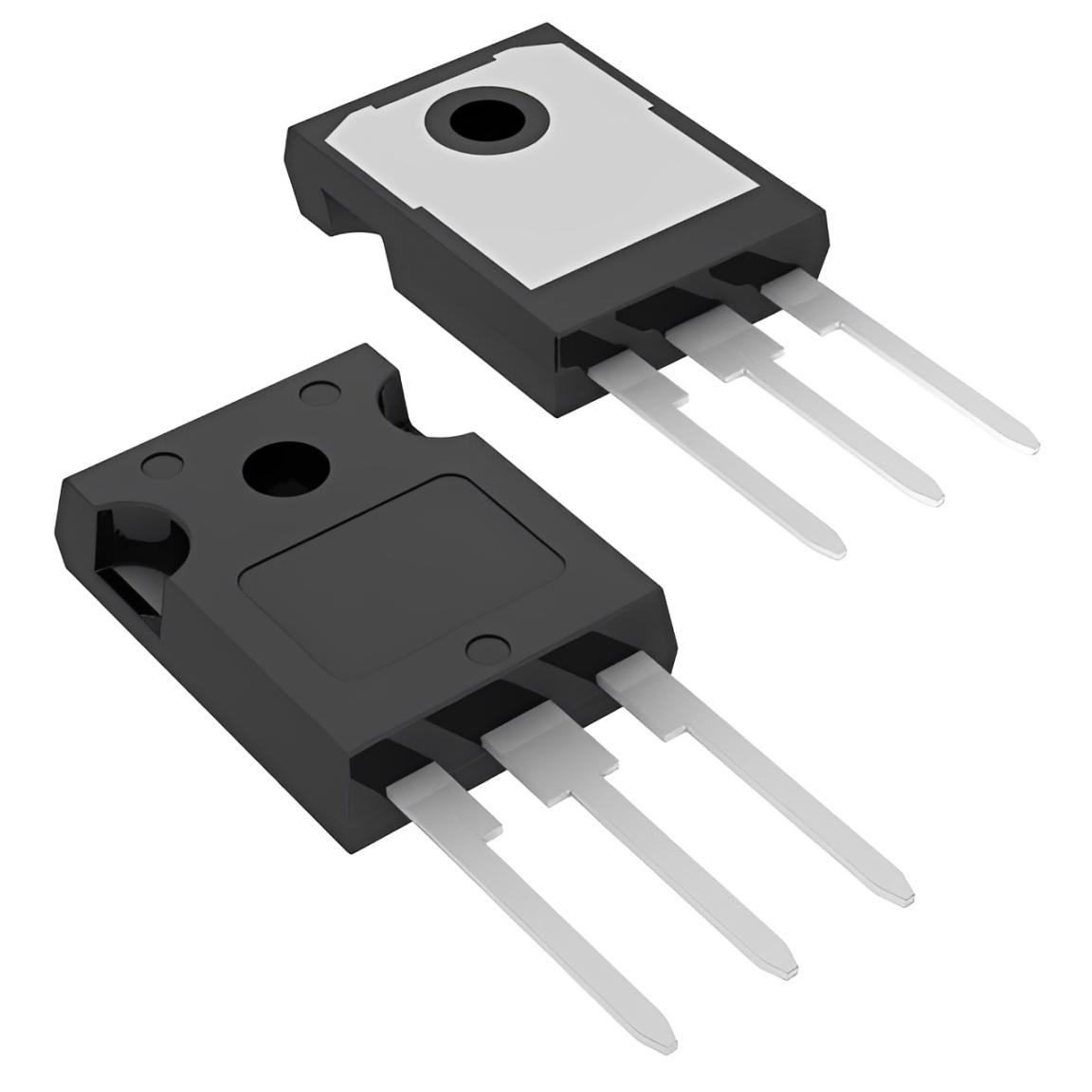
Single IGBTs are key semiconductor components used in power electronic systems that need efficient switching, reliable control, and strong performance under high electrical loads. IGBT stands for Insulated Gate Bipolar Transistor, and this device combines characteristics of both MOSFET and bipolar transistor technologies.
The main advantage of Single IGBTs is their ability to control large amounts of electrical power using a comparatively small gate signal. This makes them especially valuable in industrial drives, power converters, renewable energy systems, electric transport, heating equipment, and other applications where power must be managed precisely.
As modern systems demand better efficiency, smaller designs, and more dependable switching, Single IGBTs continue to provide a practical solution for many power management challenges.
What Makes a Single IGBT an Effective Power Switch?
A Single IGBT is designed to act as a controlled electronic switch in a high-power circuit. Instead of using moving contacts, the device switches current through semiconductor action.
This provides several important benefits:
-
Fast electronic response
-
High voltage handling
-
Strong current capacity
-
Simple gate control
-
Reduced mechanical wear
-
Precise switching behaviour
-
Compatibility with digital control circuits
The device can be turned on and off using signals from a gate driver, allowing engineers to regulate electrical power at high speed.
This is particularly useful in systems where power delivery must change rapidly according to operating conditions.
How Does a Single IGBT Combine Different Semiconductor Technologies?
The design of a Single IGBT brings together useful features from two semiconductor families.
The gate section behaves in a similar way to a MOS-controlled device, meaning it can be operated with voltage rather than requiring continuous high input current.
At the same time, the main current path provides characteristics similar to a bipolar transistor, allowing the device to handle significant current.
This combination offers:
-
Convenient gate control
-
High current capability
-
Good voltage blocking
-
Efficient conduction
-
Strong suitability for power conversion
Because of these properties, Single IGBTs are especially useful when designers need more power capability than smaller switching transistors can provide.
Why Are Single IGBTs Common in Industrial Machinery?
Industrial machinery often operates with motors, pumps, compressors, heaters, conveyors, and other electrical loads that need controlled power.
Single IGBTs help regulate this power efficiently.
In industrial control systems, they can be used to switch current according to commands from a controller or drive system. This allows machinery to respond more precisely to changing production requirements.
Benefits can include:
-
Improved motor speed control
-
Reduced energy consumption
-
Better starting performance
-
Lower mechanical stress
-
Smoother equipment operation
-
More accurate process control
-
Improved system efficiency
This makes Single IGBTs useful in automated factories and other high-demand industrial environments.
How Do Single IGBTs Support DC to AC Conversion?
One of the most important applications of Single IGBTs is inverter technology.
An inverter converts direct current into alternating current. This process is essential in many systems, including solar installations, backup power equipment, electric motor drives, and battery-based energy systems.
Single IGBTs switch DC power in carefully controlled patterns to create the required AC waveform.
They help support:
-
Controlled output frequency
-
Adjustable voltage
-
Reliable power transfer
-
Efficient conversion
-
Stable switching performance
The accuracy of the switching process has a major effect on inverter efficiency and output quality.
What Is the Importance of Switching Timing?
Switching timing determines when the IGBT changes between conducting and non-conducting states.
If the switching is poorly controlled, the device may produce excessive heat, electrical noise, or unwanted energy loss.
Precise timing can improve:
-
Efficiency
-
Waveform quality
-
Motor control
-
Thermal performance
-
Electromagnetic compatibility
-
Overall system stability
Gate drivers and control circuits are therefore designed carefully to ensure that switching occurs at the correct moment.
In systems with multiple switching devices, timing is even more important because unwanted overlap can create short-circuit conditions.
How Do Single IGBTs Perform in High-Current Applications?
Single IGBTs are widely selected for circuits that carry substantial electrical current.
Their internal structure supports high current flow while maintaining practical control requirements.
However, current rating must always be considered together with other factors, including:
-
Ambient temperature
-
Cooling method
-
Switching frequency
-
Duty cycle
-
Voltage level
-
Thermal resistance
-
Package type
A device may have a high maximum current rating, but it can only achieve that performance safely if heat is controlled effectively.
This is why thermal design is closely linked to current capability.
What Is the Role of Thermal Resistance?
Thermal resistance describes how easily heat can move away from the semiconductor junction.
Lower thermal resistance generally allows heat to escape more effectively, helping keep the IGBT within a safe operating temperature.
Thermal resistance is influenced by:
-
Package design
-
Heat sink selection
-
Mounting quality
-
Thermal compound
-
Cooling airflow
-
PCB construction
If heat cannot escape efficiently, the internal temperature may rise even when electrical ratings appear acceptable.
A well-designed thermal path helps maintain both performance and reliability.
Why Are Single IGBTs Used in Renewable Energy Systems?
Renewable energy systems require frequent conversion and regulation of electrical power.
Solar panels, for example, produce DC electricity that often needs to be converted into AC before it can be used by standard equipment or supplied to the electrical grid.
Single IGBTs can form part of the switching stage inside these converters.
They are useful in:
-
Solar inverters
-
Wind power converters
-
Battery storage equipment
-
Grid interface systems
-
Energy management platforms
Efficient switching helps reduce power loss and ensures that a larger proportion of generated energy can be used effectively.
How Do Single IGBTs Help in Electric Vehicle Power Systems?
Electric vehicles contain multiple power conversion stages.
Energy stored in the battery must be controlled before it can be used by the traction motor, charging system, and auxiliary electronics.
Single IGBTs can be used in:
-
Motor inverters
-
Power converters
-
Charging equipment
-
Auxiliary power systems
-
Energy control circuits
In traction systems, switching performance directly affects motor control and energy efficiency.
Reliable power semiconductor devices are therefore critical to electric vehicle performance.
What Is the Difference Between Conduction Loss and Switching Loss?
Two main types of loss occur in Single IGBTs.
Conduction loss happens when the device is turned on and carrying current. Because the IGBT is not a perfect conductor, some voltage remains across it.
Switching loss occurs while the device moves between on and off states.
Both losses create heat.
The total power loss depends on:
-
Current level
-
Switching frequency
-
Gate drive conditions
-
Junction temperature
-
Saturation voltage
-
Turn-on energy
-
Turn-off energy
Designers must balance these factors to achieve acceptable efficiency.
Why Does Switching Frequency Affect Design?
A higher switching frequency can improve waveform control and reduce the size of some passive components.
However, increasing switching frequency also increases the number of switching events per second, which can raise switching losses.
This means designers must find a suitable balance between:
-
Efficiency
-
Output quality
-
Heat generation
-
Component size
-
Electrical noise
The best frequency depends on the application and operating environment.
A motor controller, inverter, and industrial power supply may all require different switching strategies.
How Are Single IGBTs Protected Against Electrical Faults?
High-power circuits can experience unexpected faults such as excessive current, short circuits, voltage spikes, or overheating.
Single IGBTs should therefore be protected using suitable circuit techniques.
Common methods include:
-
Overcurrent sensing
-
Desaturation protection
-
Voltage clamping
-
Short-circuit detection
-
Thermal monitoring
-
Gate protection
-
Snubber circuits
-
Surge suppression
Fast protection is important because semiconductor devices can be damaged quickly if operating limits are exceeded.
Why Is Package Selection Important?
Single IGBTs are manufactured in different package types to suit various power levels and mounting requirements.
The package influences:
-
Heat dissipation
-
Electrical insulation
-
PCB compatibility
-
Mechanical installation
-
Current capacity
-
Serviceability
Compact packages may suit board-level applications, while larger power packages may be designed for direct mounting to substantial heat sinks.
Selecting the right package helps simplify both electrical and mechanical design.
Where Else Are Single IGBTs Commonly Found?
Beyond motor drives and renewable energy, Single IGBTs are used in many other systems.
These include:
-
Welding equipment
-
Uninterruptible power supplies
-
Industrial heating systems
-
Railway traction equipment
-
High-power chargers
-
Power conditioning systems
-
Robotics
-
Factory automation
-
Energy storage systems
-
Industrial converters
This broad range of uses demonstrates how adaptable IGBT technology can be.
What Should Engineers Consider Before Selecting a Single IGBT?
Choosing the correct device requires more than comparing one specification.
Engineers should consider:
-
Maximum operating voltage
-
Continuous and peak current
-
Switching frequency
-
Junction temperature
-
Cooling requirements
-
Gate drive voltage
-
Package style
-
Switching losses
-
Conduction losses
-
Protection requirements
A suitable safety margin should also be included to account for transients and unexpected operating conditions.
Selecting a device too close to its maximum rating can reduce long-term reliability.
How Can Single IGBTs Improve System Reliability?
Reliable power systems depend on components that remain stable under repeated electrical and thermal stress.
Single IGBTs can support long-term performance when used with appropriate cooling, protection, and control.
Good reliability practices include:
-
Maintaining safe temperature limits
-
Avoiding excessive current
-
Controlling voltage transients
-
Using suitable gate drivers
-
Providing sufficient cooling
-
Applying proper protection circuits
-
Following safe operating area limits
These measures help prevent premature failure and improve equipment uptime.
What Is the Future of Single IGBTs?
Power electronics are continuing to evolve as industries adopt more automation, electrification, and renewable energy.
Single IGBTs remain relevant because they offer a proven balance of cost, performance, switching capability, and reliability.
Future development is likely to focus on:
-
Lower power losses
-
Improved thermal performance
-
Higher power density
-
Faster switching
-
Better packaging
-
Improved ruggedness
-
More compact designs
These advances will help support increasingly efficient power systems.
Conclusion
Single IGBTs are important semiconductor devices for applications that require reliable control of high electrical power. Their combination of voltage-controlled operation, strong current handling, high-voltage capability, and practical switching performance makes them suitable for many industrial and energy-related systems.
They are widely used in motor drives, renewable energy converters, electric vehicles, industrial power supplies, welding systems, traction equipment, and energy storage applications.
Their successful operation depends on careful device selection, effective thermal management, suitable gate driving, proper switching control, and fast fault protection.
As industries continue to seek higher efficiency and better power management, Single IGBTs will remain a valuable technology for modern power electronic design.

 Arabic
 French
 Spanish
 Portuguese
 Deutsch
 Turkish
 Dutch
 Italiano
 Russian
 Romaian
 Portuguese (Brazil)
 Greek