


Hidden Fire Risks: Why Must Fire Extinguishers Be Routinely Maintained to Ensure Safety?
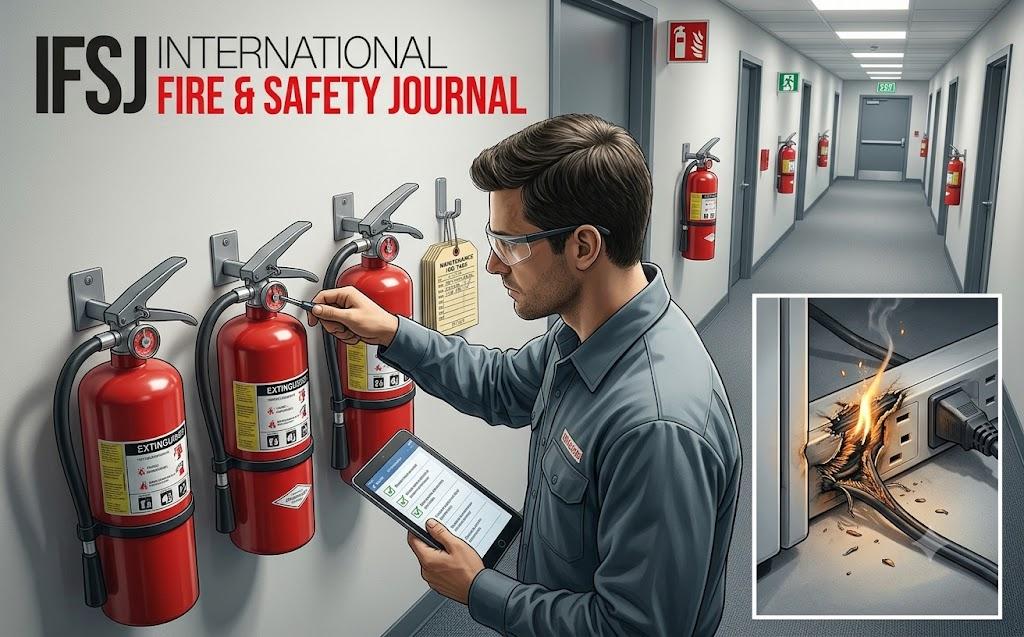
Fire emergencies can develop within seconds, leaving little time to identify equipment problems or find an alternative way to control a developing fire. A portable fire extinguisher can help control a small, manageable fire when the correct equipment is available and used safely. However, simply installing an extinguisher does not guarantee that it will work when required. Its condition, accessibility and readiness must be checked regularly.
Over time, pressure can fall, components can deteriorate, safety seals can become damaged and discharge mechanisms can develop faults. Understanding why must fire extinguishers be routinely maintained helps property owners, employees and building managers recognise the importance of regular inspections and servicing. Some problems are difficult to identify without a careful inspection, making routine maintenance essential for detecting faults before they create additional risks.
Routine maintenance supports effective fire prevention by ensuring that emergency equipment remains in suitable working condition. It also encourages a proactive approach to fire protection, reminding everyone that extinguishers require continuous attention rather than occasional checks.
1. Detecting Problems Before an Emergency
A fire extinguisher may appear perfectly normal while containing a fault that affects its performance. A damaged hose, obstructed nozzle or defective operating mechanism can prevent the extinguishing agent from being discharged properly.
Regular inspections help identify visible defects and determine whether professional servicing is necessary. Inspectors can check the equipment's physical condition, confirm that operating instructions remain readable and ensure that the extinguisher is positioned where it can be reached quickly.
The importance of understanding why must fire extinguishers be routinely maintained becomes especially clear when considering how little time may be available during a fire. Detecting a problem during a scheduled inspection is considerably safer than discovering it during an emergency.
Checks should also identify missing safety pins, broken tamper seals, evidence of leakage and signs that an extinguisher has been used or interfered with. Any questionable unit should be assessed promptly by a competent person.
2. Maintaining Correct Pressure and Discharge Performance
Many portable extinguishers rely on stored pressure or another pressurisation arrangement to discharge their contents. If the pressure is outside the permitted operating range, the extinguisher may not deliver the agent effectively.
Where a pressure gauge is fitted, it should be checked according to the manufacturer's instructions. A reading outside the acceptable range requires further attention rather than an assumption that the equipment remains serviceable.
However, a satisfactory gauge reading does not prove that every component is functioning correctly. Internal deterioration, damaged seals or an obstructed discharge path may not be apparent during a quick visual check.
Professional servicing can identify issues that routine visual inspections cannot confirm. The appropriate service procedure depends on the extinguisher design, its condition and applicable requirements.
3. Identifying Corrosion, Damage and Wear
Extinguishers may be exposed to humidity, dust, vibration, temperature changes, chemicals or accidental impacts. These conditions can gradually affect the cylinder, hose, valve assembly, mounting bracket and other components.
Corrosion deserves particular attention because it can compromise the integrity of a cylinder. Dents, cracks, severe rust, damaged threads and evidence of leakage should never be ignored.
Routine inspection allows these warning signs to be identified early. Equipment installed near industrial processes, kitchens, loading areas or outdoor locations may need additional attention because its environment can accelerate deterioration.
Cleaning should follow the manufacturer's guidance. Abrasive methods or unsuitable chemicals may damage labels, protective coatings or components, making an otherwise straightforward maintenance task counterproductive.
4. Ensuring the Extinguisher Is Suitable and Accessible
An extinguisher must be appropriate for the fire hazards present in its location. Different extinguishing agents are designed for different fire types, and an unsuitable agent can be ineffective or dangerous.
For example, electrical equipment, cooking oils, combustible metals and ordinary solid materials may require different fire-control approaches. The correct selection depends on the specific hazard and the applicable safety guidance.
Routine maintenance programmes should therefore consider more than mechanical condition. They should also confirm that extinguishers remain correctly identified, visible, accessible and positioned in suitable locations.
Furniture, stored materials, temporary partitions or deliveries can obstruct equipment without anyone deliberately moving it. Regular checks help restore access and identify changes in building use that may require a review of fire protection arrangements.
5. Supporting a Reliable Fire Safety Routine
A documented maintenance programme makes responsibilities clearer. It can specify who performs visual checks, how defects are reported, when professional servicing is due and how equipment taken out of service is managed.
Understanding why must fire extinguishers be routinely maintained also helps employees recognise that fire safety is a shared responsibility. Staff members should know how to report a missing extinguisher, damaged seal, unusual pressure reading or obstruction.
A simple inspection record can include the equipment location, identification number, inspection date, visible condition, corrective action and the name of the responsible person. More detailed service records should document work completed by a competent technician.
Records are useful only when they lead to action. A checklist showing a defect is not sufficient if the problem remains unresolved.
6. Reducing Disruption and Avoidable Costs
Maintenance can help identify minor faults before they develop into more serious equipment problems. Early intervention may reduce avoidable replacement costs and limit the disruption associated with emergency repairs or unexpected equipment failure.
The financial benefits should not overshadow the main purpose: protecting people. A low-cost inspection is valuable because it can reveal a condition that might otherwise remain unnoticed until the equipment is needed.
Organisations should also consider the cost of leaving an area without suitable fire protection while a defective extinguisher is being repaired. Replacement or temporary arrangements may be necessary, depending on the hazard and applicable requirements.
7. Building Awareness Through Practical Inspections
Maintenance provides opportunities to reinforce safe behaviour. Employees can learn where extinguishers are located, how to recognise visible defects and whom to notify when equipment appears damaged.
Smith Matthew highlights the value of proactive fire prevention and practical safety awareness in reducing avoidable incidents.
Employees should not attempt unauthorised repairs, dismantle pressurised equipment or discharge an extinguisher simply to test it. Inspection and servicing must follow appropriate procedures and be carried out by people with the necessary competence.
Fire extinguishers are intended for situations in which their use is appropriate and safe. Anyone facing a growing fire should raise the alarm, follow the evacuation procedure and contact emergency services. Extinguisher use should never delay evacuation or place someone at unnecessary risk.
8. Creating a Consistent Maintenance Schedule
The appropriate maintenance frequency depends on the extinguisher type, manufacturer guidance, local regulations and the environment in which the equipment is installed. There is no single schedule that is suitable for every extinguisher in every location.
A practical programme should distinguish between routine visual checks and more detailed professional servicing. It should also account for equipment that has been discharged, damaged, exposed to extreme conditions or otherwise suspected of being defective.
When reviewing why must fire extinguishers be routinely maintained, building managers should evaluate whether the existing schedule reflects current risks rather than relying solely on an old maintenance calendar.
Changes to building layouts, occupancy, stored materials and work processes can affect the type, location and number of extinguishers required. Maintenance reviews should identify when a wider fire risk assessment is necessary.
Conclusion
Reliable fire protection depends on equipment that is suitable, accessible and properly maintained. Routine checks help identify pressure problems, physical damage, corrosion, missing components and obstructions before an emergency exposes those weaknesses.
The central lesson behind why must fire extinguishers be routinely maintained is that readiness cannot be assumed. It must be supported by regular inspections, competent servicing, accurate records and timely corrective action.
A well-managed programme helps maintain confidence in fire protection arrangements while reinforcing a wider culture of prevention. The goal is not merely to keep an extinguisher on the wall, but to ensure that it remains appropriate for its intended purpose and that people know how to respond safely when a fire occurs.
This fire safety overview is prepared for readers of International Fire & Safety Journal.
Frequently Asked Questions
1. Why is routine fire extinguisher maintenance important?
It helps identify defects, pressure problems, corrosion and other conditions that could prevent an extinguisher from working properly during an emergency.
2. What should a basic visual inspection include?
Check accessibility, mounting, labels, safety pins, tamper seals, the hose or nozzle, visible damage and any fitted pressure indicator.
3. Can an extinguisher be defective even when its gauge looks normal?
Yes. A normal gauge reading does not establish that every internal component, valve or discharge passage is functioning correctly.
4. How often should fire extinguishers be serviced?
The schedule depends on the extinguisher type, manufacturer instructions, local requirements and environmental conditions. Professional servicing should be arranged at the applicable intervals.
5. Should employees repair damaged extinguishers themselves?
No. Employees should report defects promptly and arrange assessment by a competent person rather than attempting unauthorised repairs.
 Russian
 English
 Arabic
 French
 Spanish
 Portuguese
 Deutsch
 Turkish
 Dutch
 Italiano
 Romaian
 Portuguese (Brazil)
 Greek