


Vastu for Small and Narrow Shops: Making the Most of Tight Frontages
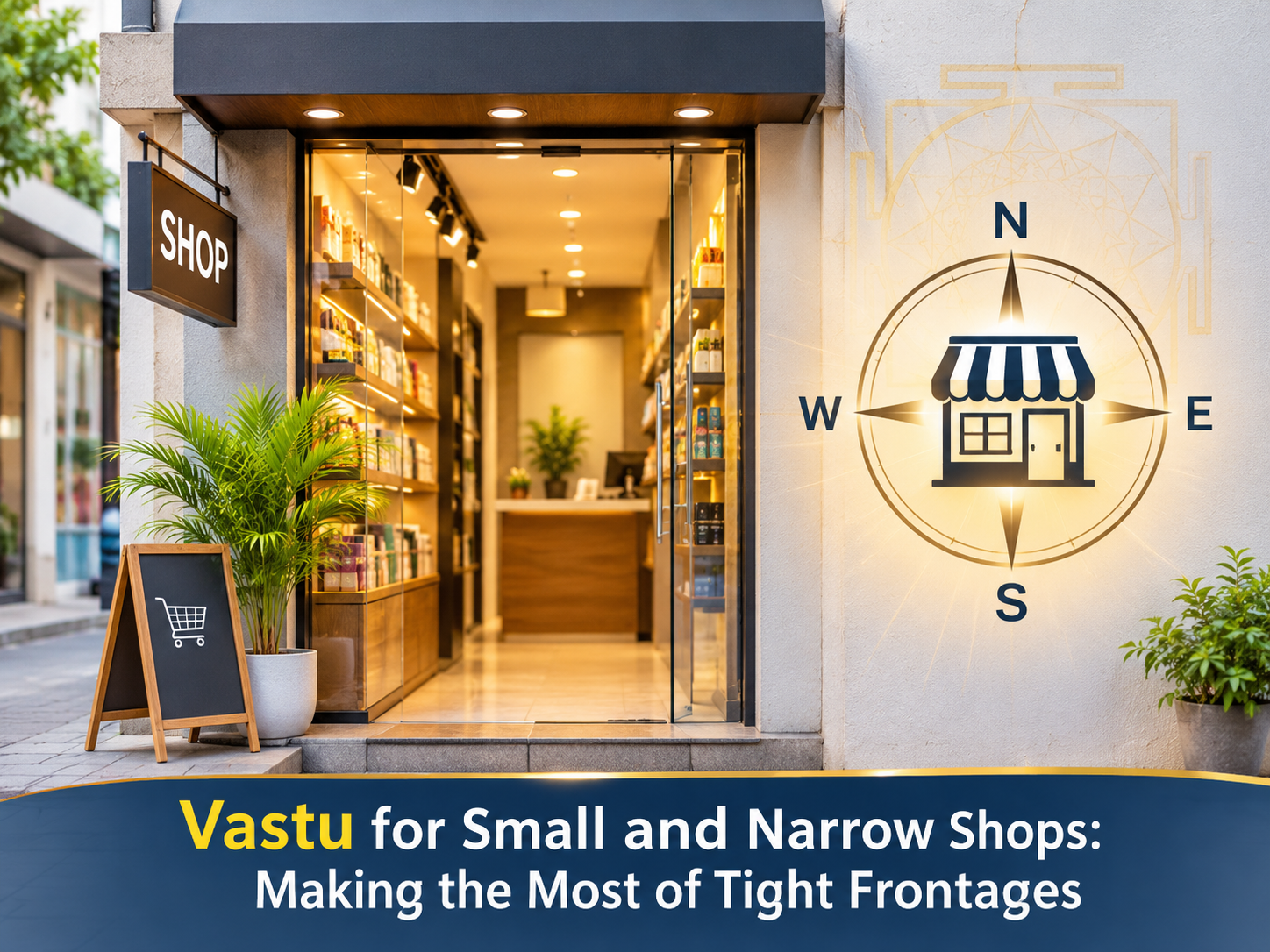
A shop can have excellent products, competitive pricing, and a loyal customer base, yet still struggle to attract people walking past its entrance. Sometimes, the challenge is not the business itself but the way the available space is organised. A narrow frontage, a partially blocked entrance, crowded display shelves, or a poorly positioned billing counter can make a shop feel less inviting than it should.
For retailers operating in Mumbai's busy commercial streets, where every square foot matters, these details deserve attention. Applying Commercial Vastu Consultant Mumbai principles alongside practical retail planning can help business owners evaluate how their entrance, layout, displays, and working areas are arranged.
Vastu Shastra offers traditional guidelines for organising commercial spaces according to directions and the placement of different functions. However, a small shop cannot always follow every recommendation because of structural restrictions, rental conditions, neighbouring properties, or limited floor area.
The objective is to work with the space available. Rather than undertaking expensive renovations or assuming that a narrow shop is inherently unsuitable, business owners can examine the existing layout and identify changes that improve accessibility, organisation, and the overall customer experience.
1. Start with the Main Entrance and Shopfront
The shopfront is often the first point of contact between a business and a potential customer. In a narrow retail unit, even a small obstruction can make the entrance appear cramped or difficult to access.
From a traditional Vastu perspective, the main entrance is an important consideration in commercial properties. Its direction and position are assessed in relation to the overall layout, rather than judged in isolation.
Keep the entrance open and welcoming
Start by checking whether display racks, promotional stands, cartons, or signboards obstruct the entrance. If the doorway is narrow, avoid placing bulky products immediately inside it.
Ensure that the shop name is visible, the entrance is adequately lit, and customers can enter without navigating around obstacles. Where possible, arrange the most relevant products so they can be seen from outside without making the frontage look overcrowded.
A Vastu assessment can help you understand the traditional significance of the entrance's direction and placement. However, changing the entrance is not always practical, particularly in leased premises or buildings with fixed structural layouts.
2. Organise Product Displays Without Making the Shop Feel Smaller
A common challenge in small shops is deciding how much merchandise to display. Business owners naturally want customers to see as many products as possible, but filling every available surface can have the opposite effect.
Traditional commercial Vastu guidance considers the placement and use of different areas within a shop. Practical retail planning adds another important consideration: customers need enough space to browse comfortably.
Use vertical space strategically
Wall-mounted shelves can free up valuable floor space, provided they are installed safely and do not make the shop feel enclosed. Keep frequently purchased products easy to reach, and reserve less accessible storage for items customers do not need to handle regularly.
Avoid creating a continuous wall of merchandise that hides the shop's depth. Even a narrow aisle can feel more manageable when sightlines remain open and products are grouped logically.
If you are consulting a Best Vastu Shastra Consultant in Mumbai, discuss how the existing display arrangement relates to the shop's directions and functional zones. Any recommendation should also account for the type of merchandise, customer movement, and safety requirements.
3. Position the Billing Counter Thoughtfully
The billing counter is one of the most important working areas in a retail shop. It needs to accommodate transactions, payment equipment, records, and sometimes inventory management, all within a limited footprint.
Traditional Vastu interpretations may recommend particular zones for the cash counter or business-related activities. The suitability of a placement depends on the shop's orientation and complete layout.
Before moving the counter, consider three practical questions:
-
Can the shopkeeper see the entrance and monitor customer activity?
-
Is there sufficient room for customers to approach the counter without blocking the aisle?
-
Can payments, packaging, and routine tasks be handled without disrupting product displays?
Avoid placing the counter where it creates a bottleneck near the entrance. If the existing position cannot be changed, adjusting its orientation, surrounding storage, or the arrangement of nearby products may improve functionality.
A commercial Vastu consultation should distinguish between traditional recommendations and the practical limitations of the premises instead of suggesting costly changes without considering their impact.
4. Make Better Use of Storage and Unused Corners
In a small shop, storage often expands until it begins to interfere with everyday operations. Extra cartons accumulate behind the counter, shelves become overloaded, and corners that could serve a useful purpose turn into dumping areas.
Traditional Vastu guidance often emphasises orderly spaces and the considered placement of heavier items. From a practical perspective, organised storage also helps prevent damage, reduce wasted time, and make stock easier to locate.
Keep frequently accessed inventory close to the area where it is needed. Store heavier products securely, and ensure that electrical panels, fire-safety equipment, and exits remain accessible.
If a corner appears unsuitable for customer-facing displays, consider whether it can serve as a compact storage zone instead. The best arrangement will depend on the products sold and the shape of the shop.
Importantly, do not sacrifice essential storage or safety simply to achieve a particular arrangement based on a generalised Vastu rule.
5. What If the Shop Faces an Unfavourable Direction?
Business owners sometimes worry that a shop facing a particular direction will automatically experience financial difficulties. Such concerns are common in commercial Vastu discussions, but a property's direction alone cannot reliably predict its commercial performance.
Traditional Vastu assessments may consider the entrance direction, internal zones, counter placement, and the relationship between different parts of the property. Different practitioners may interpret these factors differently.
If you are concerned about your shop's orientation, begin with an accurate floor plan and establish the cardinal directions. Avoid making expensive structural changes based solely on a generic online recommendation.
A qualified consultant can explain which aspects of the layout are considered significant within their approach and whether any practical adjustments are possible.
Business performance also depends on location, visibility, pricing, customer service, product demand, and competition. Vastu should not be treated as a substitute for sound business planning or as a guarantee of higher sales.
6. When Should You Consult a Commercial Vastu Expert?
Some improvements are straightforward. Others require a closer look at the entire property, particularly when the shop has an irregular shape, a restricted entrance, or limited flexibility for moving fixtures.
A Vastu For Commercial Service Mumbai consultation may be useful when opening a new shop, renewing a commercial lease, redesigning displays, or reviewing an existing layout.
Samir Karve's commercial Vastu practice is relevant to business owners seeking guidance that considers the property and its practical constraints. His background in construction and spatial planning can help inform discussions about existing structures and potential non-demolition corrections.
Before engaging a consultant, prepare a floor plan showing the entrance, counters, storage, washrooms, and major fixtures. Photographs and measurements can also help establish how the space is currently used.
Ask for clear explanations of proposed remedies, including their purpose, feasibility, and expected costs. This helps you make decisions without committing to unnecessary alterations.
Conclusion: Work With the Space You Have
A narrow shop does not need to feel disorganised simply because its frontage is limited. A clear entrance, well-planned displays, accessible billing counter, and sensible storage arrangement can make the premises easier to use for both customers and staff.
Traditional Vastu principles can provide an additional framework for evaluating the layout, but recommendations should always account for the property's actual dimensions, structural restrictions, and commercial requirements.
If you are planning a new retail space or want to improve an existing one, consulting a Best business vastu consultant in mumbai can help you explore the traditional considerations relevant to your shop and understand which adjustments may be practical.
Samir Karve offers an opportunity to assess your commercial property's layout and discuss suitable Vastu guidance. The starting point is simple: understand the space, identify the real constraints, and make informed decisions before investing in major changes.
 Portuguese (Brazil)
 English
 Arabic
 French
 Spanish
 Portuguese
 Deutsch
 Turkish
 Dutch
 Italiano
 Russian
 Romaian
 Greek