


Biogas Plant and LPG Which Saves More Money?
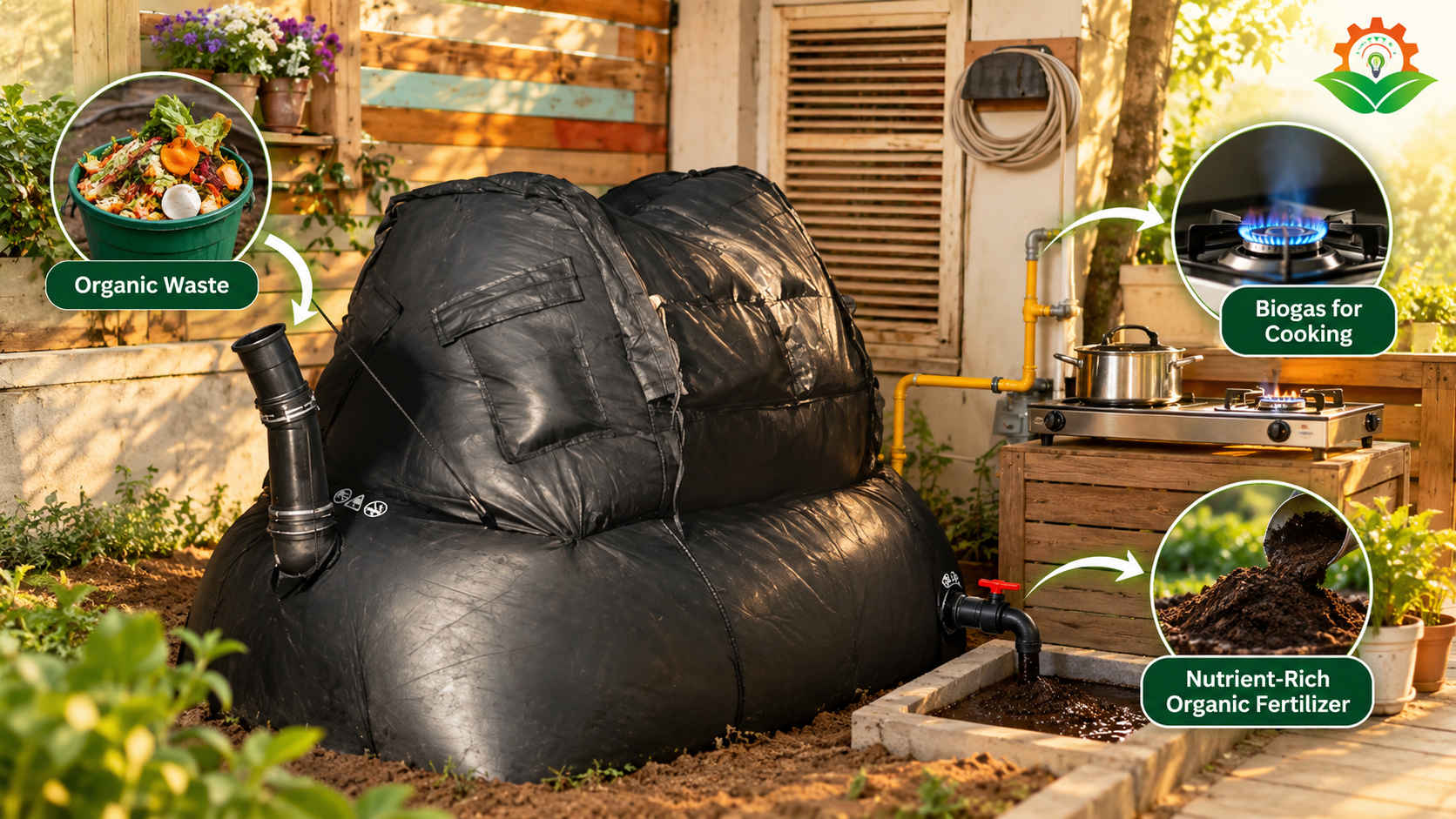
A dairy farmer who buys multiple LPG cylinders every month while managing heaps of cattle manure faces a familiar challenge. Fuel expenses continue to rise, and organic waste requires regular disposal. Instead of treating these as separate problems, a biogas plant offers a practical solution by converting waste into clean cooking fuel. For households and farms that generate organic waste daily, understanding the long-term cost difference between biogas and LPG is essential before making an investment.
Unlike LPG, which depends on regular cylinder refills, anaerobic digestion produces renewable gas from locally available organic waste. When designed correctly, a biogas system delivers consistent fuel, valuable fertilizer, and lower operating costs over its service life.
Biogas Plant vs LPG: Understanding the Difference
LPG is a fossil-based fuel supplied through cylinders or pipelines. Users pay continuously for every refill, making long-term operating costs dependent on fuel prices and availability.
A biogas plant, on the other hand, converts kitchen waste, cattle manure, crop residue, and other biodegradable materials into methane-rich gas using anaerobic digestion. While installation requires an initial investment, the fuel itself is produced from waste that would otherwise require disposal.
This difference makes biogas a renewable energy solution rather than a recurring fuel purchase.
How a Biogas Plant Generates Renewable Fuel
Inside the digester tank, naturally occurring microorganisms decompose organic waste in an oxygen-free environment.
The digestion process produces:
- Methane-rich biogas for cooking, heating, or power generation
- Nutrient-rich bio-slurry for agricultural use
A properly engineered digester maintains suitable retention time, stable temperature, and controlled feeding rates to maximize gas production throughout the year.
Comparing Long-Term Operating Costs
The biggest financial difference between LPG and biogas lies in recurring fuel expenses.
LPG requires continuous cylinder purchases, and fuel prices may fluctuate due to market conditions. Over several years, these recurring costs often exceed the initial investment required for a biogas installation.
A well-designed biogas plant for home or farm primarily incurs maintenance expenses after installation. If sufficient organic waste is available daily, ongoing fuel costs remain significantly lower.
For dairy farms and agricultural operations already producing manure, the economics become even more favorable because the feedstock is readily available.
Engineering Factors That Influence Savings
The amount of money saved depends heavily on proper engineering rather than simply installing a larger system.
Key design considerations include:
- Daily quantity of organic waste
- Household or farm gas demand
- Digester size
- Hydraulic retention time
- Gas storage capacity
- Distribution piping
- Pressure regulation
- Future expansion requirements
Effective biogas plant design ensures stable gas production without unnecessary construction costs or reduced digestion efficiency.
Fuel Delivery, Safety and Appliance Compatibility
Modern biogas plant systems can safely supply gas to various applications when installed according to engineering standards.
Common uses include:
- Kitchen cooking stoves
- Water heaters
- Small electricity generators
- Agricultural processing equipment
Proper gas piping, pressure regulators, moisture traps, and safety valves help maintain reliable operation while minimizing gas leakage and pressure loss.
These safety measures are essential regardless of plant size.
Bio-Slurry Adds Additional Financial Value
Unlike LPG, biogas production creates another valuable product.
Bio-slurry is a nutrient-rich organic fertilizer containing stabilized nitrogen, phosphorus, potassium, and beneficial microorganisms.
Many farms reduce chemical fertilizer purchases by applying treated slurry to agricultural fields, improving soil health while lowering cultivation costs.
This fertilizer value contributes significantly to the overall return on investment, making biogas financially attractive beyond fuel savings alone.
Key Features of Modern Biogas Plant Systems
Well-designed systems offer operational advantages that improve long-term reliability.
Key features include:
- Continuous gas generation
- Compact installation footprint
- Effective odor control
- Durable corrosion-resistant tank materials
- Weather and temperature resilience
- Low daily maintenance
- Easy operation
- Scalable plant capacities
- Long operational service life
A quality domestic biogas digester for homes and farms provides dependable fuel generation with minimal routine intervention.
Applications Where Biogas Outperforms LPG
Biogas is especially beneficial where organic waste is generated consistently.
Typical applications include:
- Rural households
- Dairy and livestock farms
- Agricultural cooperatives
- Hostels and educational institutions
- Small hotels and farmstays
- Gated communities
- Housing societies
- Rural electrification projects
- Community waste management systems
Locations with steady feedstock availability generally achieve faster financial returns than users relying solely on purchased fuel.
Understanding Biogas Plant Price
The biogas plant price varies depending on engineering requirements rather than equipment alone.
Major cost factors include:
- Daily feedstock quantity and type
- Digester capacity
- Tank construction material
- Gas storage requirements
- Piping and installation complexity
- Site preparation
- Available installation space
- Integration with cooking or generator systems
- Annual maintenance contracts
- Expected payback period
Choosing a system based only on initial price may reduce long-term performance and increase maintenance costs.
Buyer's Guide: Selecting the Right Manufacturer
When comparing biogas plant manufacturers in India, technical capability should take priority over the lowest quotation.
Consider evaluating:
- Industry experience
- Digester engineering expertise
- Manufacturing quality standards
- Material durability
- Custom design capability
- Installation knowledge
- Technical documentation
- After-sales maintenance support
- Subsidy assistance
- Proven project reliability
A reputable Sigma Power Tech manufacturer and service provider focuses on engineering quality, proper system sizing, and dependable operational performance. The Sigma Power Tech biogas plant approach emphasizes long-term efficiency and sustainable waste-to-energy infrastructure rather than short-term cost reduction.
Common Mistakes That Reduce Savings
Several avoidable mistakes can significantly reduce gas production and financial returns.
Common issues include:
- Undersizing or oversizing the digester
- Inconsistent daily feedstock input
- Poor site selection
- Ignoring bio-slurry utilization
- Delaying routine maintenance
- Improper gas pipeline installation
- Overlooking seasonal temperature effects on digestion
Proper planning and preventive maintenance help maintain consistent gas yield throughout the plant's operating life.
Conclusion
For households, dairy farms, and agricultural businesses that generate organic waste every day, a biogas plant often delivers greater long-term financial value than continued dependence on LPG. While LPG offers convenience, recurring fuel purchases accumulate over time, whereas biogas converts existing waste into renewable energy and nutrient-rich fertilizer.
The greatest savings come from selecting the correct plant size, investing in sound engineering, and maintaining reliable operation rather than focusing solely on the lowest installation cost. A properly designed system provides dependable fuel, reduces fertilizer expenses, supports sustainable waste management, and creates long-term waste-to-energy infrastructure that benefits both the environment and operating budgets.
 French
 English
 Arabic
 Spanish
 Portuguese
 Deutsch
 Turkish
 Dutch
 Italiano
 Russian
 Romaian
 Portuguese (Brazil)
 Greek