


Difference between Hangar Door and Traditional Industrial Doors
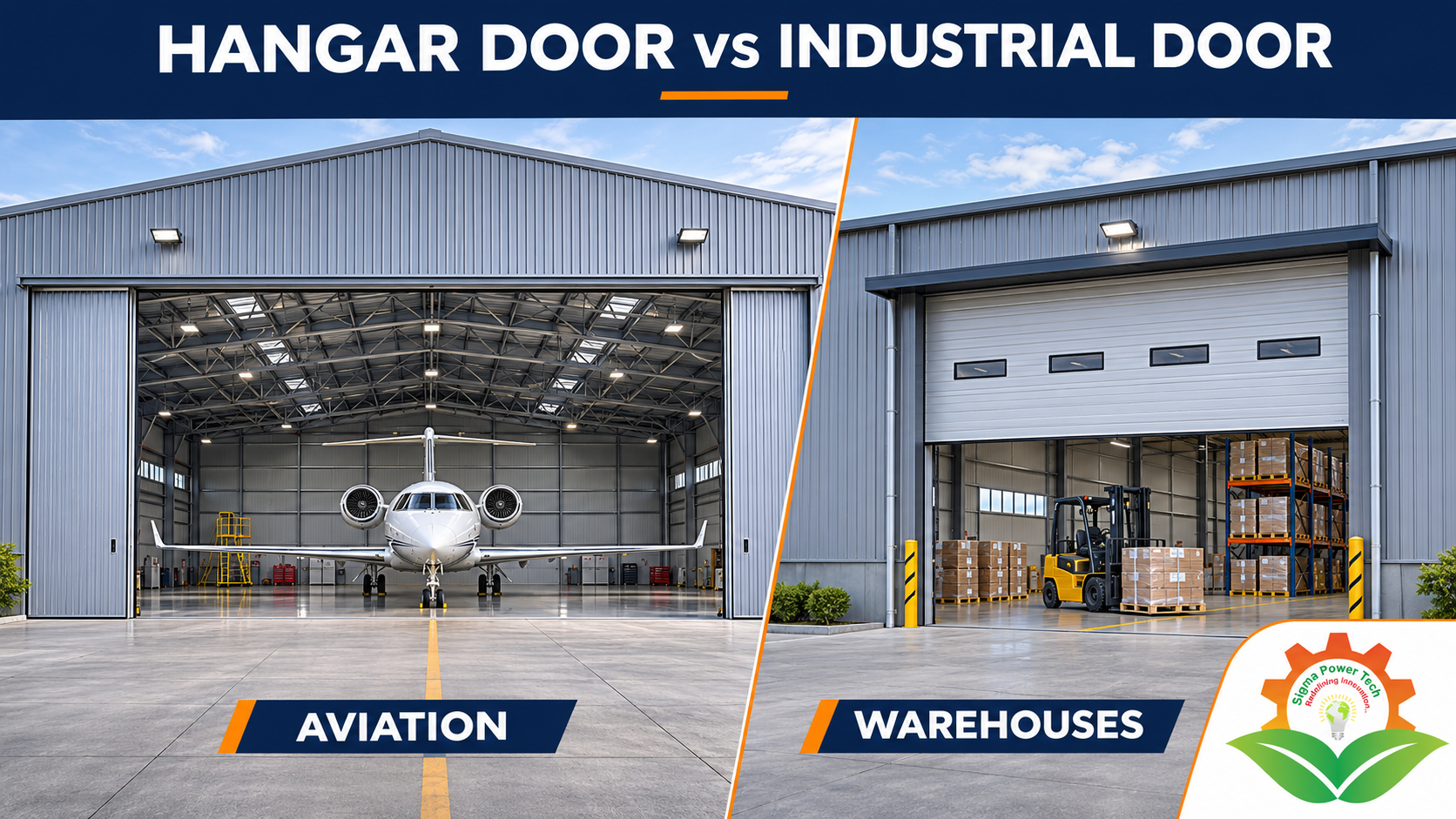
A newly built aircraft maintenance facility was almost ready for operations when the project team faced one final decision. One supplier proposed a standard industrial door to reduce costs, while another recommended a purpose-built Hangar door engineered specifically for aviation. Although both options appeared similar at first glance, their performance, structural capabilities, and long-term value were vastly different. For airports, defence facilities, and aerospace manufacturers, choosing the right door system can directly affect operational efficiency, aircraft safety, and maintenance costs for decades.
Understanding the Difference Between a Hangar Door and an Industrial Door
At a basic level, both systems provide controlled access to a building. However, their engineering objectives are entirely different.
A conventional industrial door is designed for warehouses, factories, and logistics centres where frequent movement of vehicles or goods is required. These doors typically accommodate forklifts, trucks, and production equipment.
An Aircraft hangar door, on the other hand, is engineered for exceptionally large clear-span openings, allowing aircraft to enter and exit safely without structural obstructions. It must also withstand significantly greater wind loads, frequent operating cycles, and demanding environmental conditions.
Why a Hangar Door Is Built Differently
Unlike conventional industrial doors, a hangar door often spans tens of metres while maintaining smooth, reliable movement.
Its design combines structural engineering, automation, precision manufacturing, and advanced safety systems to ensure dependable operation throughout its service life.
Hangar Door Design Prioritises Large Clear-Span Access
One of the defining characteristics of a modern Hangar door design is its ability to maximise usable opening width.
Aircraft require unrestricted movement during towing, parking, and maintenance. Internal columns or narrow openings increase the risk of collisions and reduce operational flexibility.
Purpose-built hangar doors eliminate these limitations while supporting larger aircraft and future fleet expansion.
Structural Performance: The Clear Winner
Large aviation facilities expose doors to conditions rarely encountered in conventional industrial buildings.
Hangar doors are engineered to resist:
- High wind pressures
- Heavy operational loads
- Continuous opening cycles
- Building movement
- Thermal expansion
- Extreme weather conditions
Industrial doors generally perform well within warehouses or manufacturing plants but are not intended for oversized aviation openings where structural precision is critical.
For projects involving aircraft storage or maintenance, the engineering advantage clearly favours a dedicated hangar door.
Automation and Operational Efficiency
Automation plays an increasingly important role in modern aviation infrastructure.
Today's airplane hangar doors can integrate with:
- PLC-based automation
- Remote control systems
- Building Management Systems (BMS)
- Access control
- Safety sensors
- Emergency override mechanisms
These features improve aircraft movement, reduce manual effort, and enhance operational safety.
Traditional industrial doors often provide automation as well, but the systems are typically designed for smaller openings and lighter operational demands.
Weather Protection and Aircraft Safety
Aircraft represent high-value assets that require controlled storage environments.
Hangar doors incorporate weather-resistant seals, robust guide systems, and engineered locking mechanisms that minimise water ingress, dust penetration, and air leakage.
This level of environmental protection helps preserve aircraft components while maintaining suitable conditions for maintenance operations.
Industrial doors provide weather protection for warehouses, but they generally lack the specialised sealing performance required for aviation applications.
Security and Reliability
Security requirements differ significantly between industrial facilities and aviation infrastructure.
Aircraft hangars frequently operate within airports, military bases, or defence installations where controlled access is essential.
A properly engineered hangar door provides:
- High-strength locking systems
- Integrated access control
- Tamper-resistant operation
- Reliable emergency release functions
- Long-term operational consistency
These capabilities contribute to both physical security and uninterrupted facility operations.
Applications: Where Each Door Performs Best
Both systems have important roles, but their applications are distinct.
Hangar Door Applications
- Commercial aircraft hangars
- Military airbases
- Defence facilities
- MRO (Maintenance, Repair and Overhaul) centres
- Helicopter hangars
- Aerospace manufacturing plants
- Aviation training centres
Traditional Industrial Door Applications
- Manufacturing plants
- Distribution warehouses
- Logistics hubs
- Industrial workshops
- Storage facilities
- Commercial production units
Selecting the correct door type according to the intended application improves both operational efficiency and lifecycle performance.
Cost and Long-Term Investment
At first glance, an industrial door may appear to offer a lower purchase price.
However, comparing these systems solely on cost can be misleading.
Several factors influence the overall investment:
- Door dimensions
- Structural engineering complexity
- Material quality
- Wind-load ratings
- Automation systems
- Safety features
- Installation requirements
- Manufacturing precision
- Maintenance planning
For aviation facilities, investing in a dedicated hangar door generally delivers better long-term value through improved durability, reduced downtime, and greater operational flexibility.
Buyer's Guide: Choosing the Right Manufacturer
Whether the project involves a commercial airport or a military facility, selecting the right supplier is essential.
When evaluating Hangar door manufacturers in India, buyers should consider:
- Proven aviation project experience
- Engineering and design capability
- Precision manufacturing processes
- Compliance with recognised standards
- Ability to customise solutions
- Installation expertise
- Technical support
- Preventive maintenance services
- Long-term product reliability
A company operating as a sigma power tech manufacturer and service provider can often provide end-to-end project support, from engineering and manufacturing to commissioning and lifecycle maintenance.
If you want to understand the engineering principles behind modern aviation door systems, this detailed guide on Hangar door explains key design considerations and system features in greater depth.
Common Mistakes Buyers Should Avoid
Many procurement challenges result from overlooking critical engineering requirements.
Common mistakes include:
- Choosing solely based on initial price
- Ignoring structural load calculations
- Selecting the wrong door configuration
- Underestimating local wind conditions
- Overlooking automation requirements
- Neglecting preventive maintenance planning
- Failing to consider future aircraft sizes
- Working with suppliers lacking aviation expertise
Careful planning during the design stage prevents expensive modifications later.
Key Features That Set Hangar Doors Apart
Compared with traditional industrial doors, modern hangar doors typically offer:
- Superior structural strength
- Excellent corrosion resistance
- High wind-load performance
- Large clear-span access
- Advanced automation
- Reliable weather sealing
- Enhanced security systems
- Low-maintenance operation
- Long service life
- Improved energy efficiency
These features make them the preferred choice for aviation environments where safety and reliability cannot be compromised.
Which One Wins?
The answer depends entirely on the intended application.
For warehouses, factories, and logistics facilities, traditional industrial doors remain an efficient and economical solution.
However, for aviation, defence, aerospace manufacturing, and aircraft maintenance facilities, a purpose-built Hangar door is the clear winner. Its specialised engineering, superior structural performance, advanced automation, and ability to protect valuable aircraft make it far better suited to demanding operational environments.
A well-designed Sigma Power Tech Hangar door or any comparable aviation-grade system provides significantly greater long-term value than adapting a conventional industrial door for an application it was never designed to serve.
Conclusion
While hangar doors and traditional industrial doors may appear similar, they are engineered for entirely different operational demands. A properly designed Hangar door design delivers the structural integrity, weather resistance, automation, security, and clear-span access required for modern aviation facilities.
Whether your project involves a commercial airport, an MRO centre, or a defence installation, investing in an aviation-specific solution from experienced Hangar door manufacturers in India ensures dependable aircraft protection, efficient operations, and long-term infrastructure performance. In aviation engineering, selecting the right door is not simply a construction decision—it is an investment in safety, reliability, and the future success of the entire facility.
 Portuguese
 English
 Arabic
 French
 Spanish
 Deutsch
 Turkish
 Dutch
 Italiano
 Russian
 Romaian
 Portuguese (Brazil)
 Greek