


Aging Test: Improving Power Supply Reliability and Product Quality
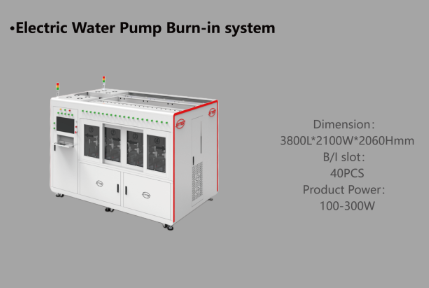
An aging test helps manufacturers evaluate product stability under continuous operating conditions. By identifying potential defects before delivery, aging test equipment supports better quality control and more reliable electronic products.
1. What Is an Aging Test?
An aging test is a reliability evaluation process that operates electronic products under specified conditions for an extended period. For power supplies and adapters, an aging test commonly involves applying electrical loads while monitoring output performance and temperature. This process helps manufacturers identify early failures, unstable components, and other potential problems before products reach customers.
2. Why Is an Aging Test Important?
A power supply may pass a short functional inspection but still develop problems during prolonged operation. An aging test helps reveal these weaknesses by exposing products to continuous workloads. Manufacturers can use the results to evaluate operational stability, identify production defects, and improve product consistency. A properly designed aging test also supports quality assurance and helps reduce the risk of early product failures.
3. Key Parameters in Aging Testing
An effective aging test requires suitable operating conditions and monitoring procedures. Important parameters include input voltage, output load, temperature, testing duration, and product operating status. Manufacturers may also monitor voltage regulation, ripple, and efficiency to understand how a power supply performs over time. Test limits should be established according to product specifications and intended operating environments.
4. Automated Aging Test Equipment
Automated equipment makes an aging test more consistent and efficient, especially in large-scale manufacturing. JETTEST provides various power supply aging systems for applications including communication power supplies, server power supplies, chargers, mining machine power supplies, and electrical tools. Its equipment portfolio also includes fully automatic test and burn-in lines, helping manufacturers connect different quality inspection stages.
5. Energy-Saving Technology and Safety
A long-duration aging test can consume considerable electricity, making energy efficiency an important equipment consideration. JETTEST offers energy-saving aging systems that use regenerative load technology in selected applications. These systems help reuse energy during testing instead of dissipating all the load energy as heat. Safety features such as leakage protection, over-temperature protection, smoke detection, fault alarms, and emergency shutdown also support controlled operation.
6. Integrating Aging Testing into Production
An aging test becomes more effective when integrated into a complete manufacturing workflow. Automated production lines can combine product identification, power-up checks, continuous aging, high-voltage withstand testing, final inspection, and product sorting. Barcode identification and data collection can also improve traceability, helping manufacturers identify test results and manage production quality more efficiently.
7. Choosing the Right Aging Test Solution
Selecting suitable aging test equipment requires consideration of product type, power rating, load capacity, temperature conditions, testing duration, and automation requirements. JETTEST provides customized power supply testing and aging solutions for different manufacturing applications. With appropriate equipment and clearly defined procedures, manufacturers can strengthen reliability verification and improve production efficiency.

 Arabic
 French
 Spanish
 Portuguese
 Deutsch
 Turkish
 Dutch
 Italiano
 Russian
 Romaian
 Portuguese (Brazil)
 Greek