


AI Software Development Cost in Malaysia in 2027: Pricing, Timeline and Hidden Expenses
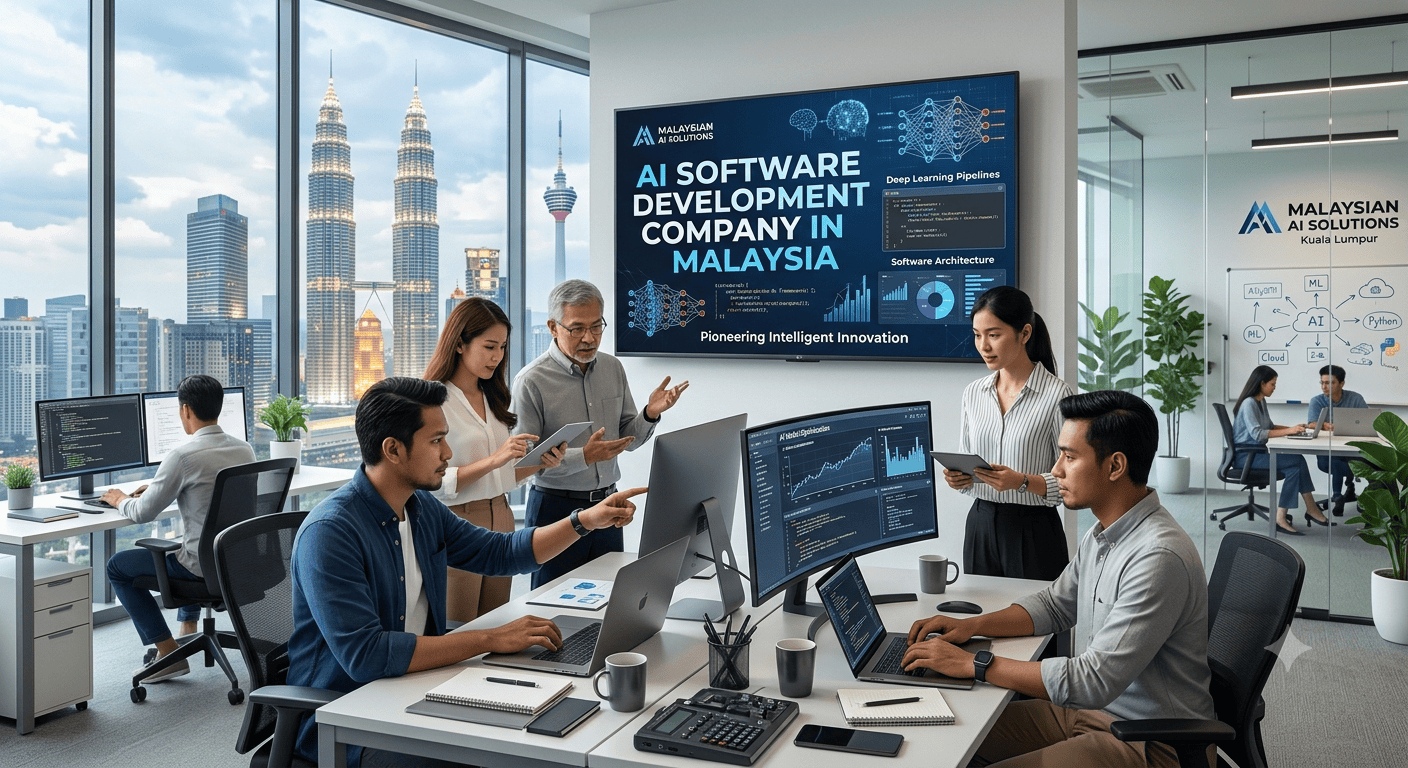
Artificial intelligence is becoming an important investment for Malaysian businesses looking to improve operational efficiency, automate workflows, enhance customer experiences, and make data-driven decisions. From AI-powered chatbots and predictive analytics to intelligent enterprise platforms, companies are exploring different ways to integrate AI into their business operations.
However, one of the biggest questions before starting an AI project is: How much does AI software development cost in Malaysia in 2027?
The answer depends on several factors, including project complexity, technology selection, data preparation, third-party integrations, security requirements, and ongoing maintenance. A basic AI-powered application may require a relatively small investment, while a customized enterprise AI platform can involve significantly higher development costs.
Understanding these expenses helps businesses plan their technology budgets, select the right development approach, and avoid unexpected costs.
This guide explores estimated AI software development costs in Malaysia for 2027, project timelines, pricing models, hidden expenses, and factors businesses should consider when selecting an AI development partner.
1. How Much Does AI Software Development Cost in Malaysia in 2027?
The cost of developing AI software in Malaysia can range from RM15,000 to RM500,000 or more, depending on the application's functionality, technical requirements, and deployment environment.
Businesses investing in AI should consider both initial development expenses and long-term operational costs.
Here are indicative 2027 planning estimates based on publicly available Malaysian development pricing benchmarks and anticipated project requirements.
| AI Software Development Type | Estimated Cost (RM) | Development Timeline |
|---|---|---|
| AI Chatbot Development | RM15,000–RM40,000 | 2–6 weeks |
| AI-Powered Web Application | RM30,000–RM80,000 | 1–3 months |
| Predictive Analytics Software | RM50,000–RM120,000 | 2–4 months |
| AI-Powered Mobile Application | RM60,000–RM150,000 | 3–5 months |
| Generative AI and RAG Solutions | RM60,000–RM180,000 | 3–5 months |
| Custom AI Agent Development | RM80,000–RM250,000 | 4–7 months |
| Computer Vision Applications | RM120,000–RM400,000 | 5–9 months |
| Enterprise AI Platforms | RM250,000–RM500,000+ | 6–12 months |
Note: These are indicative budgeting estimates, not confirmed 2027 market quotations. Actual costs depend on project scope, development resources, infrastructure, and integrations.
For example, a business implementing an AI chatbot for customer support may require a smaller budget than an enterprise building a custom AI platform connected to multiple business systems.
Working with an experienced AI Software Development Company in Malaysia can help businesses evaluate technical requirements and establish a realistic project budget before development begins.
2. Key Factors Affecting AI Software Development Costs
Not every AI project requires the same investment. Several technical and business-related factors influence the overall development cost.
Project Complexity and Features
The number of features and the complexity of business workflows directly influence development expenses.
A basic AI chatbot answering frequently asked questions requires fewer development resources than an intelligent virtual assistant capable of understanding customer requests, retrieving business information, and performing automated actions.
Advanced features such as real-time recommendations, predictive modelling, natural language processing, and multi-agent orchestration can increase development costs.
Data Collection and Preparation
AI applications depend on high-quality data to generate accurate and useful results.
Businesses may need to collect, clean, structure, label, and validate data before integrating it into an AI system. If existing information is scattered across spreadsheets, databases, or legacy applications, additional data engineering work may be necessary.
For enterprise AI projects, data preparation can become a significant part of the overall budget.
AI Model Selection and Customization
Selecting the right AI model also affects project costs.
Businesses can use existing large language models (LLMs), open-source models, or customized machine learning models depending on their requirements.
For example, integrating an existing LLM through an API may cost less than training and deploying a specialized model using proprietary business data.
Third-Party Integrations
AI software often needs to communicate with existing CRM, ERP, payment, inventory, and customer management platforms.
Integrating these systems requires additional development, API configuration, security validation, and testing.
The more complex the existing technology environment, the greater the integration effort.
3. AI Software Development Timeline: How Long Does It Take?
Development timelines depend on the project's functionality, data availability, integration requirements, and testing complexity.
Here is an estimated breakdown of different development stages.
| Development Stage | Estimated Timeline |
|---|---|
| Requirement Analysis and Planning | 1–2 weeks |
| UI/UX Design and Architecture | 1–3 weeks |
| Data Preparation and Model Selection | 2–4 weeks |
| AI Model Development and Integration | 3–8 weeks |
| Application Development | 3–8 weeks |
| Testing and Quality Assurance | 2–4 weeks |
| Deployment and Optimization | 1–2 weeks |
Some activities can happen simultaneously, so these stages should not simply be added together to determine the total project duration.
A simple AI application may take 4–8 weeks, while a complex enterprise AI solution can require 6–12 months or longer.
Businesses should also allocate time for user acceptance testing, security reviews, and performance improvements before launching an AI-powered application.
4. Hidden Expenses Businesses Should Consider
One common budgeting mistake is focusing only on initial development expenses. AI applications require additional resources to operate, maintain, and improve after deployment.
Here are some frequently overlooked expenses.
Cloud Hosting and Infrastructure
AI applications require infrastructure for processing requests, storing data, and running application services.
Depending on the workload, businesses may need cloud computing resources, GPU infrastructure, databases, and storage services.
AI API and Model Usage Fees
Applications using third-party AI models may incur recurring charges based on input tokens, output tokens, or the number of API requests.
As application usage increases, these expenses can also increase.
Data Security and PDPA Compliance
Businesses handling personal information must consider Malaysia's Personal Data Protection Act (PDPA) requirements.
Security-related expenses may include encryption, access controls, audit logging, privacy assessments, and secure data storage.
These requirements should be incorporated into the architecture rather than addressed only after development.
Maintenance and Technical Support
AI systems require continuous monitoring and improvements to maintain performance.
Businesses may need regular software updates, model evaluation, bug fixes, security patches, and infrastructure monitoring.
A practical starting point is to allocate approximately 15–20% of the initial development budget annually for maintenance, adjusting this according to support requirements and infrastructure complexity.
Model Testing and Performance Monitoring
AI-generated outputs are not always accurate. Businesses must evaluate model responses, monitor performance, identify hallucinations, and improve system reliability.
This becomes particularly important for customer-facing and business-critical applications.
5. How to Reduce AI Software Development Costs Without Compromising Quality
Reducing development expenses does not mean compromising functionality or technical quality. Businesses can manage their budgets through a structured development approach.
Start With a Minimum Viable Product (MVP): Instead of building every feature immediately, focus on the core functionality required to solve a specific business problem.
Choose the Right AI Technology: Evaluate existing LLMs, APIs, open-source models, and custom machine learning options before selecting a technology.
Prioritize Data Quality: Organize and validate business data early to reduce rework during development and integration.
Use Scalable Architecture: Build an architecture that supports future growth without requiring expensive redevelopment.
Plan Integrations Carefully: Identify essential third-party integrations before development begins to avoid unexpected costs.
Measure Business Outcomes: Track operational efficiency, processing time, customer satisfaction, and cost savings to evaluate the actual value of AI investments.
A phased development approach allows businesses to validate their AI investment before committing to a larger implementation.
6. How to Choose the Right AI Software Development Company in Malaysia
Selecting the right development partner is just as important as determining the project budget.
Businesses should evaluate potential partners based on their technical capabilities, development experience, industry understanding, and ability to deliver scalable applications.
Consider the following factors:
-
AI Development Expertise: Look for experience in machine learning, generative AI, NLP, computer vision, and AI agent development.
-
Integration Capabilities: Ensure the team can integrate AI applications with existing enterprise systems and third-party platforms.
-
Data Security: Evaluate their understanding of data protection, application security, and compliance requirements.
-
Development Methodology: Choose a partner that follows structured planning, development, testing, and deployment processes.
-
Post-Launch Support: Confirm the availability of maintenance, performance monitoring, and ongoing technical assistance.
An experienced development partner should also provide a transparent cost breakdown covering development, integrations, infrastructure, testing, and maintenance.
Why Consider Hidden Brains?
Hidden Brains helps businesses explore and implement AI-powered applications aligned with their operational requirements and digital transformation objectives.
With expertise in custom software development, AI engineering, enterprise application development, and system integration, Hidden Brains focuses on building scalable and business-oriented technology solutions.
Businesses evaluating AI investments can explore its AI software development services in Malaysia to understand how AI technologies can support their development goals.
7. Final Thoughts: Plan Your AI Software Investment for 2027
AI software development costs in Malaysia in 2027 will depend on the complexity of the application, development approach, data requirements, infrastructure, and long-term operational needs.
While smaller AI applications may require an investment starting around RM15,000, enterprise-grade AI platforms can exceed RM500,000.
The best approach is to begin with clearly defined business objectives, prioritize essential features, evaluate technology options, and account for ongoing expenses before starting development.
Partnering with an experienced AI Software Development Company in Malaysia can help businesses establish realistic budgets, reduce implementation risks, and develop scalable AI software that delivers measurable business value.
Frequently Asked Questions (FAQs)
1. What is the average cost of AI software development in Malaysia?
AI software development can cost approximately RM15,000 to RM500,000 or more, depending on the project type, complexity, integrations, and infrastructure requirements.
2. How long does it take to develop AI software in Malaysia?
A basic AI chatbot may take 2–6 weeks, while a customized enterprise AI platform may require 6–12 months or longer.
3. What are the major factors affecting AI development costs?
The main factors include project complexity, AI model selection, data preparation, third-party integrations, infrastructure, security, testing, and ongoing maintenance.
4. Are there additional costs after AI software deployment?
Yes. Businesses should consider cloud hosting, AI API usage, model monitoring, software updates, security improvements, and technical support.
5. Why should businesses hire an AI software development company in Malaysia?
An experienced development company can help businesses select appropriate AI technologies, manage development costs, integrate existing systems, and build scalable AI applications aligned with their business objectives.
 Romaian
 English
 Arabic
 French
 Spanish
 Portuguese
 Deutsch
 Turkish
 Dutch
 Italiano
 Russian
 Portuguese (Brazil)
 Greek