


How Modern Sleeper Bus Designs Are Changing Long-Distance Road Travel
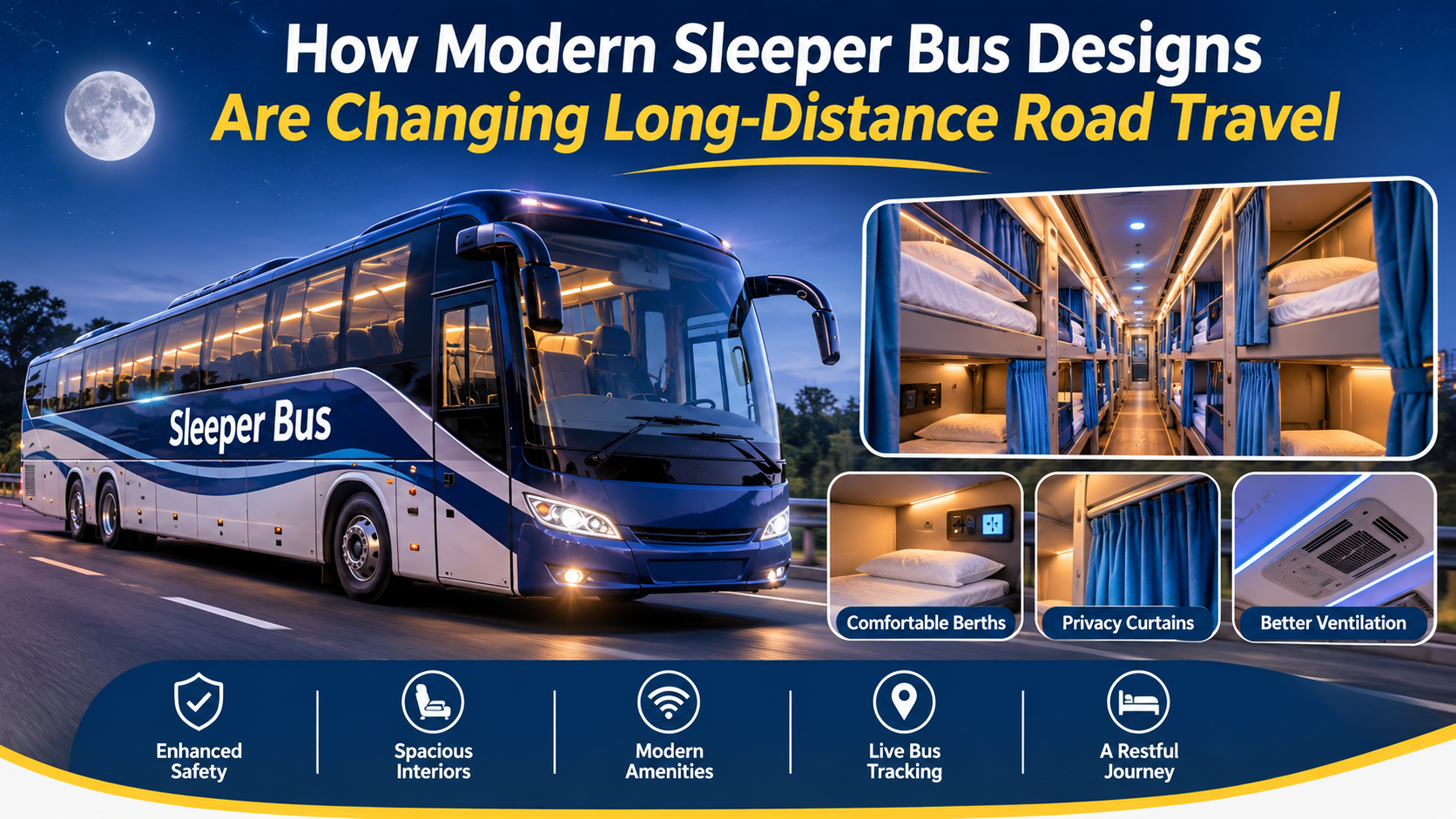
Long-distance road journeys have evolved considerably over the years. Passengers today expect more than just transportation between two destinations; they also look for comfortable seating arrangements, sufficient personal space and useful onboard facilities. A sleeper bus addresses many of these requirements by providing dedicated berths where passengers can rest during extended journeys. With improvements in vehicle design, interior layouts and passenger facilities, modern sleeper coaches are changing how people experience overnight road travel.
From improved berth arrangements to better lighting and onboard amenities, several design elements contribute to the overall journey. These developments are also encouraging bus operators to pay greater attention to passenger comfort, accessibility and safety.
The Evolution of Sleeper Bus Designs
Sleeper coaches used to provide basic sleeping facilities for passengers journeying long distances. But with changes in passenger expectations, sleeper coach interiors and designs have evolved.
The new models of sleeper coaches are more focused on berth arrangement, space available on the vehicle, ventilation and movement of passengers within the coach. Depending upon the model of the vehicle and the respective operator, there can be individual sleeping compartments, privacy curtains, reading lights, and provision to charge electronic devices.
The aim is to make things easier for passengers traveling overnight as well as provide the much-needed essentials.
Sleeper coach manufacturers and bus body builders will also keep in mind a number of factors like passenger capacity, structural design, and safety while designing a sleeper coach.
Different Berth Configurations in Modern Sleeper Coaches
One of the most noticeable aspects of sleeper coach design is the arrangement of sleeping berths. Unlike conventional buses, these vehicles are designed to provide dedicated spaces where passengers can lie down during the journey.
The configuration may vary depending on the coach model, available space and operator requirements.
1. Single Berth Configuration
Single berths provide individual sleeping spaces for passengers. They can be suitable for travellers who prefer having their own designated space during an overnight journey.
The arrangement and dimensions of these berths depend on the vehicle design.
2. Upper and Lower Berths
Many sleeper coaches feature two levels of sleeping arrangements. Upper berths are positioned above the lower section, while lower berths are closer to the floor.
This arrangement allows operators to accommodate passengers within the available vehicle space. However, the accessibility and available room can differ between the two positions.
3. Mixed Seater and Sleeper Configuration
Some coaches combine seating and sleeping arrangements within the same vehicle. In these configurations, passengers may have access to seats or berths depending on the selected service.
This arrangement offers operators flexibility in designing services for different passenger requirements.
Key Design Features Improving the Sleeper Bus Experience
Modern sleeper coaches incorporate several design elements that influence how passengers experience long-distance journeys.
|
Design Feature |
Purpose and Passenger Benefit |
|
Individual Berths |
Provide dedicated sleeping spaces for passengers. |
|
Privacy Curtains |
Offer additional personal space in selected configurations. |
|
Reading Lights |
Allow passengers to read without illuminating the entire compartment. |
|
Charging Points |
Help passengers keep their electronic devices powered. |
|
Air Conditioning |
Maintains a comfortable temperature inside the coach. |
|
Interior Lighting |
Supports visibility during boarding and travel. |
|
Luggage Compartments |
Provide designated space for carrying travel belongings. |
|
Improved Interior Layout |
Helps organise passenger spaces and movement inside the coach. |
The availability of these features varies across operators and vehicle models. Passengers should check the facilities mentioned for their selected service before travelling.
How Modern Interiors Are Improving Overnight Travel
Interior design has become an important part of the overall sleeper coach experience. Since passengers spend several hours inside the vehicle, the arrangement of berths, lighting and ventilation can influence how comfortable the journey feels.
Modern interiors may include better-designed sleeping spaces, individual lighting arrangements and curtains that offer additional privacy. Some services also provide blankets and other amenities to make overnight journeys more convenient.
Ventilation and air-conditioning systems are equally important. Maintaining suitable airflow and temperature inside the passenger compartment helps create a more pleasant travel environment.
The focus is gradually shifting towards designing interiors that balance passenger requirements with practical considerations such as accessibility, maintenance and vehicle capacity.
The Importance of Safety in Modern Sleeper Bus Design
Passenger safety is an essential part of sleeper coach construction. Unlike conventional seating arrangements, sleeper berths require specific design considerations because passengers may be resting while the vehicle is moving.
In India, AIS-119 lays down specific constructional requirements for sleeper coaches, covering aspects such as berth arrangements, passenger restraint systems and emergency provisions.
Important safety considerations include:
-
Berth Restraint Systems: These are designed to help prevent passengers from falling from sleeping berths during vehicle movement.
-
Emergency Exits: Properly designed and accessible exits are important for passenger evacuation during emergencies.
-
Escape Hatches: These provide additional emergency access where required by applicable standards.
-
Emergency Equipment: Safety equipment such as emergency hammers and fire extinguishers plays an important role during unexpected situations.
-
Clear Passageways: Passenger movement areas should remain accessible and free from obstructions.
Passengers should also pay attention to the operator's service standards and the general condition of the vehicle. A well-designed interior should not compromise safety or emergency accessibility.
How Technology Is Changing the Sleeper Bus Travel Experience
Technology is influencing more than just the physical design of modern coaches. Digital services are also helping passengers stay informed before and during their journeys.
One useful development is live bus tracking, which allows passengers to check the real-time location of their bus through supported mobile applications or tracking platforms.
This feature can be particularly useful during overnight journeys. Passengers can follow the vehicle's progress and get a better understanding of its movement along the route. Family members can also use available tracking facilities to stay informed about the journey.
Along with tracking services, mobile notifications and digital booking information make it easier to access important travel details. These developments are helping operators improve communication and provide passengers with more visibility throughout their trips.
Sleeper Bus vs Conventional Seater Bus: Understanding the Difference
Both sleeper and seater coaches serve important purposes in intercity transportation. However, their designs are based on different passenger requirements.
|
Comparison Factor |
Sleeper Bus |
Conventional Seater Bus |
|
Passenger Arrangement |
Dedicated sleeping berths |
Individual passenger seats |
|
Travel Preference |
Often preferred for overnight journeys |
Suitable for daytime and shorter journeys |
|
Space Configuration |
Designed around upper and lower berths or individual berths |
Designed around rows of seats |
|
Resting Position |
Allows passengers to lie down |
Passengers remain seated |
|
Privacy |
Some models offer individual curtains or partitions |
Generally has an open seating arrangement |
|
Accessibility |
Depends on berth position and coach design |
Depends on seat position and vehicle layout |
The right choice depends on the duration of the journey, departure time and personal preferences. Neither configuration is automatically suitable for every passenger or route.
What to Consider Before Choosing a Sleeper Bus
While modern designs offer different facilities, passengers should consider several practical details before selecting a sleeper service.
1. Check the Berth Configuration
Review whether the service offers single, upper or lower berths. Choose an arrangement that matches your preferences and accessibility requirements.
2. Review the Available Facilities
Check whether the selected service includes air conditioning, charging points, blankets, reading lights or other amenities.
3. Consider Personal Space
Look at the available berth layout and dimensions where information is provided. This can help you understand the sleeping arrangement before making a decision.
4. Check Safety and Accessibility
Pay attention to the operator's service standards, emergency provisions and general vehicle condition.
5. Understand the Journey Schedule
Review the departure time, estimated arrival and boarding instructions, particularly when planning an overnight trip.
Taking time to review these details can help passengers choose a service that better matches their travel requirements.
How IntrCity SmartBus Is Supporting Modern Sleeper Travel
Along with vehicle design, the services offered by a bus operator can influence the overall passenger experience. IntrCity SmartBus provides AC sleeper and seater services on selected intercity routes, with facilities designed to make road journeys more organised.
Depending on the selected service, passengers may have access to trained captains, live GPS tracking, fresh blankets, charging points and in-bus washrooms. The IntrCity app also provides access to booking information and journey-related updates, while boarding lounges at selected locations offer passengers a dedicated waiting space before departure.
These facilities complement the vehicle's design by addressing different passenger requirements throughout the journey.
The Future of Sleeper Coaches in Long-Distance Travel
The design of sleeper coaches is evolving as more travelers are searching for greater comfort and organization of their overnight travel experience. Such trends have brought changes in the layouts of the berths, in providing ease of travel for passengers as well as in utilizing of IT solutions.
Additionally, safety and continued observations of regulations and maintenance of the vehicles is crucial for intercity travel.
Consequently, while manufacturers and suppliers pay attention to the mentioned aspects in the creation of sleeper coaches, they will definitely become a successful means of travel between cities for passengers, the combination of proper interior, good onboard services, and reliable operation leading to enhanced quality of road travel services.
 Dutch
 English
 Arabic
 French
 Spanish
 Portuguese
 Deutsch
 Turkish
 Italiano
 Russian
 Romaian
 Portuguese (Brazil)
 Greek