


How Catalyst Technology Is Transforming Advanced Manufacturing Processes
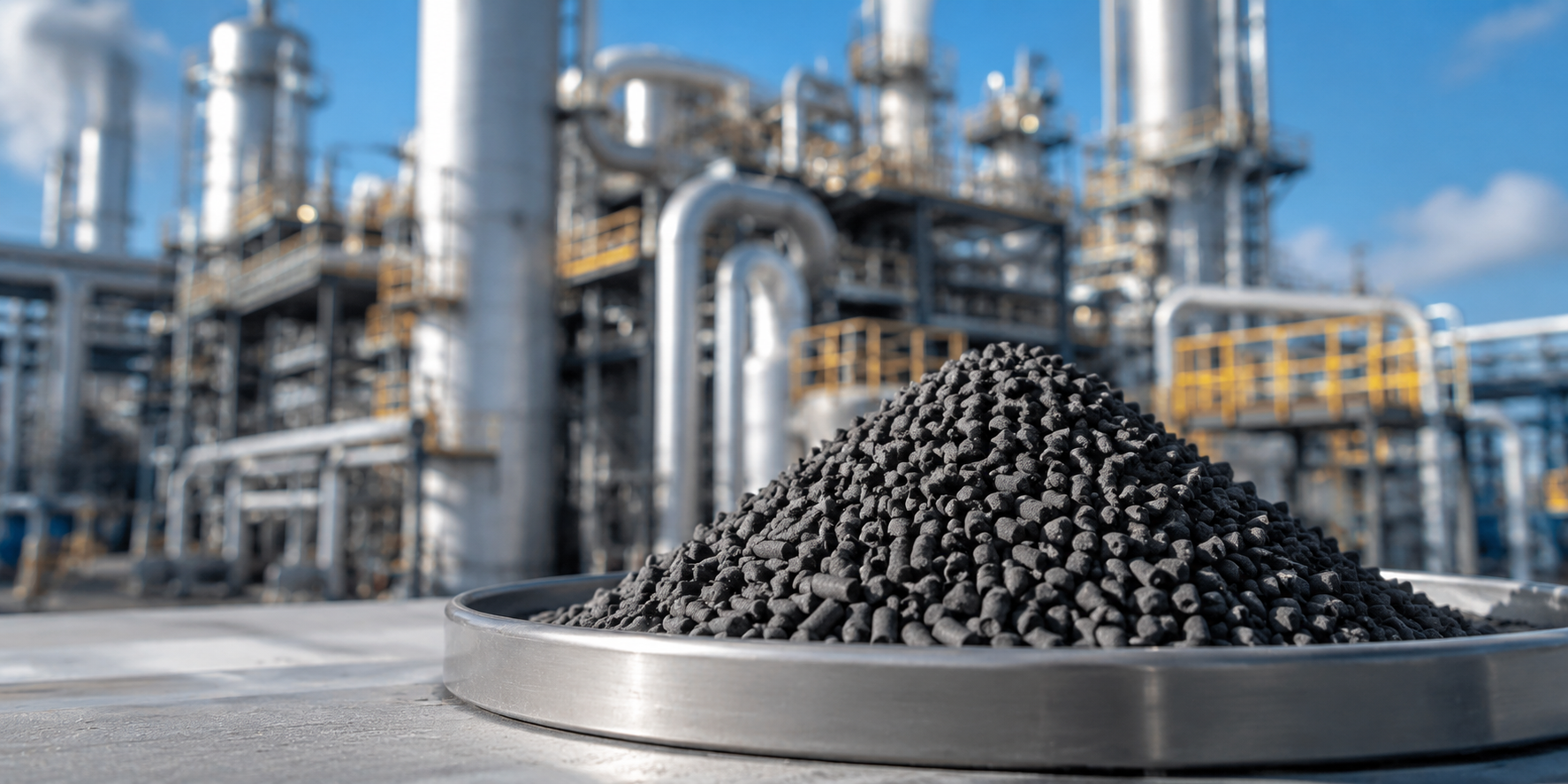
Catalyst technology is becoming increasingly important in advanced manufacturing processes that require precise reactions, reduced energy consumption, and consistent product quality. Catalysts enable chemical reactions to occur faster or under more practical operating conditions without being permanently consumed. Their use supports manufacturers in refining fuels, producing chemicals, developing polymers, controlling emissions, and processing renewable materials. As factories adopt cleaner and more automated production systems, advanced catalytic materials are helping improve reaction selectivity, minimize unwanted by-products, and make complex industrial operations more efficient.
Why Catalysts Matter in Modern Production
Manufacturing companies use catalysts to control how raw materials are converted into useful products. By reducing the energy required to initiate a reaction, a catalyst can help lower processing temperatures, shorten production cycles, and improve overall resource utilization. These advantages are particularly valuable in large facilities where minor efficiency improvements can create meaningful operational savings.
Catalysts are used in petroleum refining, chemical synthesis, polymer production, automotive emission systems, pharmaceutical manufacturing, water treatment, agriculture, and clean-energy technologies. Different processes require different systems, including heterogeneous catalysts, homogeneous catalysts, and biocatalysts. Material choices may include zeolites, metals, enzymes, chemical compounds, and organometallic materials. Selecting the appropriate catalyst depends on reaction conditions, feedstock properties, required product purity, and the expected operating lifecycle.
Expanding Role Across Industrial Operations
According to MarkNtel Advisors, the global catalyst market value was USD 31.48 billion in 2025 and is projected to increase from USD 33.89 billion in 2026 to USD 48.37 billion by 2032, registering an estimated CAGR of 6.11% during 2026–2032. This expansion is associated with refinery investments, rising petrochemical production, tighter environmental requirements, and the adoption of advanced catalytic technologies.
Heterogeneous catalysts are estimated to account for approximately 75% of demand in 2026. These solid catalysts are widely used because they offer thermal stability, reusability, and relatively simple separation from reaction mixtures. Their compatibility with continuous reactors also makes them suitable for high-temperature and high-pressure manufacturing. Improvements in pore structures, active surfaces, and nanostructured materials are further increasing their reaction efficiency and operational durability.
Improving Refining and Chemical Conversion
Petroleum refining remains a major application for catalyst technology. Processes such as fluid catalytic cracking, hydrocracking, hydrotreating, catalytic reforming, alkylation, and isomerization depend on catalysts to convert crude feedstocks into fuels and petrochemical materials. The oil and gas segment represents approximately 33% of catalyst demand, supported by continuing fuel consumption, refinery modernization, and stricter fuel-quality specifications.
Advanced zeolite-based catalysts are helping refiners improve molecular diffusion, conversion rates, and product selectivity. They can support the processing of heavier or more complex feedstocks while limiting unwanted cracking and deposit formation. Catalysts also assist with sulfur removal and fuel upgrading, allowing production facilities to meet cleaner-fuel standards while maintaining acceptable yields. Similar systems are used to manufacture ammonia, methanol, hydrogen, syngas, specialty chemicals, and intermediate materials.
According to the International Energy Agency, energy systems are undergoing significant changes as economies pursue greater efficiency, energy security, and lower-emission production pathways worldwide.
Supporting Cleaner Manufacturing Across Major Regions
Catalysts contribute to cleaner manufacturing by improving reaction efficiency and reducing pollutants generated during industrial operations. Emission-control catalysts can help limit nitrogen oxides, sulfur compounds, carbon monoxide, and other harmful substances. In chemical plants, higher selectivity may reduce waste because more feedstock is converted into the intended output rather than undesirable secondary products.
Asia-Pacific accounts for approximately 41% of catalyst demand in 2026. China, India, Japan, and South Korea have extensive refining, petrochemical, automotive, polymer, and chemical-production capabilities. Manufacturing clusters in locations such as Shanghai, Gujarat, and Ulsan create substantial demand for catalysts used in continuous, large-scale processes. Regional investments in cleaner fuels, hydrogen systems, specialty chemicals, and advanced materials are expected to encourage further adoption.
According to the United States Environmental Protection Agency, controlling emissions from industrial activities is an important part of protecting air quality and reducing environmental and public-health risks.
Managing Materials, Costs, and Supply Risks
Despite their operational benefits, advanced catalysts can present cost and supply challenges. Some systems rely on platinum, palladium, rhodium, iridium, ruthenium, and other valuable metals. Supplies of these materials may be geographically concentrated, while pricing can be affected by mining output, processing capacity, geopolitical conditions, and competition from automotive, electronic, and clean-energy applications.
Manufacturers are responding by reducing precious-metal content, developing base-metal alternatives, improving catalyst lifetimes, and recovering materials from spent systems. Recycling, regeneration, and rejuvenation services are becoming more closely integrated with catalyst supply chains. A used catalyst may retain valuable metals even after its activity declines, making recovery economically and environmentally relevant. However, recycling procedures must address contamination, handling safety, transport requirements, and differences in catalyst composition.
According to the U.S. Geological Survey, mineral supply information is essential for understanding the availability and strategic importance of materials used throughout modern manufacturing systems.
Companies Advancing Catalytic Solutions
Companies active in catalyst development include Albemarle Corporation, Topsoe A/S, BASF SE, Evonik Industries AG, LyondellBasell Industries Holdings B.V., Arkema S.A., Dow Inc., Clariant AG, W. R. Grace & Co., Johnson Matthey Plc, Axens S.A., Honeywell UOP, Zeolyst International, Exxon Mobil Corporation, and Umicore NV/SA.
These participants develop materials and process technologies for refining, petrochemicals, polymers, pharmaceuticals, emissions control, renewable fuels, hydrogen production, and specialty chemical applications. Research priorities increasingly include greater catalyst stability, improved selectivity, lower precious-metal dependence, compatibility with renewable feedstocks, and more efficient regeneration.
Catalyst technology may continue to influence how advanced manufacturing facilities balance productivity, energy use, environmental compliance, and material efficiency. Developments in zeolites, nanostructured surfaces, enzymes, metal recovery, and digital process monitoring could support more precise reaction control. Demand is expected to remain connected to refinery activity, chemical production, polymer consumption, emission regulations, and investment in hydrogen and renewable fuels. Although raw-material constraints and technical costs remain important considerations, improved catalyst design and circular lifecycle services could enable cleaner and more resource-efficient manufacturing systems.
 Italiano
 English
 Arabic
 French
 Spanish
 Portuguese
 Deutsch
 Turkish
 Dutch
 Russian
 Romaian
 Portuguese (Brazil)
 Greek