


How Long Do Carbon Monoxide Detectors Last? 7 Warning Signs It’s Time for a Replacement
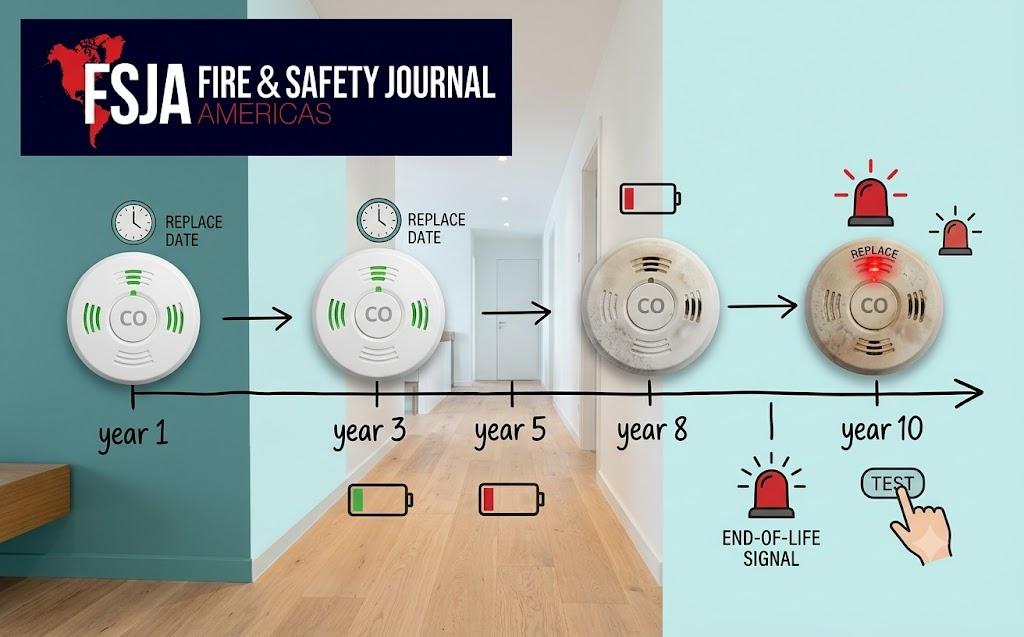
Carbon monoxide is a dangerous gas that cannot be seen, smelled or tasted. It can accumulate indoors when fuel-burning appliances operate incorrectly, ventilation is inadequate or exhaust gases enter a living space. Because people cannot reliably identify carbon monoxide without a suitable alarm, a functioning detector is an important part of household safety.
However, installing a detector is not a one-time responsibility. Sensors have a limited service life, batteries require attention, and older devices may eventually stop providing dependable protection. Homeowners should understand when their equipment needs to be replaced rather than assuming that a familiar alarm will continue working indefinitely. Understanding how long do Carbon monoxide detectors last helps households plan replacements, recognise end-of-life warnings and maintain effective protection.
1. Understanding the Typical Lifespan
Carbon monoxide detectors do not all have the same lifespan. Depending on their design and manufacturer specifications, some models require replacement after approximately five to seven years, while others may remain in service for seven to ten years.
The correct replacement interval is determined by the specific model, not simply by the appearance of the device or the type of power supply. Always consult the product label and instruction manual to identify the recommended replacement date.
The sensor is a particularly important component because it responds to carbon monoxide in the surrounding air. Over time, the sensing technology can deteriorate or become less reliable. Consequently, a detector may look undamaged while approaching the end of its approved service life.
When researching how long do Carbon monoxide detectors last, remember that the manufacturer's stated lifespan takes priority over general estimates.
2. Seven Warning Signs That Replacement May Be Necessary
A. The expiry date has passed
Check the manufacturing date, replacement label or instructions. If the recommended service period has ended, replace the complete alarm even if it appears to operate normally.
B. The device gives an end-of-life warning
Some alarms produce a recurring chirp or display a particular light pattern when their useful life has ended. The exact signal differs by model, so consult the manual rather than assuming every chirp means the same thing.
C. The detector fails a test
Press the test button according to the manufacturer's instructions. If the unit does not respond as expected after checking its power supply, replace it or follow the specified troubleshooting procedure.
D. The housing is damaged
Cracks, water exposure, corrosion or other physical damage can affect the detector's operation. A damaged safety device should not be trusted until the manufacturer's guidance confirms that it remains suitable for use.
E. Persistent fault warnings appear
Repeated malfunction signals may indicate an internal problem. Check the manual to distinguish a fault warning from a low-battery alert or end-of-life signal.
F. The alarm's history is unknown
A detector inherited with a property may already be beyond its recommended service period. Check its date and model details before relying on it.
G. The device has been exposed to unsuitable conditions
Excessive humidity, dust, grease or temperatures outside the permitted operating range may affect performance. Inspect the installation conditions and replace the device if required by its instructions.
3. How to Check Your Detector's Age
Start by locating the manufacturing date or replacement information. Depending on the model, this may appear on the back of the unit, inside the battery compartment or in its accompanying documentation.
If the date is difficult to read, identify the model number and consult the appropriate product manual. Do not estimate the age from the colour of the casing or assume that a recently installed device is newly manufactured.
Record the installation date and the required replacement date in a home maintenance calendar. If the device provides a dedicated replacement label, fill it in clearly.
This simple record makes it easier to answer how long do Carbon monoxide detectors last in your own home without relying on memory.
4. Does Changing the Battery Extend the Lifespan?
No. Replacing a battery restores power when the battery is depleted, but it does not renew an ageing sensor.
Battery-powered, plug-in and hardwired alarms all have model-specific maintenance requirements. Some units use replaceable batteries, while others contain sealed batteries intended to last for the device's service life.
A hardwired alarm can also require replacement even when electricity reaches it. Its sensor and internal electronics remain subject to their own lifespan limits.
Never continue using an expired alarm simply because a new battery makes its lights or test function operate.
5. How to Maintain a Carbon Monoxide Alarm
Routine maintenance supports dependable operation between replacements.
-
Test the alarm monthly, following the instructions.
-
Replace removable batteries when indicated or as directed.
-
Clean the unit only using the approved method.
-
Keep vents and openings clear of dust and obstructions.
-
Avoid painting the alarm or exposing it to unsuitable chemicals.
-
Check the replacement date during regular household safety inspections.
-
Ensure the detector is installed in an approved location.
These steps support maintenance but do not eliminate the need to replace an expired sensor.
6. Where Should Detectors Be Installed?
Install carbon monoxide alarms according to local requirements and the device's instructions. Common recommendations include placing alarms on each level of a home and near sleeping areas, with additional protection where required by applicable regulations.
Avoid locations that may interfere with operation, such as areas exposed to excessive humidity, grease or extreme temperatures, unless the device is specifically approved for those conditions.
An alarm is a backup safety measure, not a substitute for maintaining fuel-burning appliances, checking ventilation or arranging appropriate inspections.
7. Planning a Replacement
When a detector reaches its replacement date, select a suitable model with recognised safety certification for the intended market. Confirm whether it is battery-powered, plug-in or hardwired, and check that its installation requirements match the existing location.
Follow the instructions for removing the old unit and installing the replacement. If the alarm connects to building wiring, obtain qualified assistance where needed. Test the new unit after installation and record its replacement date.
For readers following home safety guidance through Fire & Safety Journal Americas, the key lesson is to treat detector replacement as a planned maintenance task rather than an emergency purchase.
Conclusion
Knowing how long do Carbon monoxide detectors last is essential for maintaining an effective home safety plan. Check the date, understand the warning signals, test the alarm regularly and replace the entire unit when required. A detector that has reached the end of its service life should not be relied upon simply because it still looks new.
Consistent maintenance and timely replacement help ensure that carbon monoxide protection remains part of everyday household safety.
Frequently Asked Questions
1. How often should carbon monoxide detectors be replaced?
Follow the replacement interval specified for the particular model. Depending on the device, this may be approximately five to ten years.
2. Can an expired carbon monoxide detector still beep when tested?
It may respond to a test button, but that does not establish that its sensor remains within its intended service life.
3. Does a chirping detector always mean carbon monoxide is present?
No. A chirp may indicate a low battery, malfunction or end of service life. However, never dismiss a full alarm signal as a routine warning.
4. Should hardwired carbon monoxide detectors be replaced?
Yes, when they reach the manufacturer's replacement date, indicate end of life or fail the prescribed checks.
5. Can regular cleaning make an old detector last longer?
Cleaning can help maintain the device, but it cannot reverse sensor ageing or extend the approved replacement period.
 Russian
 English
 Arabic
 French
 Spanish
 Portuguese
 Deutsch
 Turkish
 Dutch
 Italiano
 Romaian
 Portuguese (Brazil)
 Greek