


Reducing Surface Defects Advanced Paint Booth Defoamer Selection Methods
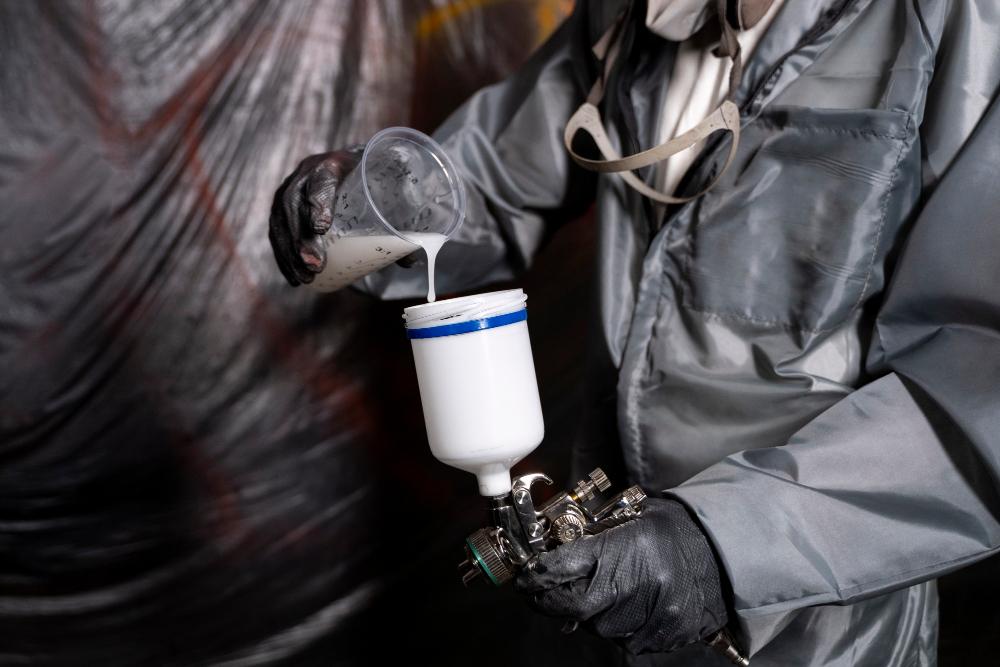
Paint booths require controlled application conditions to achieve smooth finishes, consistent coating thickness, and reliable surface quality. Foam can develop during paint preparation, circulation, mixing, or application, depending on the coating chemistry and equipment used. Excessive bubbles may contribute to pinholes, craters, uneven films, and other visible defects that require additional finishing work. Selecting a suitable paint booth defoamer can help manage foam in compatible coating systems and improve process consistency. Effective selection begins with identifying where bubbles originate, understanding the coating formulation, and evaluating how the treatment interacts with the paint and the overall application process.
Identifying Sources of Foam During Coating Operations
Foam may form when air becomes trapped during mixing, pumping, recirculation, spraying, or transfer between containers. Surfactants, resins, pigments, solvents, and other formulation components can influence how easily bubbles develop and how long they remain stable. In water-based coatings, agitation and certain additives may encourage persistent foam, while other coating systems may experience different air-entrapment challenges. Booth cleaning liquids and contaminated process streams can also contribute to foam in associated systems. Identifying the specific source is essential before choosing a treatment. A targeted assessment helps distinguish formulation-related foam from problems caused by equipment, handling, or application conditions.
How Foam Affects Paint Finish Quality
Excessive foam can compromise the appearance and performance of a finished coating. Bubbles that remain during application may rupture and leave pinholes, craters, or small surface cavities after drying or curing. Other defects can include uneven gloss, inconsistent film appearance, and local variations in coating thickness. These problems may require sanding, recoating, or complete rejection of affected parts, increasing material use and labour costs. The severity depends on coating chemistry, application technique, film thickness, and curing conditions. Effective foam management helps reduce these risks, but it should be combined with suitable application practices and quality checks to achieve a consistently smooth finish.
Selecting a Compatible Defoamer Formulation
Choosing an appropriate formulation requires an understanding of the paint chemistry, including the binder, solvent or water phase, pigments, surfactants, and other additives. A treatment that works well in one coating system may cause defects or instability in another. Compatibility testing should assess dispersion, foam reduction, surface appearance, and the effect on coating properties. Important considerations may include gloss, levelling, adhesion, recoatability, and storage stability. Manufacturers should define their performance requirements before testing potential products. This structured approach helps identify a suitable option while reducing the risk of introducing new surface problems during paint preparation or application.
Understanding the Difference Between Defoamers and Antifoams
Defoamers and antifoams are related foam control products, but their roles may differ according to formulation and application. Antifoams are commonly used to prevent or limit foam formation, while defoamers are often selected to break down foam that has already developed. In practice, many commercial products provide both effects, depending on their chemistry and operating conditions. Paint booth applications may require immediate foam reduction, ongoing prevention, or a combination of these functions. Product selection should therefore be based on actual performance rather than terminology alone. Testing under representative conditions helps determine whether the chosen formulation can control foam without affecting the final coating quality.
Managing Foam in Water-Based Paint Systems
Water-based paints may produce foam during high-speed mixing, pumping, filtration, or spraying. Surfactants and other ingredients can stabilize bubbles, making them difficult to remove before application. Excessive foam may affect paint handling and contribute to defects when the coating dries. A compatible defoamer can help reduce these problems, but its effect on wetting, levelling, gloss, and adhesion must also be considered. The formulation should disperse appropriately within the paint and remain effective throughout the intended process. Manufacturers should evaluate product performance at different addition levels and under realistic application conditions before selecting a treatment for regular use.
Addressing Foam in Solvent-Based Coatings
Solvent-based coatings present different compatibility requirements because their solvents, resins, and additives influence how foam control ingredients behave. A product that performs effectively in a water-based system may not disperse properly or provide the desired results in a solvent-rich formulation. Coating appearance, film formation, drying behaviour, and compatibility with the binder system are important evaluation criteria. Manufacturers should also consider applicable workplace safety and handling requirements associated with the complete formulation. Controlled testing helps establish whether a proposed treatment reduces foam without causing haze, cratering, poor levelling, or other surface defects. Product suitability must be confirmed for the specific coating system.
Evaluating Defoamer Dosage and Dispersion
The correct dosage depends on the coating formulation, foam intensity, process conditions, and characteristics of the selected product. Too little treatment may leave persistent bubbles, while excessive addition can create compatibility issues or negatively affect surface appearance. Accurate dispersion is equally important because uneven distribution may produce inconsistent results across a batch. Manufacturers should follow technical recommendations and establish appropriate dosage levels through controlled trials. Testing should include the actual mixing sequence, temperature, agitation, and application method used in production. Recording dosage, foam reduction, and coating quality provides useful evidence for selecting an effective treatment while maintaining predictable results and controlling chemical consumption.
Improving Paint Preparation and Mixing Procedures
Foam control should begin before the coating reaches the paint booth. Incorrect mixing speeds, excessive agitation, unsuitable impeller design, and rapid liquid transfer can introduce air into the formulation. Allowing adequate deaeration time may help reduce entrained bubbles in some systems, although the effectiveness depends on paint viscosity and process design. Operators should review mixing procedures, transfer arrangements, and storage practices when recurring foam problems occur. A suitable defoamer can complement these process improvements, but chemical treatment alone may not resolve every cause. Consistent preparation methods help reduce variability and create more stable conditions for application and finishing.
Controlling Foam in Paint Circulation Systems
Paint circulation systems maintain coating availability and support consistent application in certain industrial booths. Pumps, return lines, filters, and mixing points can introduce air or increase agitation, creating conditions that encourage foam. Persistent bubbles may interfere with smooth paint delivery and complicate process monitoring. A suitable foam control product should remain compatible with the circulating paint and the equipment involved. Operators should inspect pump seals, pipe connections, return arrangements, and fluid levels to identify mechanical sources of air entrainment. Combining equipment checks with formulation evaluation can improve control and reduce unnecessary chemical additions while supporting reliable coating operations.
Maintaining Surface Quality During Spraying
Spraying introduces additional variables that can affect coating quality, including atomization pressure, spray distance, nozzle condition, airflow, and the condition of the prepared surface. Although not every spray defect is caused by foam, entrained air in the paint can contribute to visible imperfections. Adjusting spray settings and maintaining suitable equipment conditions can help reduce defects that might otherwise be incorrectly attributed to the defoamer. The selected treatment should support foam control without disrupting atomization, wetting, or film formation. Trial applications on representative components provide a practical way to assess surface appearance, coverage, and curing performance before making changes to routine production.
Supporting Paint Booth Water Treatment
Some paint booths use water curtains, wash systems, or recirculating water to capture overspray and help manage airborne coating particles. These systems may accumulate paint residues, surfactants, and other materials that contribute to persistent foam. Excessive bubbling can complicate water circulation, interfere with level monitoring, and increase maintenance requirements. Foam control in these systems may require a product specifically suited to the circulating liquid rather than the coating itself. Facilities can review relevant paint booth applications when evaluating foam management needs. The selected treatment should be tested for compatibility with booth water, accumulated residues, and any downstream treatment processes.
Considering Environmental and Workplace Requirements
Paint booth operations must account for workplace safety, environmental obligations, and the handling requirements of coating additives. Product selection should consider the applicable safety data, storage instructions, personal protective equipment, and waste management procedures. For water-based booth systems, the effect of foam control chemicals on wastewater handling and downstream treatment may also require assessment. Facilities should verify regulatory requirements for their specific coating materials and operating location rather than relying on general product descriptions. Responsible handling and accurate documentation help operators use additives appropriately. A well-designed foam control program balances coating performance with safe application, effective maintenance, and responsible management of process residues.
Testing Defoamer Performance Before Production Use
Laboratory testing helps identify promising products before they are introduced into a full production line. Initial trials can evaluate foam knockdown, prevention of new foam, dispersion, compatibility, and visible changes in the coating. However, laboratory results should be followed by controlled application trials because spray equipment, airflow, film thickness, and curing conditions can influence performance. Testing should use representative paint batches and realistic addition rates. Manufacturers should compare treated samples with untreated controls and record any changes in surface quality or coating properties. A structured evaluation process reduces uncertainty and helps establish whether the proposed treatment meets the facility's actual performance requirements.
Preventing Common Coating Defects
Pinholes, craters, fisheyes, poor levelling, and uneven gloss may arise from different causes, including contamination, surface preparation, application conditions, or incompatible additives. Foam can contribute to some defects, but it should not automatically be considered the cause of every finishing problem. Correct diagnosis requires examining the defect pattern, paint preparation, substrate cleanliness, and curing conditions. Where foam is confirmed as a contributing factor, a suitable defoamer may help reduce its occurrence. Manufacturers should evaluate the complete coating system before changing dosage or introducing a new product. This approach prevents unnecessary formulation changes and supports more reliable defect reduction.
Improving Efficiency and Reducing Rework
Coating defects can increase production costs through additional inspection, sanding, repainting, cleaning, and rejected components. Consistent foam control may help reduce some of these losses when bubbles are a confirmed source of quality problems. However, effective results depend on correct dosage, suitable product compatibility, and repeatable application practices. Production teams should track defect rates, material consumption, rework hours, and treatment costs to evaluate performance over time. Reviewing these measurements can reveal whether a formulation change provides measurable operational value. A balanced improvement program considers both coating quality and total process efficiency instead of judging the treatment solely by its immediate effect on visible foam.
Using Research and Development for Better Formulations
Persistent foam problems sometimes require a more detailed technical investigation. Research and development teams can examine interactions between resins, surfactants, pigments, solvents, and foam control ingredients to identify the cause of poor performance. Facilities exploring tailored solutions can review research and development capabilities when evaluating formulation challenges. Useful testing should reproduce actual production conditions and measure both foam reduction and coating quality. Changes may involve the defoamer chemistry, the addition point, the dosage, or the mixing procedure. A structured development process helps ensure that any proposed solution addresses the underlying problem while maintaining the coating's intended appearance and functional properties.
Establishing a Consistent Foam Control Program
A dependable foam control program combines product selection with standard operating procedures, equipment maintenance, and routine quality monitoring. Facilities should document the approved treatment, dosage range, addition sequence, and required checks for each coating system. Operators need clear guidance on recognizing unusual foam behaviour and reporting changes in paint appearance or application performance. Regular reviews can identify shifts caused by new raw materials, equipment modifications, or changes in production volume. Batch records and defect tracking provide useful evidence for troubleshooting. These measures support consistent decisions across shifts and help prevent repeated problems caused by unrecorded changes or inconsistent chemical handling practices.
Choosing a Reliable Industrial Foam Control Partner
Selecting a technical supplier involves more than comparing product prices. Manufacturers should consider formulation knowledge, technical documentation, product consistency, testing support, and the ability to understand the specific coating process. A useful supplier relationship includes clear communication about operating conditions, compatibility requirements, and the performance outcomes expected from treatment. Facilities may also benefit from exploring broader industrial foam control applications when assessing solutions for different production environments. Proposed products should be validated through suitable trials before regular use. Careful supplier evaluation helps businesses identify practical options and maintain a consistent approach to coating quality and process reliability.
Conclusion
Effective paint booth foam control depends on identifying the source of bubbles, selecting a compatible formulation, controlling dosage, and verifying performance under real application conditions. A suitable defoamer may help reduce foam-related defects, improve coating consistency, and limit unnecessary rework when foam is a confirmed contributor to quality problems. Process monitoring, equipment maintenance, and proper testing remain essential parts of the overall strategy. Manufacturers should assess both immediate foam reduction and the finished coating's appearance and performance. PMC Ouvrie supports industrial foam control needs through formulation expertise and application-focused development, helping manufacturers evaluate solutions suited to their production requirements.
 Portuguese (Brazil)
 English
 Arabic
 French
 Spanish
 Portuguese
 Deutsch
 Turkish
 Dutch
 Italiano
 Russian
 Romaian
 Greek