


Why Pump-Free Dosing Is Becoming the Standard in Water Treatment Plants
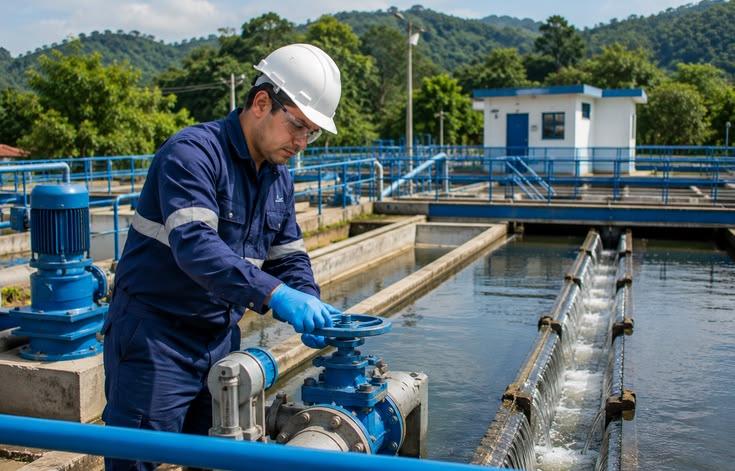
A chemical dosing system does not always need a motor, moving parts or a conventional pump to do its job. In several water treatment applications, a simpler arrangement can draw, mix and deliver chemicals using the pressure of an existing fluid supply. This is the principle behind ejector-based dosing.
For water treatment plant operators, the appeal is straightforward. Fewer mechanical components can mean fewer maintenance requirements, simpler equipment arrangements and more reliable operation under suitable process conditions.
This is one reason why ejector-based systems are gaining attention across industrial water treatment applications. An experienced Ejector Manufacturer in India can help industries select suitable ejector configurations based on chemical compatibility, operating pressure, flow requirements and the intended application.
But how does pump-free dosing actually work, and is it suitable for every water treatment plant? Understanding the engineering behind it helps answer these questions.
What Is Pump-Free Chemical Dosing?
Traditional chemical dosing systems often use metering pumps to transfer chemicals from storage tanks into a process line or treatment vessel. These pumps rely on mechanical components to move and regulate the liquid.
Pump-free dosing using an ejector follows a different approach.
An ejector uses the Venturi principle. A pressurised motive liquid passes through a specially designed nozzle, increasing its velocity and creating a low-pressure region. This pressure difference draws a secondary liquid, such as a treatment chemical, into the ejector.
The two streams mix and are discharged towards the intended process.
In water treatment plants, the motive liquid is generally water, while the secondary liquid may be an acid, alkali or another treatment chemical, depending on the application.
Since the ejector has no moving mechanical parts, it does not require a motor or the mechanical drive arrangement associated with conventional dosing pumps.
However, pump-free does not mean energy-free. The system still requires an adequate motive fluid pressure and flow to generate the necessary suction.
Why Water Treatment Plants Are Considering Ejector-Based Dosing
The shift towards simpler dosing arrangements is closely linked to the operational challenges faced by industrial water treatment facilities.
Equipment must perform consistently, maintenance should be manageable, and chemical handling needs to remain controlled.
Here are some reasons why ejector-based dosing is worth considering.
1. Fewer Moving Parts Mean Lower Mechanical Maintenance
One of the biggest advantages of an ejector is its simple construction.
A conventional chemical dosing pump may contain diaphragms, seals, valves and other components that require periodic inspection or replacement.
An ejector works through fluid dynamics rather than mechanical movement. With no moving parts, there are fewer mechanical components that can fail during operation.
This can be particularly useful in industrial facilities where maintenance teams manage multiple treatment systems and equipment installations.
It does not eliminate all maintenance. Nozzles, pipelines and connections still need periodic inspection, especially when the fluids contain suspended particles or have the potential to cause scaling.
2. Simpler Equipment Arrangements
Installing a conventional dosing pump involves more than the pump itself. Depending on the application, the arrangement may require electrical connections, mounting arrangements, associated valves and other supporting components.
An ejector-based system can simplify the installation where a suitable motive fluid supply is already available.
This can make the overall dosing arrangement more straightforward, particularly in applications involving liquid mixing, chemical dilution and transfer.
For new water treatment projects, this also gives engineers another option to consider during equipment selection and plant layout planning.
3. Reliable Chemical Mixing
Chemical concentration matters in water treatment. Incorrect dilution or inconsistent chemical delivery can affect treatment performance and downstream processes.
An ejector draws the secondary liquid into the motive stream, allowing both liquids to mix before discharge.
The required mixing ratio depends on the ejector design and application. Standard configurations such as 1:1 and 1:5 ratios are available, while customised arrangements can be considered for specific process requirements.
Selecting the correct ratio helps achieve the intended dilution conditions without relying on an unsuitable standard configuration.
4. Reduced Dependence on Electrical Equipment
Since ejectors use fluid pressure rather than an electric motor to create suction, they can be useful in locations where minimising electrical equipment is an operational consideration.
This is particularly relevant in certain chemical handling applications.
However, the complete installation must still comply with the plant's electrical and process safety requirements. The presence of an ejector does not automatically make an entire dosing system suitable for hazardous environments.
How an Ejector Works in Water Treatment Applications
The operating principle is relatively simple, but the nozzle design and pressure conditions are important.
A typical ejector has three main functional sections:
Motive liquid inlet: Pressurised water enters the ejector and moves towards the nozzle.
Suction chamber: As the motive liquid accelerates through the nozzle, pressure reduces. This creates the suction needed to draw the secondary liquid into the chamber.
Mixing and discharge section: The motive and secondary liquids combine and move through the discharge section towards the process.
This arrangement can be used in different industrial applications, including:
-
Chemical dosing in water treatment plants.
-
Acid and alkali dilution.
-
DM plant regeneration arrangements.
-
Water softener brine suction.
-
Liquid mixing and transfer.
-
Selected industrial process applications.
The actual suitability depends on the chemical properties, required flow, available motive pressure and discharge conditions.
Understanding Different Ejector Materials and Configurations
An ejector is not a one-material-fits-all product. The fluid being handled can be corrosive, abrasive or sensitive to temperature variations.
This is why material selection is an important part of the equipment specification.
Sai-Tech Engineers offers different ejector constructions, including MSEL, MSRL and CSEL configurations.
MSEL Ejector: Mild Steel Ebonite Lined
An MSEL Ejector consists of a mild steel outer body with an internal ebonite lining.
The lining provides corrosion protection in suitable chemical service conditions. These ejectors are used in applications involving chemicals such as hydrochloric acid and caustic, subject to the specified operating conditions.
For water treatment facilities, MSEL construction can be considered where the chemical compatibility and temperature requirements match the product specifications.
MSRL Ejector: Mild Steel Rubber Lined
An MSRL Ejector has a mild steel body with an internal rubber lining.
The rubber lining protects suitable applications where the fluid characteristics and operating conditions call for this type of construction.
The choice between ebonite and rubber lining should be based on the chemical being handled, concentration, temperature and other process conditions.
An MSRL configuration may be suitable for specific industrial liquid handling requirements, but it should not be selected solely because it is rubber lined.
CSEL Ejector: Carbon Steel Ebonite Lined
A CSEL ejector uses a carbon steel outer body with an internal ebonite lining.
This construction combines the structural properties of carbon steel with the corrosion protection offered by the lining in compatible service conditions.
It can be considered for applications where the specified mechanical and chemical requirements make this material combination suitable.
The important thing is to match the ejector construction to the actual process rather than choosing equipment based only on its material name.
What Should You Check Before Replacing a Dosing Pump with an Ejector?
Although ejectors offer several advantages, they are not suitable for every dosing application. Replacing a conventional pump without evaluating the process requirements can create operational problems.
Before selecting an ejector, engineers should consider the following factors.
1. Available motive pressure: An ejector needs adequate inlet pressure to generate the required suction. If the available pressure is insufficient, the intended flow and mixing performance may not be achieved.
2. Required chemical flow: The ejector must be sized according to the quantity of chemical that needs to be drawn and delivered.
3. Mixing ratio: The required dilution ratio should be established before selecting the ejector configuration.
4. Chemical compatibility: The body and lining materials must be compatible with the chemical concentration and operating temperature.
5. Discharge pressure: The pressure conditions at the outlet influence ejector performance and must be considered during selection.
6. Process requirements: Some applications require highly precise, independently adjustable dosing. A conventional metering pump may remain more appropriate in such situations.
A technical evaluation helps determine whether an ejector can perform the required function effectively.
Why the Right Ejector Manufacturer Matters
Ejector performance depends on more than its external dimensions. Nozzle geometry, material selection, suction capacity, motive pressure, and discharge conditions all affect performance.
Working with an experienced Ejector Manufacturer in India lets industrial buyers evaluate these parameters before finalising an installation.
Sai-Tech Engineers manufactures industrial ejectors in different material configurations, including MSEL, MSRL and CSEL. Its product range serves water treatment and process industry applications, with standard and customised mixing-ratio options.
The company also serves international markets. Businesses exploring MSEL ejector requirements in Dubai can consider Sai-Tech Engineers for Indian-manufactured ejector solutions, depending on their application and technical specifications.
Conclusion
Pump-free dosing is gaining attention because it offers a simpler way to handle selected chemical mixing and transfer requirements in water treatment plants. By using motive fluid pressure instead of mechanical pumping components, ejectors can reduce maintenance requirements and simplify equipment arrangements.
However, the real benefit comes from selecting the right ejector for the process. MSEL, MSRL, and CSEL constructions serve different material and application requirements, so chemical compatibility and operating conditions are essential considerations.
For water treatment operators and project engineers, ejector-based dosing is worth evaluating wherever the process allows it. Sai-Tech Engineers offers a range of industrial ejectors designed around these varied application requirements, helping businesses identify suitable equipment for their operations.
Visit: https://mselejector.com/

 Arabic
 French
 Spanish
 Portuguese
 Deutsch
 Turkish
 Dutch
 Italiano
 Russian
 Romaian
 Portuguese (Brazil)
 Greek