


Non-Woven Fiber Wheel Production Equipment: Questions Worth Asking Before the Deposit
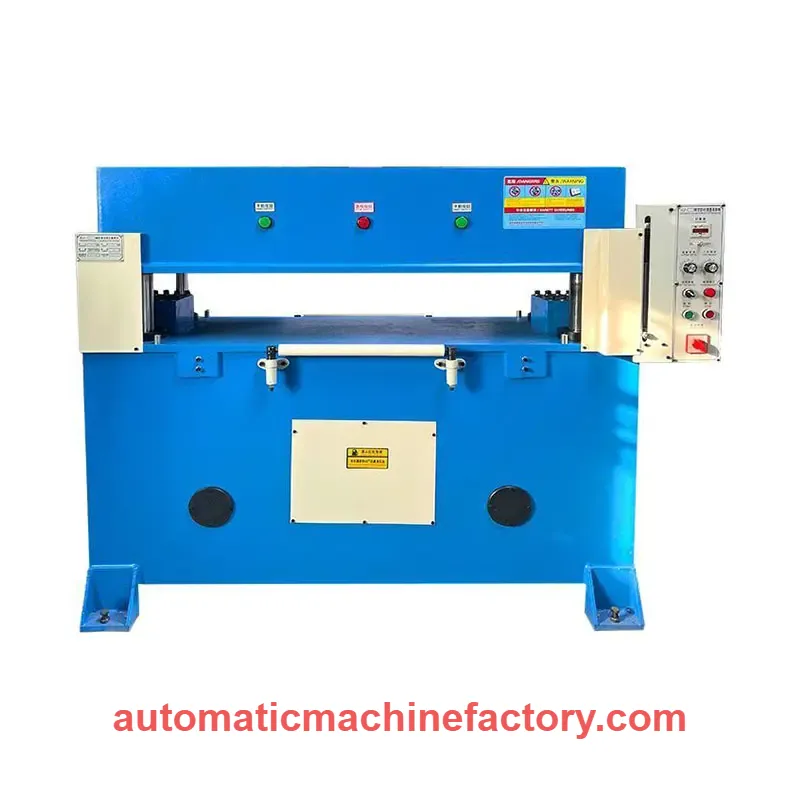
A polishing wheel looks like a simple product until you try to make one consistently. The fiber web has to be opened evenly, the adhesive has to penetrate without saturating, the abrasive has to distribute across the surface rather than clumping in one zone, and the finished disc has to cut cleanly without fraying at the edge. Anyone who has run a small workshop knows how quickly those requirements turn into a daily argument between speed and quality. That is the gap Non-Woven Fiber Wheel Production Equipment is meant to close, and it is the reason buyers should evaluate such a line as a connected process rather than a list of separate machines.
Material behavior drives most of the engineering decisions. Non-woven fiber arrives in different densities and fiber lengths, and the bonding stage has to apply adhesive in a controlled way so that the web holds together without becoming stiff or losing its open structure. The abrasive application that follows determines whether the wheel performs as a coarse grinding tool or a fine finishing tool, and the transition between those roles is largely a matter of how evenly the grit is distributed. Cutting is the stage where material quality becomes visible: a hydraulic cutting system that maintains clean edges will produce wheels that mount properly and wear predictably, while imprecise cutting creates rejects that never leave the warehouse. Yongkang Tarun Technology Co., Ltd. builds its automaticmachinefactory line around in-house development and manufacturing of the bonding and cutting stages, which is how process consistency is maintained from one unit to the next rather than varying with assembly habits.
Buyers entering this category usually have a target market in mind, and the equipment should be specified against that market rather than against a brochure. A workshop supplying general hardware retailers needs volume and repeatability, so the line should prioritize stable output and simple changeover between wheel sizes. A supplier serving specialist finishing customers needs flexibility in density, thickness, and grit combination, which places more demands on the bonding and abrasive stages and on how easily recipes can be adjusted. Both types of buyer should ask how the supplier validates output quality, whether sample runs can be arranged before purchase, and what support exists for commissioning and operator training. Those answers often matter more than the price difference between two quotations.
Automation is where the economics of this equipment become interesting. A fully automated line reduces the labor content per wheel and removes the variation that comes from manual adhesive application or hand-fed cutting. The value is not only in headcount; it is in the reduction of rejects, because a process that repeats the same action identically produces a wheel that behaves the same way in the customer's hands. Buyers should examine how the control system handles recipe changes, how the line behaves when fiber feed varies, and whether the cutting stage can be adjusted without stopping production for an extended period. Sustainability is a related consideration, since many non-woven lines can incorporate recycled fiber, and the ability to run reclaimed material without compromising bond strength is worth confirming.
For operators, the difference between a good line and a frustrating one shows up in the small routines of a shift. Loading fiber, checking adhesive flow, clearing offcuts, and monitoring the cutting stage should not require improvisation. A machine that demands constant attention trains operators to work around problems rather than solve them, and the resulting inconsistency reaches customers. Training and documentation deserve equal weight, because a line that only one technician understands becomes a bottleneck the moment that person is unavailable. Workshops investing in this equipment should insist on clear operating procedures and accessible technical support.
Layout and appearance in industrial equipment are not about aesthetics alone. A line that arranges the bonding, abrasive, and cutting stages in a logical flow reduces handling between steps and keeps the workshop organized. Machine frames that allow access for cleaning and maintenance extend service life more reliably than any feature list. The automaticmachinefactory range approaches equipment design as a production system, with stage placement and access built in rather than added later, and buyers can review how the nonwoven fiber wheel line is structured at https://www.automaticmachinefactory.com/, which is the level of practical detail worth confirming before committing to any Non-Woven Fiber Wheel Production Equipment purchase.
 Deutsch
 English
 Arabic
 French
 Spanish
 Portuguese
 Turkish
 Dutch
 Italiano
 Russian
 Romaian
 Portuguese (Brazil)
 Greek