


The Facility Manager's Guide to Maintaining Compliance During Fire Watch Events
Navigating Complex Life Safety Code Mandates
Facility managers operating commercial office buildings, industrial manufacturing plants, educational campuses, and medical complexes bear tremendous legal and operational responsibilities. Among the most challenging situations a manager can face is a sudden failure or scheduled shutdown of primary life safety systems. When water mains burst, fire pumps fail, or main control panels malfunction, the facility instantly enters a high-risk operational state governed by strict municipal, state, and federal safety mandates.
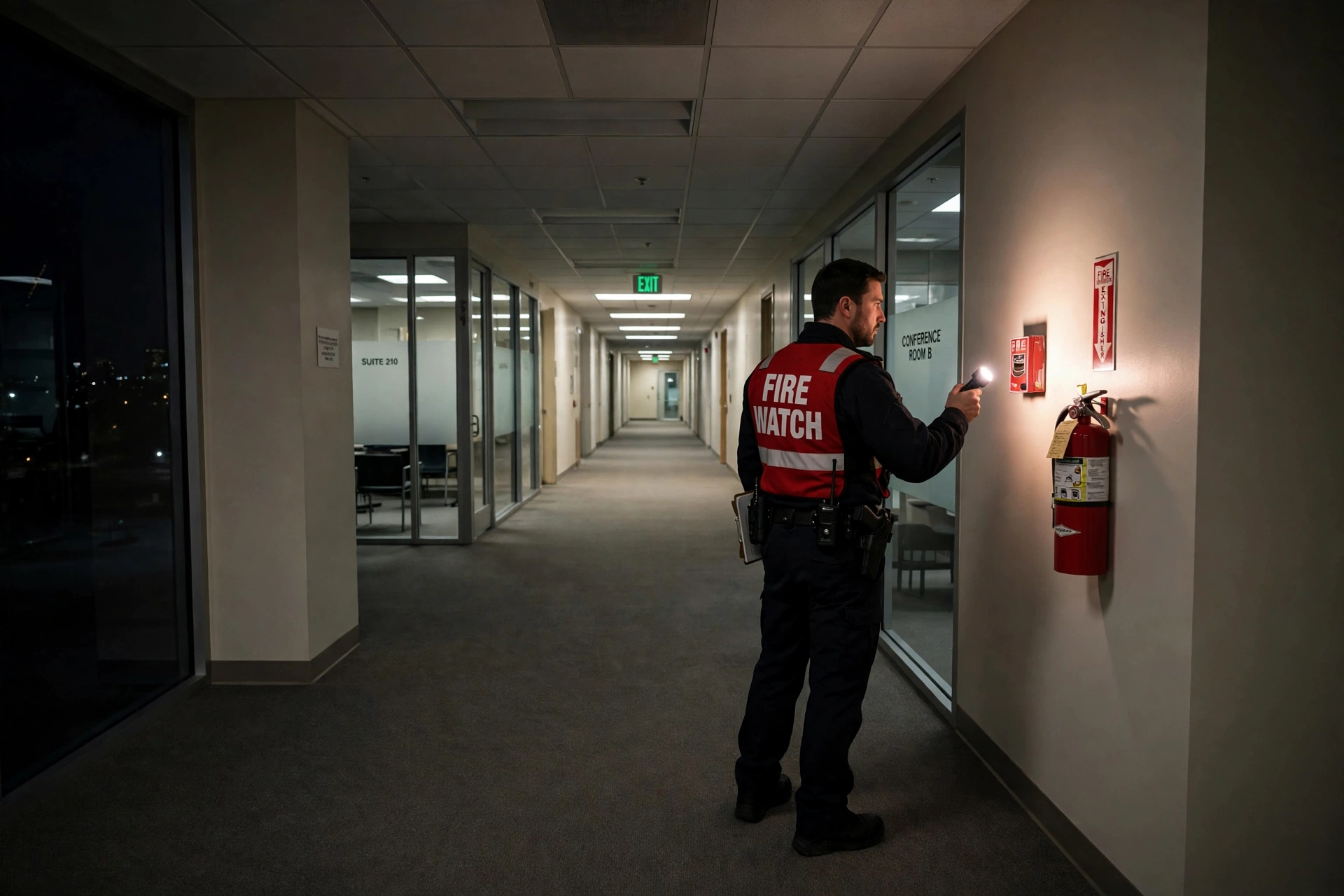
Navigating these regulatory requirements demands a clear understanding of international building codes and standards established by the National Fire Protection Association. When central alarm or suppression networks are offline for extended periods, facility managers must immediately execute a formal fire watch protocol to maintain legal occupancy. Implementing a compliant manual surveillance program requires rapid coordination, detailed logbook recording, continuous physical patrols, and clear communication with municipal enforcement authorities.
Understanding NFPA Rules and Municipal Directives
National safety standards mandate that building management initiate continuous manual safety monitoring whenever a required fire protection system is out of service for more than four hours within a twenty-four-hour window. This strict requirement applies universally across all commercial, industrial, institutional, and high-density residential properties. The overarching objective is to replace automated electronic sensors with trained human observers capable of detecting heat, smoke, or fire anomalies before structural damage occurs.
Local municipal fire marshals enforce these national guidelines through local municipal ordinances, often adding specific operational directives tailored to local building density and emergency response capabilities. Municipal codes dictate exact monitor-to-square-footage ratios, patrol frequencies, reporting timelines, and logbook storage standards. Maintaining absolute compliance with these dual regulatory frameworks protects facility managers from severe municipal penalties and shields property owners from catastrophic legal liabilities.
Key NFPA Standards Governing System Outages
Specific sections of national life safety codes outline explicit instructions for managing building impairments. Codes dictate that property administrators must conduct immediate risk assessments, isolate defective system sectors, post warning signage, notify municipal dispatch centers, and deploy certified human monitors to patrol affected building zones until repairs are fully completed and certified.
Local Municipal Regulations and Fire Marshal Directives
While national guidelines provide a broad framework, local municipal fire marshals hold ultimate enforcement authority within their jurisdictions. Fire officials may impose custom monitoring mandates, such as requiring dedicated monitors on every floor of high-rise structures or increasing patrol frequency in facilities housing vulnerable populations. Establishing proactive communication with local code officials guarantees full operational alignment.
Developing a Step-by-Step Incident Response Strategy
When an unexpected life safety system failure occurs, facility managers must act decisively to execute a compliant incident response plan. Having a pre-established, step-by-step strategy eliminates confusion, prevents operational downtime, and ensures that critical safety steps are never overlooked during chaotic emergency situations. The response sequence begins the moment a system defect is detected by building engineers or automated diagnostic panels.
First, the manager must immediately isolate the damaged system component to prevent localized water or electrical damage while keeping functional sectors operational if possible. Second, formal notifications must be dispatched immediately to local fire department control centers and commercial insurance carriers.
Third, the manager must contract a certified, professional safety monitoring vendor to deploy trained personnel to the property without delay. Finally, structural entry points must be secured, and continuous physical patrols must commence immediately.
Immediate System Isolation and Emergency Notifications
Upon discovering a major system defect, building engineers must isolate damaged water risers or electrical sub-panels to mitigate immediate property damage. Simultaneously, the facility manager must contact local municipal fire dispatchers, providing detailed information regarding the nature of the outage, affected building sectors, estimated repair timelines, and planned temporary safety measures.
Professional Vendor Deployment and Site Onboarding
Partnering with an established security vendor guarantees that certified monitoring personnel arrive on site rapidly. Upon arrival, the facility manager conducts a thorough onboarding briefing, reviewing floor plans, identifying hazardous material storage vaults, highlighting primary evacuation routes, issuing communication radios, and establishing official logbook tracking stations.
Mastering Physical Logbook Documentation and Audit Compliance
In the eyes of municipal fire marshals and legal compliance auditors, an unrecorded safety patrol simply did not happen. Maintaining continuous, flawless physical documentation is the single most critical aspect of managing a successful manual monitoring event. Regulatory authorities inspect monitoring logbooks with extreme scrutiny during routine audits or following minor emergency incidents.
A fully compliant monitoring logbook must contain explicit, time-stamped entries recorded at regular intervals throughout every shift. Entries must document the full name of the monitoring officer, exact start and end times of each patrol loop, specific building sectors and rooms inspected, environmental conditions observed, and any corrective actions taken regarding identified hazards. Keeping organized, professional documentation provides indisputable proof of regulatory compliance, protecting management from municipal fines and legal disputes.
Essential Data Fields for Compliant Record-Keeping
Standardized monitoring logbooks must capture precise operational metrics to satisfy municipal enforcement standards. Required data fields include officer names, shift dates, time-stamped entry logs, specific floor and room locations checked, status of emergency exit corridors, portable extinguisher inspection stamps, and notes on any identified thermal or electrical anomalies.
Audit Preparation and Document Archiving Strategies
Logbooks must remain physically present at the primary building security console or main administrative office throughout the system outage event. Once mechanical repairs are completed and automated systems are restored, the facility manager must archive all physical logbooks securely for a minimum of three to five years to satisfy legal compliance and insurance audit requirements.
Mitigating Liability and Preserving Insurance Policy Integrity
Operating a commercial facility during a safety system outage introduces significant legal and financial liabilities. Should a fire incident occur while automated sprinklers or alarms are defective, plaintiff attorneys and insurance adjusters will meticulously examine whether management took every reasonable precaution to protect human life and structural property. Demonstrating that management instituted a certified manual monitoring program provides a powerful legal defense against claims of gross negligence.
Furthermore, commercial property insurance policies contain explicit policy warranties requiring immediate insured action during system impairments. Failure to deploy qualified monitoring personnel can invalidate multi-million dollar property insurance coverage, leaving building owners fully liable for all fire-related repair costs, business interruption losses, and third-party injury claims. Maintaining compliant manual monitoring protocols safeguards corporate assets and ensures uninterrupted insurance policy coverage.
Navigating Insurance Policy Warranties and Exceptions
Commercial insurance contracts contain strict covenants detailing property owner duties during utility and safety system failures. Underwriters mandate immediate deployment of authorized safety guards as a mandatory condition for maintaining active policy coverage. Adhering strictly to these contractual warranties eliminates coverage denial risks during catastrophic loss events.
Protecting Corporate Reputation and Stakeholder Trust
Beyond legal and financial metrics, protecting corporate reputation is paramount for commercial property managers. Demonstrating a proactive, unyielding commitment to tenant safety during equipment breakdowns builds deep trust among corporate clients, residents, and municipal leaders, solidifying the facility's standing as a safe, professionally managed real estate asset.
Sustainable Operational Excellence Through Preparedness
Managing a safety system failure demands exceptional leadership, rapid execution, and absolute regulatory compliance.
By understanding NFPA guidelines, establishing rapid vendor deployment protocols, enforcing meticulous logbook documentation, and maintaining close coordination with municipal fire marshals, facility managers successfully navigate high-risk outage events.
For more details visit our website: https://firewatchguards.net/
Prioritizing structured human monitoring protects structural investments, maintains legal business operations, and ensures complete peace of mind through any facility emergency.

 Arabic
 French
 Spanish
 Portuguese
 Deutsch
 Turkish
 Dutch
 Italiano
 Russian
 Romaian
 Portuguese (Brazil)
 Greek