


Financial Mechanics: Calculating Old Mobile Home Tear Down Costs vs. Salvage Recovery
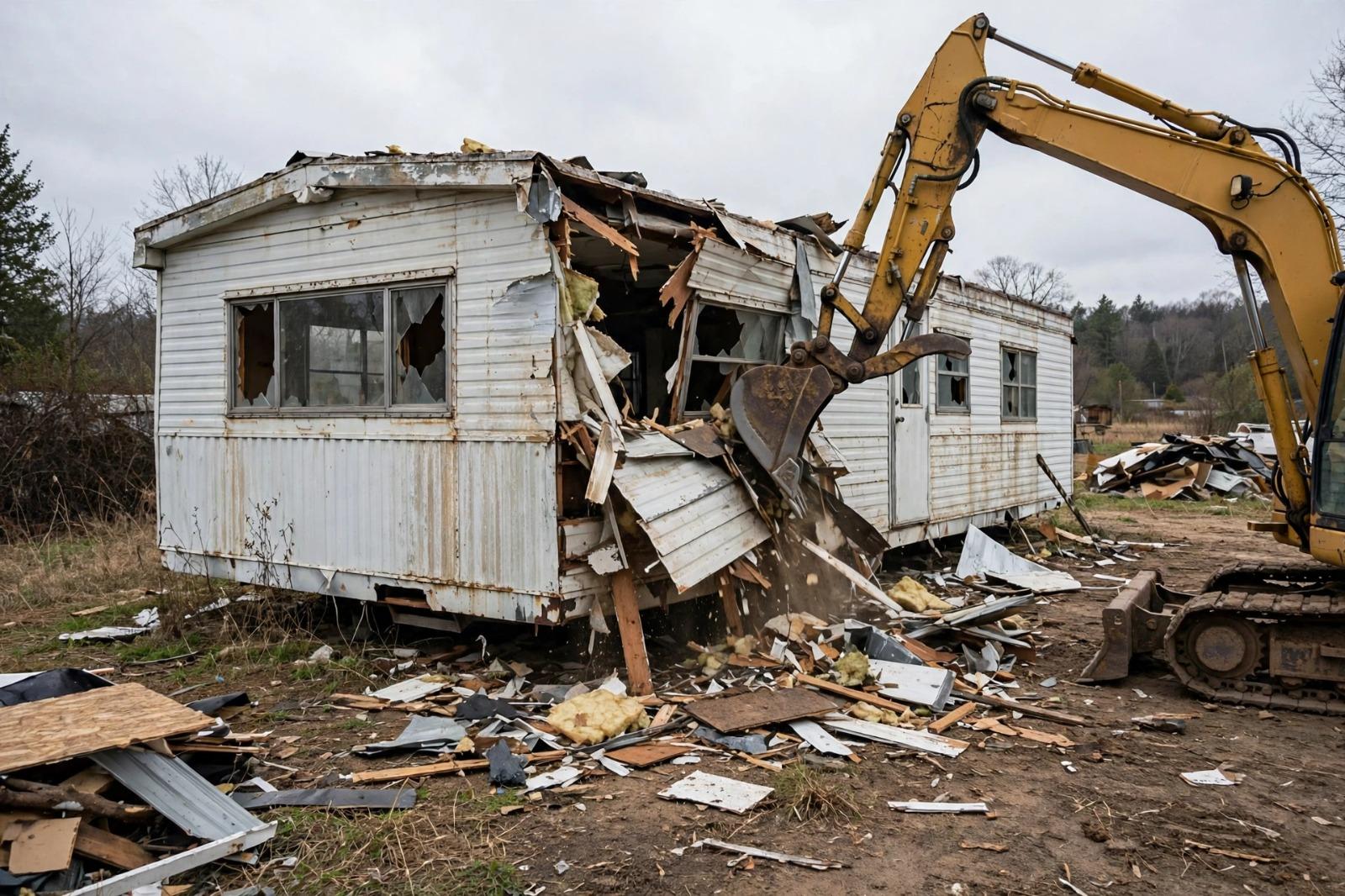
Property owners evaluating how to handle an obsolete manufactured structure on their land often face a difficult financial dilemma. Deciding whether to invest thousands of dollars into total structural demolition or explore alternative salvage recovery models requires a detailed analysis of labor, machinery, dumping fees, and scrap metal valuations. Understanding the underlying financial metrics of structural clearance allows landowners to make informed choices that preserve their capital.
Calculating a comprehensive Old Mobile Home Tear Down budget involves looking far beyond basic contractor labor rates. Hidden expenses such as municipal permit fees, hazardous material disposal surcharges, roll-off dumpster rentals, and heavy equipment transportation fees can quickly escalate overall project costs. Analyzing these financial variables against potential material recovery values reveals strategies to clear your parcel without unnecessary financial drain.
Itemizing Direct Demolition Expenses and Municipal Fees
A complete financial assessment begins by itemizing direct out-of-pocket demolition costs. Hiring a licensed demolition contractor typically involves base hourly charges for heavy equipment operators, fuel surcharges, and mobilization fees to transport machinery to your property. Depending on your geographic region and site accessibility, equipment mobilization alone can represent a significant percentage of initial project estimates.
Municipal permitting requirements add another layer of direct cost to structural tear downs. Local building departments routinely require demolition permits, environmental impact reviews, and utility disconnect inspections before work can legally begin. Furthermore, regional landfills charge tipping fees based on total waste weight, with specialized surcharges for bulky building debris like shingles, insulation, and treated lumber.
Evaluating Scrap Metal Values and Salvageable Components
While structural tear down generates substantial waste, obsolete manufactured buildings also contain valuable raw materials that hold significant commodity value. The heavy steel chassis frame, axle assemblies, aluminum siding, copper plumbing, and brass fixtures can be recycled at regional metal processing facilities. Calculating the total weight and market value of these metals reveals opportunities to offset overall demolition expenses.
Beyond scrap metals, functional architectural elements can be salvaged for resale or personal reuse. Undamaged vinyl window units, exterior doors, metal roofing panels, gas water heaters, and furnace assemblies often command strong demand in secondary markets. Carefully dismantling these components prior to structural demolition transforms potential landfill waste into liquid capital, reducing net clearing expenses.
Labor Efficiency: Professional Machinery vs. Manual Deconstruction
Choosing between heavy machinery tearing down and manual hand deconstruction significantly impacts total project costs and operational timelines. Renting an excavator with an operator accomplishes structural tear down in a single day, minimizing labor hours but incurring higher equipment fees. Conversely, manual deconstruction utilizing hand tools requires multiple days of labor, increasing workforce expenses while yielding higher rates of clean, undamaged salvage materials.
Landowners must weigh time constraints against available budget parameters when selecting a structural removal strategy. For tight construction deadlines, rapid mechanical tear down remains the most efficient choice despite equipment rental costs. For property owners with flexible schedules, selective manual deconstruction combined with targeted recycling offers an economical, budget-friendly alternative.
Formulating a Balanced Cost-Recovery Strategy
Achieving an optimal financial outcome requires combining efficient machinery usage with proactive material salvage operations. Work crews harvest high-value scrap metals and reusable fixtures before deploying heavy equipment to crush remaining wood framing and insulation. This balanced approach minimizes landfill tipping weights while capturing maximum scrap market returns.
For more details visit our website: https://washingtonfreemobilehomeremoval.com/
Ultimately, understanding structural removal economics empowers property owners to make sound financial choices for their land. Working with specialized removal partners allows you to navigate equipment logistics, waste disposal rules, and salvage recovery seamlessly. Transforming structural liabilities into clean, usable real estate enhances your overall property value while keeping operational costs under control.
 Greek
 English
 Arabic
 French
 Spanish
 Portuguese
 Deutsch
 Turkish
 Dutch
 Italiano
 Russian
 Romaian
 Portuguese (Brazil)