


Autonomous Vehicles: Transforming the Future of Commercial Logistics
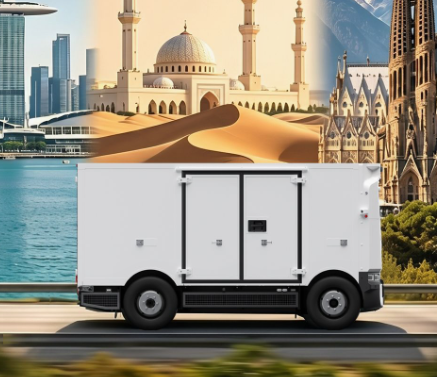
Autonomous vehicles are changing commercial transportation by combining artificial intelligence, advanced sensors, and intelligent control. These technologies help businesses automate deliveries and improve logistics operations.
1. What Are Autonomous Vehicles?
Autonomous vehicles use sensors, onboard computing, and artificial intelligence to understand their surroundings and perform driving tasks with reduced human intervention. In commercial logistics, autonomous vehicles are designed to transport parcels, supplies, and other goods along defined routes. Zelostech focuses on this market through its RoboVan platform, which combines vehicle engineering with in-house autonomous driving technology.
2. How Autonomous Driving Technology Works
Modern autonomous vehicles rely on multiple technologies to navigate complex environments. LiDAR, radar, cameras, and ultrasonic sensors collect information about nearby objects, road conditions, and obstacles. Zelostech integrates these technologies into a 360-degree perception system. Its unified architecture connects environmental perception, decision-making, and vehicle control, supporting more coordinated autonomous operation.
3. Applications in Commercial Logistics
Autonomous vehicles can support many transportation activities beyond traditional parcel delivery. Common applications include retail replenishment, pharmaceutical distribution, industrial park logistics, warehouse transfers, agricultural transportation, and hospitality services. These vehicles are particularly useful for recurring transportation tasks where businesses need reliable movement of goods between designated locations.
4. Zelostech RoboVan Product Portfolio
Zelostech offers several autonomous vehicles designed for different cargo requirements. The Z5 supports urban delivery and commercial transportation, while the Z5 Cold-Chain is designed for temperature-controlled goods. The Z5 Multi-Locker provides multiple compartments for parcel distribution. For larger transportation needs, the Z10 and Z10 Cold-Chain offer additional cargo capacity and specialized configurations.
5. Improving Logistics Efficiency
By automating repetitive transportation tasks, autonomous vehicles can help businesses improve fleet utilization and organize delivery schedules. Connected vehicle systems also provide operational information that supports route planning and fleet supervision. The actual benefits depend on route conditions, vehicle capacity, operating hours, and deployment requirements. Businesses should evaluate these factors before introducing autonomous transportation into existing workflows.
6. Safety and Intelligent Control
Safety is essential for the practical deployment of autonomous vehicles. Zelostech combines multi-sensor perception with an integrated driving architecture to help vehicles detect obstacles and respond to changing environments. Its L4 autonomous driving computing unit is designed to deliver high-performance perception and decision-making with power consumption below 100 watts. Operations must also follow applicable regulations and defined operating conditions.
7. The Future of Autonomous Vehicles
As autonomous technology develops, autonomous vehicles are expected to support more commercial transportation scenarios. Zelostech continues to expand its RoboVan platform for urban delivery, industrial logistics, cold-chain transportation, and other applications. By combining intelligent driving systems with practical vehicle configurations, the company aims to make logistics more automated, flexible, and efficient.

 Arabic
 French
 Spanish
 Portuguese
 Deutsch
 Turkish
 Dutch
 Italiano
 Russian
 Romaian
 Portuguese (Brazil)
 Greek