


Logo Printing on Clothes: A Practical Guide for Melbourne
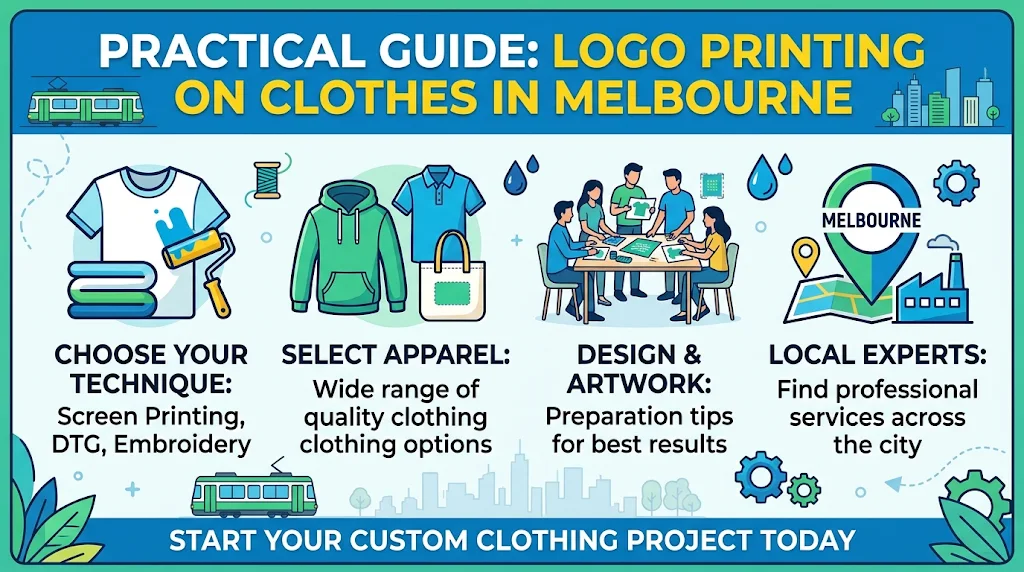
Your café team needs new shirts before opening weekend, or your community group wants matching clothing for an upcoming fundraiser. You have a logo and a budget, but choosing the right garment, printing method and supplier feels more complicated than expected. How do you avoid ordering something that looks impressive on screen but disappoints when worn?
For people comparing logo printing on clothes in Melbourne, Australia, the best starting point is the job those clothes need to do. Rather than choosing on price alone, build your order around comfort, readable branding, realistic deadlines and a clear approval process.
Start With Everyday Melbourne Needs
Before requesting quotes, describe a typical day for the person wearing the garment. Will they serve customers indoors, carry equipment outside, attend a university event or represent a business at a weekend market? Use those scenarios to decide what matters most.
For a hospitality team, ask staff to assess movement, fit and comfort during a trial shift. For an event crew, consider whether visitors should recognise volunteers from across a room. For a community organisation, check whether the proposed size range accommodates everyone participating.
Think about layers, too. Melbourne visitor guidance recommends clothing that can be added or removed as conditions change, rather than relying on one heavy outfit. 1784 Ask to see your logo mocked up on both the T-shirt and any outer layer you intend to order.
Prepare a short brief covering:
-
Who will wear the clothing and where
-
Quantities, garment colours and size requirements
-
Logo placement and approximate dimensions
-
The date the finished order must arrive
-
Washing routines and any workplace-specific requirements
This gives suppliers something concrete to assess and helps you compare recommendations fairly.
Match Printing to the Garment
A useful conversation about custom logo t-shirt printing starts with fabric, artwork and order size—not simply a preferred technique. Screen printing suits bold designs and larger runs, while direct-to-garment printing is generally strongest on cotton garments.
Use these distinctions to frame your questions:
| Method | Practical starting point | Question to ask |
|---|---|---|
| Screen printing | Simple graphics, bold shapes and larger quantities. 1777 | What happens to the quote if we add another colour? |
| Direct-to-garment printing | Detailed, full-colour artwork on cotton or cotton-rich shirts. 1780 | Can we inspect a sample on our chosen garment? |
| Direct-to-film transfers | Designs transferred from film using heat, with options for cotton, polyester and blends. | Has this transfer been tested on this exact fabric? |
Avoid treating fabric compatibility as a blanket guarantee. Polyester printing can require particular attention to dye migration, so ask for a test before approving light-coloured branding on a dark polyester garment.
Also discuss how the finished design should feel. A large graphic and a small chest logo create different wearing experiences; request physical samples rather than judging everything from photographs.
Compare Melbourne Printing Services Fairly
Searching for best t-shirt printing melbourne is a reasonable first step, but turn that broad search into a specific checklist. Your strongest option should be able to explain the proposed process, identify uncertainties and document what you are approving.
Send every shortlisted supplier the same brief. Request an itemised quote covering garments, decoration, artwork preparation, delivery and GST treatment. Ask whether the price changes for additional print positions, individual names, larger sizes or a smaller repeat order.
For context, JBUniforms describes its offering around uniforms and logo embroidery, with customers across healthcare, hospitality and other industries. When reviewing any provider, verify whether your requested printing method is available instead of assuming that uniform supply, embroidery and T-shirt printing are interchangeable services.
Before paying a deposit, ask:
-
Is the specified garment available in every required size?
-
Does production begin after artwork approval or sample approval?
-
What is the confirmed dispatch date?
-
How are printing mistakes or damaged items handled?
-
Can the same garment and decoration be reordered later?
Keep written answers alongside the final proof. They provide a practical reference if expectations differ.
Make Artwork and Fit Work
Treat artwork approval as a production decision, not a quick email formality. Ask the printer which file formats they accept, whether the supplied logo needs redrawing and what the finished dimensions will be.
Specify placement in measurements where possible. “Small logo on the front” leaves room for interpretation; an agreed width and position are easier to review. Request a proof showing the actual garment colour, front and back decoration, and any individual names.
Check contrast and legibility at the intended size. Read every word yourself, then ask another person to check spelling, phone numbers and web addresses. For a local event shirt, prioritise the information someone needs to recognise quickly rather than including every available detail.
Fit deserves the same attention. Request a size chart for the exact garment and, where practical, arrange a sample fitting. Ask wearers to try normal movements such as reaching, bending and sitting.
For example, a hypothetical Melbourne café could trial two shirt styles with staff before ordering. That small approval step lets the team choose based on actual wear rather than a product photograph.
Plan for Care and Repeat Orders
Build garment care into the purchasing decision. Printed T-shirt guidance commonly recommends washing inside out, using cool water and avoiding excessive heat, while following the garment’s care label. Ask whether those instructions suit your team’s real laundry routine before committing.
For specialised workwear, separate branding decisions from safety decisions. WorkSafe Victoria identifies high-visibility clothing as personal protective equipment and stresses that PPE is the lowest and least reliable level of workplace risk control. Ask the responsible workplace safety adviser to review any proposed decoration before modifying protective garments.
Keep a simple reorder record containing the garment code, colour, approved artwork, print measurements and supplier contact. Add a photograph of the accepted sample and note who authorised it.
If sustainability matters to your organisation, request specific evidence rather than accepting a broad “eco-friendly” description. Ask what the claim covers: the garment, packaging, printing materials or production process. Include fit accuracy and realistic quantities in your own purchasing checklist to avoid unnecessary purchases.
Questions Before You Place an Order
What should I send for an accurate quote?
Send quantities, sizes, garment preferences, artwork, print locations and your required delivery date. Ask the supplier to identify assumptions or missing information before you compare prices.
Can I print a multicolour logo on polyester?
Direct-to-film printing offers options for polyester, but the exact fabric and application process still need checking. Request a sample using your chosen garment and artwork.
How do I judge value beyond price?
Compare the approved sample, written specifications, delivery commitment and repeat-order arrangements. A useful final question is: “What could change the price or delivery date after I approve this quote?” Resolve that before placing the order.

 English
 Arabic
 French
 Spanish
 Portuguese
 Deutsch
 Dutch
 Italiano
 Russian
 Romaian
 Portuguese (Brazil)
 Greek