


Guniting for Structural Repair and Concrete Rehabilitation
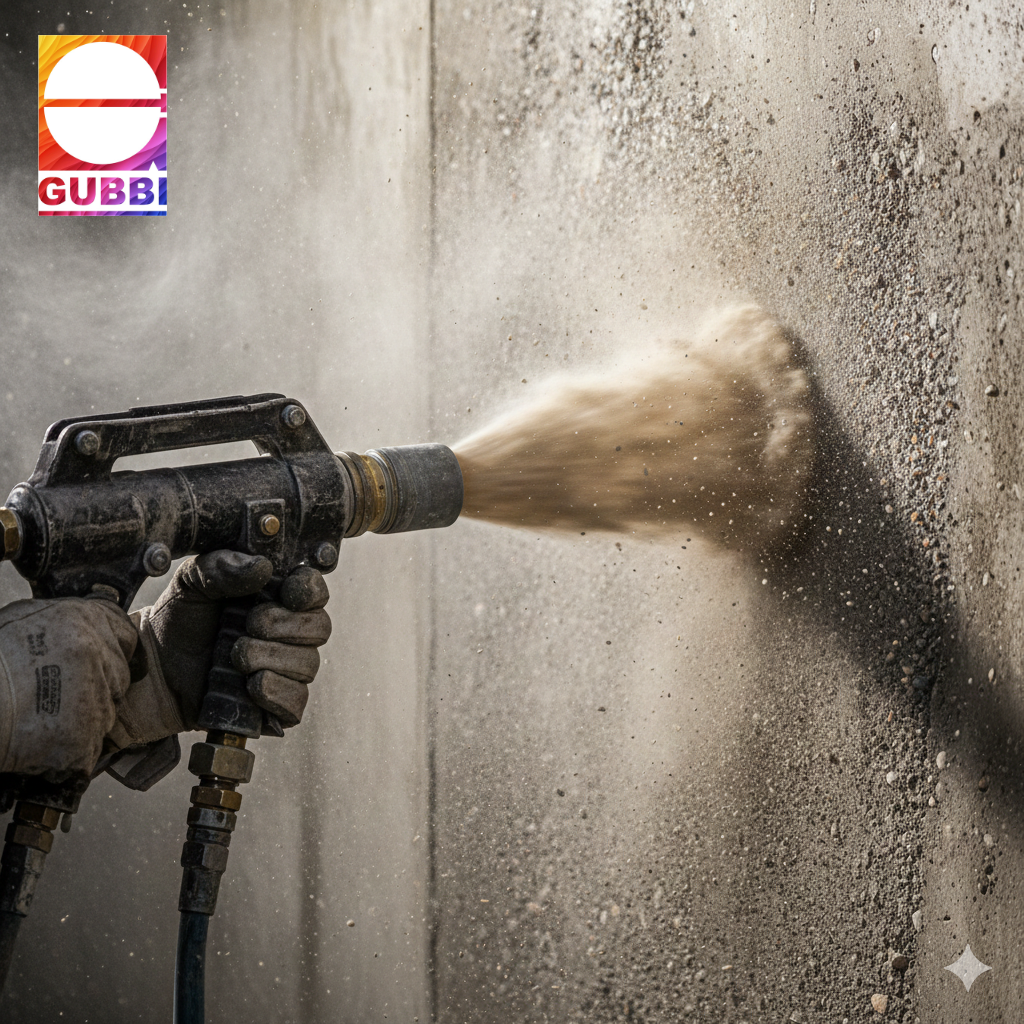
Guniting is a specialized concrete application method used for repairing, strengthening, protecting, and rehabilitating deteriorated structures. It involves projecting cementitious material onto a prepared surface at high velocity, creating a dense layer with strong adhesion. Because it can reach vertical, overhead, irregular, and difficult areas, guniting has become useful for industrial buildings, commercial structures, infrastructure assets, retaining structures, tunnels, and other concrete repair applications.
When concrete begins showing cracks, spalling, exposed reinforcement, honeycombing, surface erosion, or deterioration caused by moisture, conventional patching may not provide the required performance. Guniting services offer an alternative approach by rebuilding damaged sections with sprayed material. The method can reduce the need for extensive formwork and is particularly useful where access is restricted, repair thickness varies, or construction activities must be completed within a controlled shutdown period.
What Is Guniting in Construction?
Understanding the actual condition of a structure is the first step before selecting any repair method. A professional assessment helps identify whether damage is limited to the surface or has affected reinforcement, concrete strength, bonding, or structural capacity. Guniting contractors should therefore examine the damaged area, determine the cause of deterioration, prepare a suitable repair methodology, and establish application requirements instead of treating visible defects alone.
The term guniting is commonly associated with dry-mix sprayed concrete, where dry ingredients are conveyed through a hose and water is introduced near the nozzle before the material reaches the receiving surface. The high-velocity application helps compact the material against the substrate. Depending on project requirements, related shotcrete techniques may also be considered, but the selected process should always match the structure, repair objective, access conditions, and specification.
Guniting for RCC Repair and Structural Rehabilitation
One major application of guniting is RCC repair. Reinforced concrete members can deteriorate because of reinforcement corrosion, water ingress, chemical exposure, impact, poor construction, or prolonged environmental stress. Guniting work can rebuild deteriorated concrete sections after proper surface preparation and reinforcement treatment. It is often considered for columns, beams, slabs, walls, soffits, retaining structures, and other members where conventional concrete placement is difficult or disruptive.
Guniting services are also useful for structural strengthening and rehabilitation projects where existing concrete requires additional protection or a new repair layer. The final solution depends on engineering assessment and may include reinforcement mesh, bonding treatments, corrosion protection, or other strengthening measures. Guniting should not be viewed as a universal replacement for every repair technique; its suitability depends on the damage mechanism, design requirement, substrate condition, and execution environment.
Importance of Surface Preparation
Surface preparation has a direct influence on the performance of sprayed concrete repair. Loose concrete, dust, laitance, weak material, contaminants, and deteriorated sections need to be removed before application. Where reinforcement is exposed, corrosion products may require cleaning and suitable treatment. The prepared substrate must provide a sound receiving surface so the sprayed material can develop proper contact and bond. Poor preparation can compromise even a technically suitable guniting system.
For industrial facilities, repair work often needs to be coordinated around production schedules, equipment access, safety requirements, and shutdown windows. Experienced guniting contractors understand that the application itself is only one part of the project. Planning includes access arrangements, surface preparation, material handling, equipment positioning, protection of nearby assets, curing, inspection, and housekeeping. A properly organized sequence can help reduce unnecessary disruption while maintaining the required repair quality.
Where Guniting Services Are Used
Guniting can be valuable where traditional formwork-based concrete repair is difficult. Vertical walls, overhead surfaces, narrow sections, curved areas, and locations with restricted access can present challenges for conventional concreting. Sprayed application allows material to be placed directly onto prepared surfaces without building extensive shuttering in every situation. This flexibility makes guniting relevant to rehabilitation work involving industrial structures, underground areas, retaining walls, tanks, bridges, and other complex concrete surfaces.
Another important application is the repair of water-retaining and moisture-exposed structures. Concrete in tanks, basements, underground structures, retaining walls, and similar areas can deteriorate because of persistent moisture and leakage. Guniting may provide a dense repair layer when designed and executed appropriately. However, waterproofing performance depends on more than spraying material alone. Crack treatment, joint detailing, drainage conditions, substrate preparation, curing, and compatible protective systems must also be considered.
Guniting and Shotcrete in Modern Repair Work
Guniting is frequently discussed alongside shotcrete, concrete repair, structural rehabilitation, and RCC strengthening because these terms describe related areas of construction practice and Pneumatic Concrete Rehabilitation. For project owners, the important question is not which keyword sounds better, but which repair system suits the actual problem. A competent contractor should explain the proposed method, material requirements, expected thickness, surface preparation, curing procedure, quality checks, and limitations before work begins.
Choosing suitable guniting contractors requires attention to technical capability rather than simply comparing quotations. Contractors should have experience with sprayed concrete equipment, trained application personnel, appropriate compressors and delivery systems, surface preparation practices, and project-specific quality control. Their previous work should also demonstrate familiarity with industrial, commercial, or infrastructure conditions similar to the project under consideration. Clear methodology and site planning are important indicators of execution readiness.
How Guniting Work Is Executed
A reliable guniting work contractor should also understand the importance of material consistency and application control. The quality of sprayed repair depends on mix proportions, aggregate grading, moisture control, nozzle technique, application distance, angle, layer thickness, and curing. Rebound and overspray should be managed carefully, while weak or poorly bonded material must not simply be covered with another layer. Consistent supervision helps maintain uniformity throughout the repaired area.
The guniting process generally begins with inspection and surface preparation, followed by reinforcement treatment where required. Suitable materials are then prepared and conveyed through specialized equipment to the nozzle, where controlled water addition and high-velocity spraying create the repair layer. The applicator builds the required thickness in accordance with the repair methodology. After application, finishing, curing, inspection, and necessary protective treatments complete the work sequence safely and systematically.
Why Proper Curing and Inspection Matter
Proper curing is underestimated in repair projects, yet it plays an important role in the development of cementitious materials. Newly applied guniting material needs suitable curing conditions to support hydration and reduce the risk of premature drying. The curing approach should follow the selected material system, site conditions, and project specifications. Inspection should confirm surface quality, thickness, bonding, finishing, and areas requiring correction before the repaired structure returns to service.
The benefits of guniting become particularly relevant when project conditions demand fast, controlled, and flexible concrete repair. Reduced formwork requirements can simplify access, while pneumatic application allows material to reach difficult surfaces. Guniting can also support localized rehabilitation without removing large portions of an otherwise serviceable structure. When correctly designed and executed, the method can help restore concrete sections, improve surface protection, and extend the useful service life of aging assets.
Understanding Guniting Service Cost
Cost should be evaluated as part of the complete repair strategy rather than by comparing the lowest application rate alone. A quotation may vary according to repair thickness, surface preparation, reinforcement treatment, access, equipment requirements, material specification, working height, project location, and shutdown constraints. For industrial and infrastructure owners, the better comparison is often the total repair value, including reduced disruption, appropriate workmanship, maintenance needs, and expected performance.
For businesses planning concrete rehabilitation, working with an established engineering contractor can simplify coordination between assessment, repair planning, and execution. Gubbi Civil Engineers Limited can be considered when evaluating guniting services for industrial, commercial, and infrastructure applications, particularly where the repair requires technical planning rather than basic surface patching. The contractor selected should still be evaluated against drawings, specifications, site conditions, safety requirements, and required quality standards.
Guniting for Industrial and Infrastructure Projects
Guniting can support several types of infrastructure rehabilitation where concrete surfaces are exposed to demanding service conditions. Applications may include bridge components, retaining structures, underground works, tunnels, industrial facilities, water-related structures, and other deteriorated RCC elements. Each application requires a different assessment of loading, exposure, geometry, access, and repair thickness. The objective should always be to create a repair system that addresses the cause and extent of deterioration rather than only improving appearance.
Property and facility managers should consider professional inspection when concrete damage begins increasing or recurring after temporary repairs. Signs such as expanding cracks, hollow or delaminated concrete, rust staining, exposed reinforcement, falling cover, persistent seepage, and surface loss can indicate deeper deterioration. Early evaluation can help determine whether guniting, injection grouting, micro concrete, jacketing, protective coating, or another rehabilitation method is more appropriate for the specific structural condition.
Selecting the Right Guniting Contractors
Selecting guniting services is ultimately a technical decision influenced by the structure's condition, repair objective, accessibility, exposure, and required service life. The right contractor should provide a clear scope covering preparation, material selection, spraying, finishing, curing, inspection, and safety controls. Avoid choosing a method only because it appears fast or economical. Proper engineering assessment and disciplined execution determine whether a guniting repair performs successfully over time.
For industrial and commercial assets, planned rehabilitation can be more practical than allowing concrete deterioration to progress until major reconstruction becomes necessary. Guniting services can form part of a broader structural repair strategy when the existing substrate remains suitable for rehabilitation. Used appropriately, the method can help restore damaged concrete, improve protection, and support continued operation. The key is matching the guniting system to the structure's actual engineering requirements and site constraints. guniting is a versatile technique for concrete repair, RCC rehabilitation, strengthening support, and surface restoration in challenging construction environments. Its value comes from pneumatic application, strong substrate contact, flexible access, and reduced dependence on conventional formwork. For dependable results, the project should begin with condition assessment and end with curing and quality checks. Choosing experienced guniting contractors helps ensure the method is applied with proper planning and control.

 English
 French
 Spanish
 Portuguese
 Deutsch
 Turkish
 Dutch
 Italiano
 Russian
 Romaian
 Portuguese (Brazil)
 Greek