


Why Heating Systems Fail During New York Cold Snaps
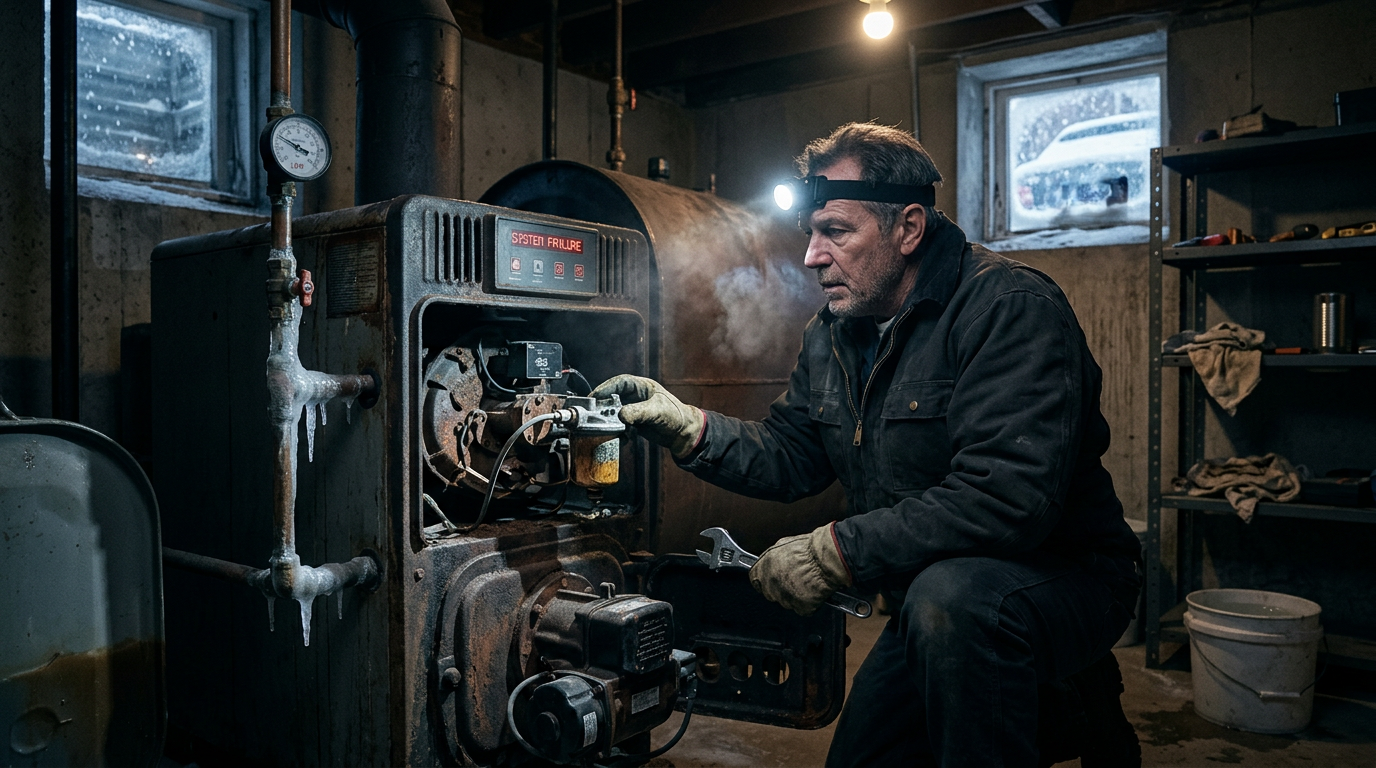
It always seems to happen on the coldest night of the year. The thermostat reads 58 and falling, the furnace won't fire, and every service line in the area is busy. Heating failures cluster during cold snaps for good reasons, and understanding them is the best way to avoid being caught off guard.
New York winters put heavy strain on heating equipment. When temperatures fall into the single digits or below zero, systems run longer and harder than at any other time. Weak parts that held up through mild weather finally give out. That's when many homeowners first learn they need emergency HVAC in New York, often at night or over a weekend.
This guide explains why heating systems fail during cold snaps, which problems show up most often, and what you can do to reduce your risk. It also covers when to call for emergency HVAC in New York and how to keep your home safe while you wait for help.
Why cold snaps push systems past their limits
Your heating system is designed to keep up with typical winter conditions in your area. On an average winter day, the furnace or boiler cycles on and off, resting between runs. During a deep freeze, those rest periods shrink or disappear. The system may run almost nonstop for days.
That constant operation stresses motors, ignitors, pumps, and electrical parts. A component that was already worn might last through a mild winter but fail within hours of continuous use. Cold weather also brings its own physical problems, such as frozen lines, gelled fuel, and ice buildup, that don't happen when it's warmer.
Then there's demand. When everyone's system is working at full capacity, small weaknesses show up across thousands of homes at once. Service companies get flooded with calls, and wait times grow.
Common reasons heating systems fail in extreme cold
Some failures appear again and again during New York cold snaps. Here are the most common causes:
- Ignitor or flame sensor failure on gas furnaces after heavy cycling
- Frozen condensate lines on high-efficiency furnaces and boilers
- Snow, ice, or frost blocking intake and exhaust vents
- Blower motor or circulator pump failure from nonstop running
- Gelled or frozen heating oil in outdoor tanks and fuel lines
- Heat pumps struggling to keep up or getting stuck in defrost cycles
- Frozen pipes in hydronic heating systems or in unheated areas
- Clogged filters that restrict airflow and trigger safety shutoffs
- Thermostat problems, including dead batteries and wiring faults
- Power outages from winter storms that shut down equipment
Each of these deserves a closer look.
Ignitor and flame sensor problems
Most modern gas furnaces use a hot surface ignitor to light the burners and a flame sensor to confirm the flame is present. Ignitors are fragile and wear out over time. Heavy use during a cold snap speeds that wear.
Flame sensors collect a coating of residue that makes it harder for them to detect the flame. When the sensor can't confirm a flame, the furnace shuts off the gas for safety. You may notice the furnace starting, running briefly, and then shutting down, over and over.
Frozen condensate lines
High-efficiency furnaces and boilers produce water as part of the combustion process. That water drains through a condensate line, which often runs outside or to a floor drain. In extreme cold, the line can freeze where it exits the house.
When the condensate can't drain, a safety switch shuts the system down. This is one of the most common cold-weather failures in newer equipment. Insulating exposed condensate lines and routing them properly can prevent it.
Blocked vents
High-efficiency systems often vent through plastic pipes on a side wall instead of a chimney. After a snowstorm or during drifting snow, those vents can get buried. Frost can also build up on intake pipes during extreme cold.
A blocked intake or exhaust vent causes the system to shut down. It can also create a safety hazard if exhaust can't escape. After every storm, check that your vents are clear and that snow isn't piled against the house where they exit.
Motor and pump failures
A furnace's blower motor moves warm air through your ducts. A boiler's circulator pump moves hot water through the pipes. Both work hardest during cold snaps. Bearings wear, capacitors weaken, and motors overheat.
Warning signs include squealing, grinding, or humming sounds, weak airflow from vents, and radiators that stay cool while the boiler runs. Catching these signs early often allows a repair before full failure.
Oil system problems
Many homes across New York still heat with oil. Oil can thicken or gel in extreme cold, especially in outdoor tanks or exposed fuel lines. Thickened oil doesn't flow well to the burner, so the system may sputter or shut off. When an oil burner quits overnight in a deep freeze, emergency HVAC in New York is often the fastest way to get fuel moving and the heat back on.
Clogged filters and nozzles also cause trouble, especially if sludge from the bottom of the tank gets stirred up. Keeping the tank well filled, protecting outdoor lines, and scheduling annual burner service help reduce these problems.
Heat pumps in deep cold
Heat pumps move heat from outdoor air into your home. Older heat pumps lose efficiency as temperatures drop, and many rely on backup electric heat strips when it gets very cold. Modern cold-climate heat pumps perform much better, but they still face challenges in extreme conditions.
Ice can build up on the outdoor coil, and the system must run defrost cycles to clear it. If the defrost controls fail, the coil can become encased in ice. Snow drifts can also block airflow around the outdoor unit. Keeping the unit clear and raised above snow lines helps.
Frozen pipes in hydronic systems
Boilers that heat with hot water rely on pipes running through the home. Pipes in exterior walls, crawl spaces, garages, or unheated rooms can freeze when the boiler struggles or shuts down. A frozen pipe can stop circulation and burst, causing serious water damage.
If your boiler stops working in deep cold, protecting the pipes becomes urgent. That's one reason heating failures during a cold snap often need a fast response.
Thermostats and power outages
Sometimes the problem isn't the heating equipment at all. A thermostat with dead batteries can stop calling for heat. Loose wiring can cause erratic behavior. Check the thermostat first if the system goes quiet.
Winter storms can also knock out power. Nearly every modern heating system, including gas and oil systems, needs electricity to run its controls, ignitors, blowers, and pumps. Without power, the system won't run. Some homeowners install standby generators wired by a licensed electrician to keep heat running during outages.
Warning signs before a breakdown
Many heating failures give hints before they happen. Pay attention to the system's behavior in the weeks before winter's coldest stretch. Short cycling, strange noises, rooms that take longer to warm up, a yellow burner flame, burning smells that linger, and higher-than-usual energy bills are all reasons to schedule service.
Fixing a small problem in November is far easier and less expensive than dealing with a complete failure in the middle of January.
What to do if your heat goes out during a cold snap
Start with the basics. Check the thermostat settings and batteries. Look at the circuit breaker for the furnace or boiler. Make sure the emergency shutoff switch, often near the furnace or at the top of the basement stairs, is turned on. Replace a clogged filter. Check outdoor vents for snow or ice.
If those steps don't help, call for service. While you wait, keep doors to unused rooms closed, gather the household in one warm room, and open cabinet doors under sinks on exterior walls so warm air reaches the pipes. Let faucets drip slightly to help keep water moving.
Use space heaters with care. Keep them away from bedding, curtains, and furniture, plug them directly into wall outlets, and never leave them running unattended. Never use an oven, grill, or generator indoors for heat, since they can produce dangerous carbon monoxide.
Preparing for the next deep freeze
The best defense against a cold-snap failure is preparation. Schedule a heating tune-up each fall, before the first hard freeze. A technician cleans burners and sensors, tests ignitors and motors, checks venting, and measures safety controls.
Replace filters regularly through the winter. Keep vents, outdoor units, and fuel tanks clear of snow. Insulate exposed pipes and condensate lines. Test carbon monoxide alarms and keep a backup heat plan ready.
If your system is near the end of its expected life, consider replacing it before winter. An older system is much more likely to fail during sustained cold, and replacement in the fall is far easier than in an emergency.
Staying warm all winter with A. Borrelli Mechanical
Cold snaps expose every weak spot in a heating system, from worn ignitors and tired motors to frozen condensate lines and blocked vents. Fall maintenance, clear vents, insulated lines, and early attention to warning signs reduce the chance of a breakdown when temperatures plunge. A. Borrelli Mechanical services and repairs furnaces, boilers, and heat pumps for homeowners across Westchester, with prompt response when a heating failure leaves your home without heat.

 English
 French
 Spanish
 Portuguese
 Deutsch
 Turkish
 Dutch
 Italiano
 Russian
 Romaian
 Portuguese (Brazil)
 Greek