


What can you do with a mortuary science degree? Careers beyond the funeral home
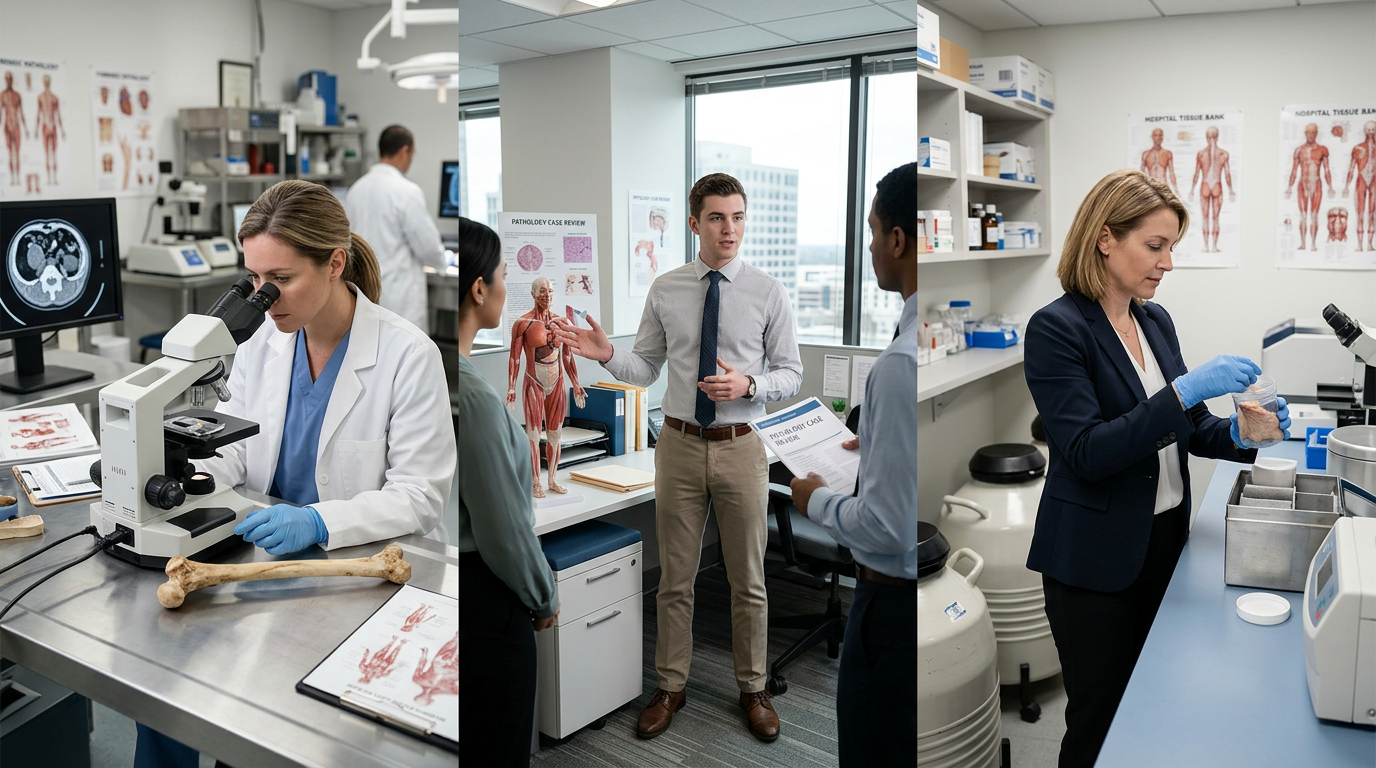
When people hear "mortuary science," they usually picture a funeral director in a dark suit greeting families at a viewing. That role is real and important. But it's only one of many paths open to graduates of a funeral service program.
A mortuary science degree prepares you with a mix of skills that few other programs combine. You study anatomy, pathology, chemistry, and embalming. You also learn business management, law, ethics, and grief psychology. That blend of science, service, and business opens doors in settings many students never consider.
This guide covers the traditional careers first, then looks at the many roles graduates take on beyond the funeral home. Some require only a mortuary science degree and a license. Others call for additional training or certifications. All of them build on the foundation the degree provides.
Traditional funeral service careers
Most graduates begin in a funeral home, and many build long, rewarding careers there.
Funeral director
Funeral directors guide families through every step of planning a service. They meet with families soon after a death, explain options, coordinate details with cemeteries and crematories, file legal paperwork, and lead services. The role calls for organization, empathy, and calm leadership under pressure. On any given day, a funeral director might meet with a family in the morning, coordinate a burial at midday, and oversee a visitation in the evening. No two weeks look exactly alike.
Embalmer
Embalmers prepare the deceased for viewing and final disposition. They use scientific knowledge and technical skill to preserve, disinfect, and restore a natural appearance. Some states license embalmers separately from funeral directors, while others combine the two. Embalmers often work behind the scenes, but their care makes a meaningful difference. A family's last look at a loved one depends on it.
Funeral home manager or owner
With experience, many professionals move into management. Managers oversee staff, finances, compliance, and family service. Some eventually purchase or open their own funeral homes, which combines professional skill with business ownership. Owners handle hiring, budgeting, community relationships, and long-term planning, so business courses in the degree program pay off here.
Careers beyond the funeral home
The skills you build in a funeral service program apply in many other settings. Here are some of the paths graduates pursue:
- Medical examiner or coroner office roles, such as death investigator or morgue technician
- Hospital morgue and autopsy assistant positions
- Cremation services management and crematory operations
- Preneed planning and funeral advance planning advisor roles
- Cemetery management and memorial services
- Anatomical donation program coordination at medical schools
- Trade embalming services for multiple funeral homes
- Removal and transport services
- Mass fatality and disaster response work
- Aftercare and grief support coordination
- Funeral service education and teaching
- Sales roles with funeral service suppliers and manufacturers
Each path draws on a different part of what you learned. Let's look at several in more detail.
Medical examiner and coroner offices
Medical examiner and coroner offices investigate deaths that are sudden, unexpected, violent, or unexplained. These offices employ death investigators, morgue technicians, and autopsy assistants.
A funeral service background prepares you well for this work. You already understand anatomy, pathology, decomposition, and infection control. You're comfortable working with the deceased and with grieving families. Some offices require additional certification or training in death investigation, but graduates of a mortuary science degree program often have a strong head start. Death investigators may visit scenes, gather information about the circumstances of a death, and notify next of kin. The work is demanding and requires careful documentation and steady judgment.
Hospital morgues and pathology departments
Hospitals with morgues need staff to receive, store, and release the deceased, assist with autopsies, and coordinate with funeral homes. Pathology departments may hire autopsy assistants who prepare bodies and help pathologists during examinations. Your training in anatomy, pathology, and safety procedures applies directly. Hospital roles often offer regular schedules and benefits, which appeals to graduates who want predictable hours.
Cremation services
Cremation has grown steadily as a choice for families. That growth creates demand for professionals who manage cremation providers, operate crematories, and guide families who choose cremation.
Crematory operators handle the cremation process and maintain equipment. Many states require specific crematory operator certification. Managers oversee compliance, records, and family communication. A mortuary science degree gives managers the background to explain cremation options clearly, answer family questions about the process, and make sure every legal step is followed. A mortuary science background helps you understand the legal, ethical, and practical sides of the work.
Preneed and advance planning
Many people choose to plan and pay for their funerals in advance. Preneed advisors help them do that. They explain options, discuss costs, and set up arrangements that ease the burden on families later.
This role suits graduates who enjoy working with people and explaining choices clearly. Depending on the state, preneed work may require an additional license, especially when insurance or trust products are involved. Preneed advisors need patience and honesty. Families planning ahead want clear answers, not pressure.
Cemeteries and memorial services
Cemeteries need managers who understand burial practices, regulations, family service, and business operations. Roles include cemetery manager, family service counselor, and memorial sales. Graduates can also work with monument and memorial companies that create headstones and markers. Cemetery work often involves long-term relationships with families who return to visit, plan additional burials, or maintain memorials.
Anatomical donation programs
Medical schools rely on whole-body donation to train future doctors. Donation programs need staff who can coordinate with families, receive and prepare donors, and handle remains with dignity. Embalming skills are especially valuable here, since donors must be preserved for long-term study. Program staff also hold memorial services for donors and help families understand how the gift will be used, which calls for the same compassion funeral directors bring to their work.
Trade embalming and transport services
Some funeral homes don't employ full-time embalmers. Instead, they contract with trade embalmers who serve several firms. This path offers independence and variety. Removal and transport services also employ trained staff to move the deceased from homes, hospitals, and other locations with care and professionalism. Transport work can be a good entry point into the field while you finish school or complete an apprenticeship.
Disaster and mass fatality response
Natural disasters, accidents, and other mass casualty events require trained professionals to help recover, identify, and care for the deceased. Funeral service professionals often volunteer or serve on response teams that support local authorities during these events. This work demands resilience, teamwork, and technical skill. Training in identification, documentation, and the respectful handling of remains is essential in these settings.
Aftercare and grief support
Many funeral homes offer support to families after the service. Aftercare coordinators check in with families, share grief resources, organize remembrance events, and connect people with support groups. Your training in grief psychology prepares you for this role. Some graduates pursue further education in counseling to deepen this work. Aftercare programs help funeral homes stay connected with the families they serve, and they give graduates a chance to provide support over months rather than days.
Teaching and education
Experienced funeral service professionals can move into teaching. Funeral service programs need instructors who combine practical experience with academic knowledge. Teaching usually requires years of field experience and, in many cases, an advanced degree. For professionals who enjoy mentoring, it offers a way to shape the next generation. Some experienced professionals also teach continuing education courses that help licensed practitioners keep their skills current.
Industry sales and supply
Companies that make caskets, urns, embalming chemicals, equipment, and software need staff who understand funeral service. Sales and support roles let graduates use their knowledge in a business setting, often with travel and client relationships. Customers trust representatives who understand how funeral homes actually work, so field experience can set you apart.
Choosing the right path for you
With so many options, it helps to think about what you enjoy most. If you're drawn to the science, embalming, medical examiner work, or anatomical donation may suit you. If you love working with families, funeral directing, preneed planning, or aftercare could be the right fit. If business interests you, management, ownership, or sales may be where you thrive.
Many professionals move between roles over their careers. A funeral director might later manage a cremation provider. An embalmer might move into a medical examiner's office. The degree gives you flexibility to change direction as your interests grow. Talking with professionals in different roles, or shadowing them for a day, is one of the best ways to discover where you fit.
Building your career with AAMI
Funeral service education opens doors far beyond the traditional funeral home. Graduates work in medical examiner offices, hospitals, cremation services, preneed planning, cemeteries, donation programs, education, and business. Each path draws on the same foundation of science, service, and professional skill. American Academy McAllister Institute of Funeral Service (AAMI) prepares students for these careers through a comprehensive mortuary science program that combines classroom learning with hands-on training, giving graduates the knowledge to serve families and communities in many roles.
 Italiano
 English
 Arabic
 French
 Spanish
 Portuguese
 Deutsch
 Turkish
 Dutch
 Russian
 Romaian
 Portuguese (Brazil)
 Greek