


Business Software Integration: Connect Your Apps and Work Smarter
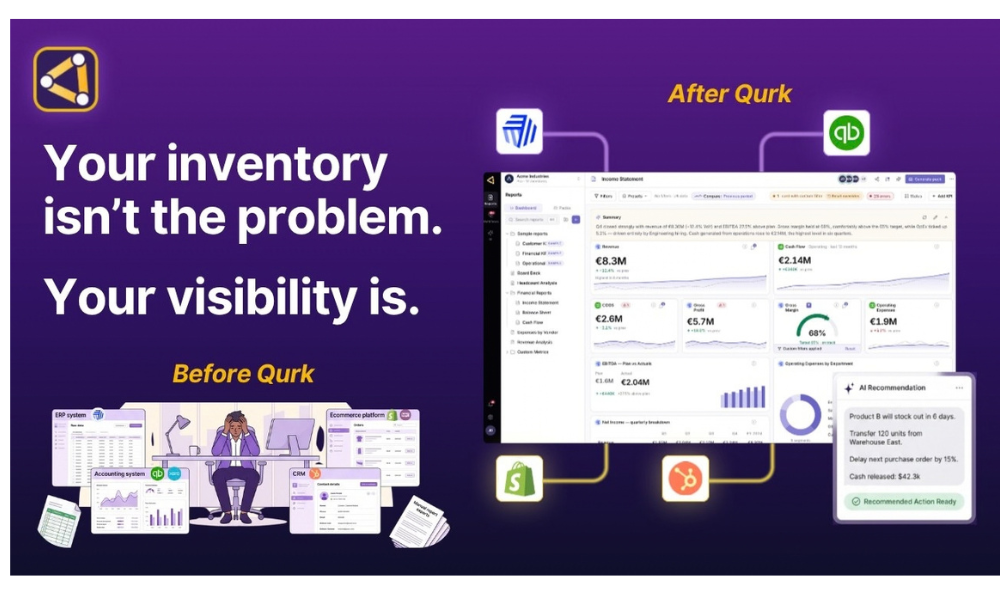
Modern businesses rely on multiple software applications to manage their daily operations. From processing customer orders and tracking inventory to managing accounting records and monitoring sales performance, each application plays an important role.
However, problems arise when these systems operate independently. Employees spend hours transferring information between platforms, reconciling records, and correcting data inconsistencies. As businesses expand, these disconnected processes can become expensive and difficult to manage.
Business software integration provides a practical solution by connecting different applications and allowing them to exchange information automatically. Instead of managing isolated systems, companies can build a connected technology environment that improves accuracy, saves time, and supports sustainable growth.
Why Business Software Integration Is Essential for Growing Companies
Businesses often adopt new applications to solve specific operational challenges. An online retailer might use Shopify for sales, an ERP platform for inventory, and accounting software for financial management.
Although each application serves a purpose, disconnected systems create unnecessary administrative work.
Common challenges include:
-
Duplicate data entry: Employees manually transfer orders, customer details, and financial information between applications.
-
Inventory discrepancies: Different platforms display conflicting stock quantities.
-
Delayed order processing: Sales information takes time to reach warehouse and fulfilment teams.
-
Financial inconsistencies: Accounting records may not reflect the latest operational transactions.
-
Limited business visibility: Managers struggle to understand performance across different departments.
ERP integration and other software connections help eliminate these operational gaps by establishing reliable information flows between applications.
For example, when a customer places an order through an online store, an integrated workflow can transfer order information to the ERP system, update inventory records, and communicate relevant details to fulfilment teams.
This reduces manual intervention and helps businesses maintain consistent information throughout their operations.
Different Types of Business Software Integration
Not every business requires the same integration strategy. The right approach depends on its existing technology, operational processes, and growth objectives.
ERP and Inventory Management Integration
Enterprise Resource Planning (ERP) systems help businesses manage important functions such as finance, procurement, inventory, and order processing.
Connecting ERP software with inventory management systems helps synchronize stock levels, product information, purchase orders, and sales transactions.
This is especially valuable for manufacturers, wholesalers, and retailers managing multiple warehouses or distribution locations.
With properly configured inventory integration, businesses can:
-
Maintain consistent stock information across platforms.
-
Improve purchase planning and replenishment.
-
Reduce manual inventory adjustments.
-
Track product movements more effectively.
-
Improve visibility across multiple locations.
eCommerce and Marketplace Integration
Online retailers frequently sell products through multiple storefronts and marketplaces. Managing orders and inventory separately across these channels can create significant operational challenges.
eCommerce integration connects platforms such as Shopify and WooCommerce with back-office applications, allowing information to move between storefronts, ERP systems, and warehouse platforms.
For example, an order placed through an online store can automatically enter the operational workflow, while inventory updates can synchronize across connected sales channels.
This helps businesses improve order management, reduce stock discrepancies, and deliver a more consistent customer experience.
Accounting and Financial Software Integration
Accounting systems contain essential information about revenue, expenses, payments, invoices, and financial performance.
Connecting accounting applications with ERP and eCommerce platforms reduces the need for repetitive data entry and manual reconciliation.
Businesses using applications such as Xero and QuickBooks Online can benefit from connected financial workflows that help maintain consistent transaction information.
This also gives finance teams better access to operational data when preparing reports and reviewing business performance.
CRM and Customer Data Integration
Customer Relationship Management (CRM) platforms help businesses organize customer interactions, sales opportunities, and communication histories.
Integrating CRM systems with operational applications allows sales teams to access more complete customer information.
For example, customer records, sales orders, and transaction updates can move between CRM and ERP platforms. This creates better coordination between sales, finance, and operations departments.
How to Choose the Right Integration Solution
Selecting an integration solution requires more than checking whether two applications can communicate. Businesses should evaluate how effectively the technology supports their actual processes.
Here are several important factors to consider:
1. Application compatibility
Check whether the solution supports your existing ERP, accounting, CRM, inventory, and eCommerce platforms.
2. Workflow flexibility
Basic integrations may handle simple data transfers, but complex operations often require conditional rules, multi-step processes, and customized data transformations.
3. Data accuracy
Reliable integration should include appropriate validation mechanisms to identify missing information, duplicate records, and inconsistencies.
4. Scalability
Choose a solution that can accommodate additional applications, warehouses, business entities, and sales channels as operations expand.
5. Ongoing maintenance
Integrations require monitoring and occasional updates as applications, APIs, and business processes change. Consider whether your team has the technical resources to maintain them internally.
These considerations help businesses distinguish between basic self-service connectors and fully managed integration solutions.
Why Managed Integrations Can Be Better Than Basic Connectors
Pre-built integration tools can work well for straightforward automation requirements. However, they may become restrictive when businesses need more sophisticated workflows.
For instance, a manufacturer might require an integration that checks inventory availability, validates purchase orders, applies approval conditions, and communicates delivery updates to suppliers.
A simple connector may not support every step without additional customization.
Managed integration services provide a more flexible alternative. Specialists can design integrations around specific business requirements, test the complete workflow, and maintain connections as technology evolves.
The main advantages include:
-
Custom-built connections designed around existing processes.
-
Advanced workflow logic and conditional automation.
-
Centralized monitoring and integration maintenance.
-
Improved data synchronization between applications.
-
Reduced dependence on internal technical resources.
Rather than forcing businesses to redesign their processes around standard connectors, customized integrations can accommodate the way their operations actually work.
How Qurk Connects Business Applications Through Integration
For companies struggling with disconnected software, Qurk provides an integration layer that connects finance and operations applications within a unified ecosystem.
Its business integration platform supports connections across several important software categories, including ERP, inventory management, eCommerce, accounting, and CRM.
Qurk highlights integrations with platforms such as Cin7 Core, MRPeasy, Xero, QuickBooks Online, Shopify, Katana, Unleashed, WooCommerce, Odoo, Zoho, HubSpot, and Salla.
Its approach focuses on several capabilities:
Custom-built integrations: Connections are designed around specific operational requirements instead of relying exclusively on standard templates.
Managed integration services: Qurk builds, monitors, and maintains integrations, reducing the ongoing technical workload for internal teams.
Advanced workflow automation: Businesses can implement multi-step processes, conditional rules, and data transformations across connected applications.
ERP and inventory connectivity: Stock information, orders, product records, and financial data can move between relevant platforms.
eCommerce and warehouse integration: Online orders, inventory updates, and fulfilment information can synchronize across connected systems.
Qurk follows a structured implementation process involving discovery, development, deployment, and ongoing maintenance. This helps ensure integrations are designed around business requirements and tested before becoming part of everyday operations.
An additional advantage is the connection between integrations and reporting. Rather than simply transferring information, Qurk also brings data from connected applications into an integrated reporting environment.
Businesses can explore its broader capabilities through the Qurk website, which presents an integrated approach to finance, operations, workflow automation, and analytics.
Conclusion: Build a More Connected and Efficient Business
Disconnected applications can create unnecessary complexity as businesses grow. Manual data entry, inconsistent inventory records, delayed financial updates, and fragmented reporting all reduce operational efficiency.
Business software integration helps address these challenges by connecting existing applications and creating reliable information flows between departments.
Whether a company needs ERP integration, eCommerce connectivity, accounting synchronization, or CRM integration, the right solution can reduce repetitive work and improve operational visibility.
The key is choosing an integration strategy that supports current requirements while allowing room for future growth.
For businesses looking to connect their existing software and simplify finance and operations, exploring managed integration solutions such as Qurk can be a valuable first step toward building a more connected business.
 Portuguese
 English
 Arabic
 French
 Spanish
 Deutsch
 Turkish
 Dutch
 Italiano
 Russian
 Romaian
 Portuguese (Brazil)
 Greek