


Understanding Rule-Based Systems in Artificial Intelligence
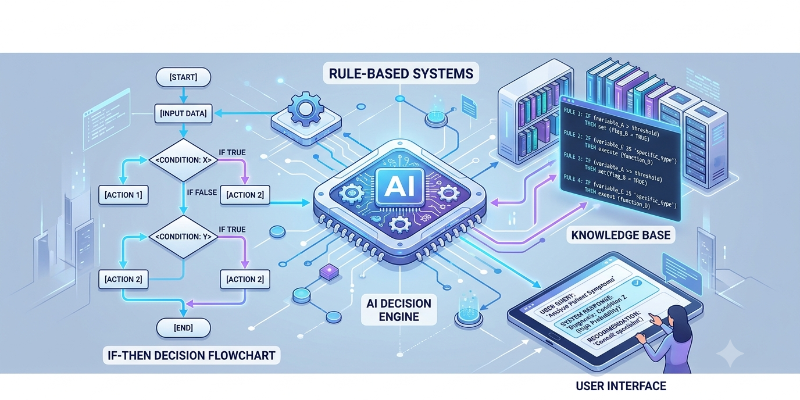
Artificial Intelligence (AI) helps machines perform tasks that usually require human intelligence, such as making decisions, solving problems, and processing information. One of the earliest approaches used to develop intelligent systems is the rule-based system. It allows computers to make decisions by following predefined rules and logical conditions. If you are interested in building a strong foundation in AI concepts and applications, consider enrolling in an Artificial Intelligence Course in Tirupur at FITA Academy to develop your technical knowledge and practical skills.
What Are Rule-Based Systems in Artificial Intelligence?
A rule-based system is an artificial intelligence method that employs established rules to make choices or address particular issues. These rules usually follow an IF-THEN structure. The system checks whether certain conditions are satisfied and then performs the action associated with those conditions.
For example, a simple rule-based system in a banking application might check whether a customer's account balance is sufficient before approving a transaction. If the balance meets the required condition, the transaction can proceed. Otherwise, the system may reject it.
Unlike machine learning systems, which learn patterns from data, rule-based systems depend on rules created by human experts or developers. They are useful when decisions can be clearly defined using logical conditions.
How Do Rule-Based Systems Work?
Rule-based systems generally work through three main components that help them process information and generate decisions.
1. Knowledge Base
The knowledge base stores the predefined rules and facts required by the system. These rules represent the knowledge of human experts in a particular field. For example, a medical support system may contain rules related to symptoms and possible health conditions.
2. Inference Engine
The inference engine acts as the decision-making component of the system. It examines the available facts, checks the conditions in the knowledge base, and identifies which rules should be applied. It uses logical reasoning to reach a conclusion.
3. User Interface
The user interface enables individuals to engage with the system. Users can enter information, answer questions, and receive results based on the available rules. It makes the system easier to access and use.
Together, these components help rule-based systems process information and deliver consistent decisions.
Types of Rule-Based Systems
Rule-based systems can use different reasoning methods depending on how they process information.
Forward Chaining
Forward chaining begins with the known facts and utilizes applicable rules to arrive at a conclusion. The system continues checking conditions until it finds a suitable result. This approach is useful in monitoring systems and automated decision-making applications.
Backward Chaining
Backward chaining starts with a possible conclusion and works backward to determine whether the available facts support it. It is commonly used in troubleshooting systems and expert systems.
Both approaches help AI applications solve problems through structured reasoning.
Real-World Applications of Rule-Based Systems
Rule-based systems are used in several industries because they can handle decisions based on clearly defined conditions.
-
Healthcare: They help evaluate symptoms and provide preliminary decision support based on predefined medical rules.
-
Banking: They support transaction validation, eligibility checks, and fraud detection using established conditions.
-
Customer Support: They help chatbots provide answers based on user questions and predefined response rules.
-
Manufacturing: They support equipment monitoring and identify conditions that may require maintenance.
-
Education: They help evaluate student responses and provide feedback based on predefined assessment criteria.
These applications show how rule-based systems can simplify repetitive tasks and support consistent decision-making.
Advantages and Limitations of Rule-Based Systems
One major advantage of rule-based systems is their simplicity. Since decisions follow predefined rules, developers can understand how the system reaches a particular result. They also provide consistent outputs when the same conditions are presented.
However, these systems have certain limitations. They cannot automatically learn from new data or adapt to changing situations without updating their rules. Managing a large number of rules can also become difficult. They may struggle with complex problems that require understanding context, uncertainty, or unfamiliar patterns.
As AI technology continues to develop, understanding both traditional rule-based approaches and modern generative technologies becomes increasingly valuable. If you want to expand your knowledge of intelligent applications and explore modern AI capabilities, take time to explore Gen AI Courses in Tirupur and strengthen your understanding of emerging technologies.

 English
 Arabic
 French
 Spanish
 Portuguese
 Deutsch
 Dutch
 Italiano
 Russian
 Romaian
 Portuguese (Brazil)
 Greek