


Hiring a cleanroom contractor in Saudi Arabia: what to check before you sign
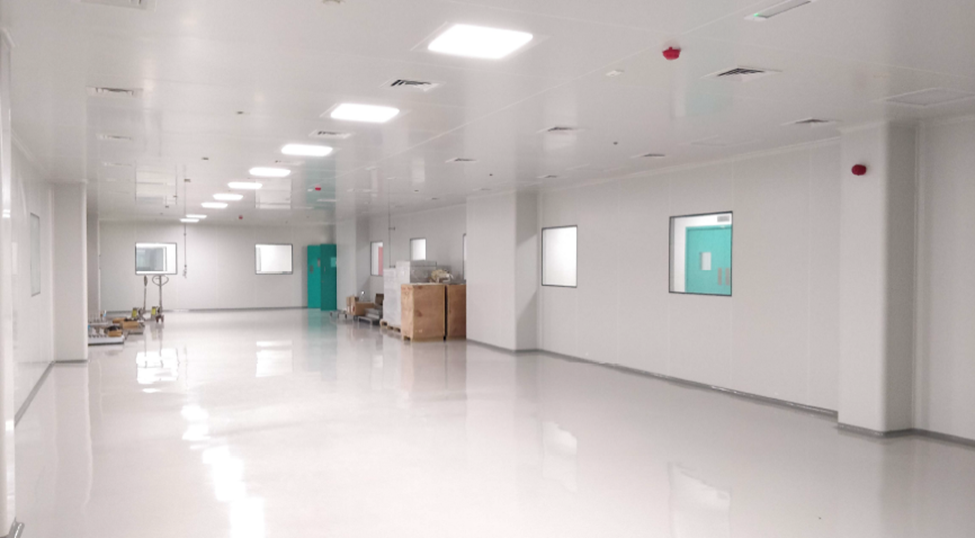
Type “cleanroom contractor Saudi Arabia” into a search bar and you’ll get pages of companies promising ISO-certified, turnkey, GMP-compliant rooms. Most of them use the same words. Very few will deliver the same results.
That gap matters more in the Kingdom than almost anywhere else. Saudi Arabia is investing heavily in pharmaceutical plants, biotech labs, hospital pharmacies and electronics facilities, much of it tied to Vision 2030’s push to make more medicines and high-value products at home. Every one of those projects needs controlled space, and a room that fails qualification usually means a delayed licence and, quite often, a partial rebuild.
So if you’re shortlisting contractors, here’s what I’d look at beyond the brochure.
Start with the standard, not the sales pitch.
Any serious contractor should talk to you in specifics. Which ISO 14644-1 class is the room designed to? Is it a GMP grade under EU Annex 1, and if so, which grade for which zone? Annex 1 was rewritten and came into force in August 2023, and it changed a lot of thinking around contamination control strategy, barrier technology and how pressure cascades are justified. A contractor still quoting the old version in their method statements is telling you something.
For pharmaceutical work, the Saudi Food and Drug Authority (SFDA) will be the body inspecting your facility before you get a manufacturing licence. Ask the contractor which SFDA-inspected projects they’ve handed over, and ask to speak to the client’s QA lead, not just their sales contact. People in QA remember who made their life difficult.
The climate will test every weak decision.
Designing a cleanroom in Riyadh or Dammam is not the same as designing one in Frankfurt. Summer temperatures can push well past 45°C, humidity on the coast can be punishing, and fine dust is a constant, not an occasional event.
That has real engineering consequences. Air handling units need to be sized for high ambient design temperatures, or they’ll struggle to hold room conditions exactly when the building is under most stress. Pre-filters load faster, so filter change intervals and access for maintenance need to be planned from day one. Building envelope sealing matters, because a leaky shell fights your pressure cascade all day long. Annex 1 suggests a 10 to 15 Pa difference between adjacent grades as guidance, and holding that steadily depends on the envelope as much as the fans.
Ask the contractor how they handled these problems on a previous Gulf project. If the answer is generic, that’s a warning sign.
Modular or stick-built? It depends, but ask why
Modular wall and ceiling systems are popular across the Gulf because panels are made off-site, installation is faster and cleaner, and the room can be reconfigured if your process changes. Stick-built construction still suits very large spaces or awkward building structures. You want a contractor who can explain that trade-off for your building, not one who only sells what they manufacture.
Scheduling is a local skill.
Here’s something overseas contractors sometimes underestimate. Saudi Arabia enforces a midday outdoor work ban from 15 June to 15 September each year, between 12 pm and 3 pm. Add Ramadan working hours, permit timelines, customs clearance for imported HVAC equipment and Civil Defence approvals for fire systems, and a programme that looked tidy on paper can slip by months.
A contractor with genuine local experience builds these into the schedule upfront. One without it discovers them as they go, at your expense.
Qualification is where projects are won or lost.
Construction is maybe half the job. The other half is proving the room works through design, installation, operational and performance qualification (DQ, IQ, OQ, PQ), with paperwork an inspector can follow without asking twenty questions.
In practical terms, you want HEPA filter integrity testing, airflow and air change verification, pressure differential checks, particle counts at rest and in operation, recovery testing and temperature and humidity mapping. Ask who does the testing. An independent third party carries more weight than the contractor certifying their own work, and some clients insist on it.
Also ask what happens if the room fails. Who pays for the retest? How quickly can they respond? The contract should answer that clearly before anyone starts work.
Think about year three, not just handover day.
Filters age, seals wear, and door interlocks get abused. Your contractor should offer a realistic maintenance and requalification plan, ideally with technicians based in the Kingdom rather than flown in when something breaks. Local presence also counts towards Saudisation and local content requirements on government-linked projects, so confirm early how a contractor meets them. It can decide whether they’re eligible to bid at all.
A short checklist before you sign
If I had to boil it down, I’d want clear answers to these questions:
- Which ISO class and GMP grade is each room designed to, and why?
- Which SFDA-inspected or comparable projects have you delivered, and can I speak to the client?
- How did you size the HVAC and filtration for Saudi ambient conditions?
- Who carries out qualification testing, and who pays if a test fails?
- What does your maintenance and requalification support look like in the Kingdom?
Good contractors enjoy these questions. They’ve answered them before, and they have the documents to back it up. Weak ones get vague, change the subject or lean on the word “turnkey”.
When you’re choosing a cleanroom contractor in Saudi Arabia, the qualification report is the only promise that counts. Ask to see one from a past project before you ask for a price.
 Italiano
 English
 Arabic
 French
 Spanish
 Portuguese
 Deutsch
 Turkish
 Dutch
 Russian
 Romaian
 Portuguese (Brazil)
 Greek