


Virginia’s Separation Requirements Before You Can File for Divorce
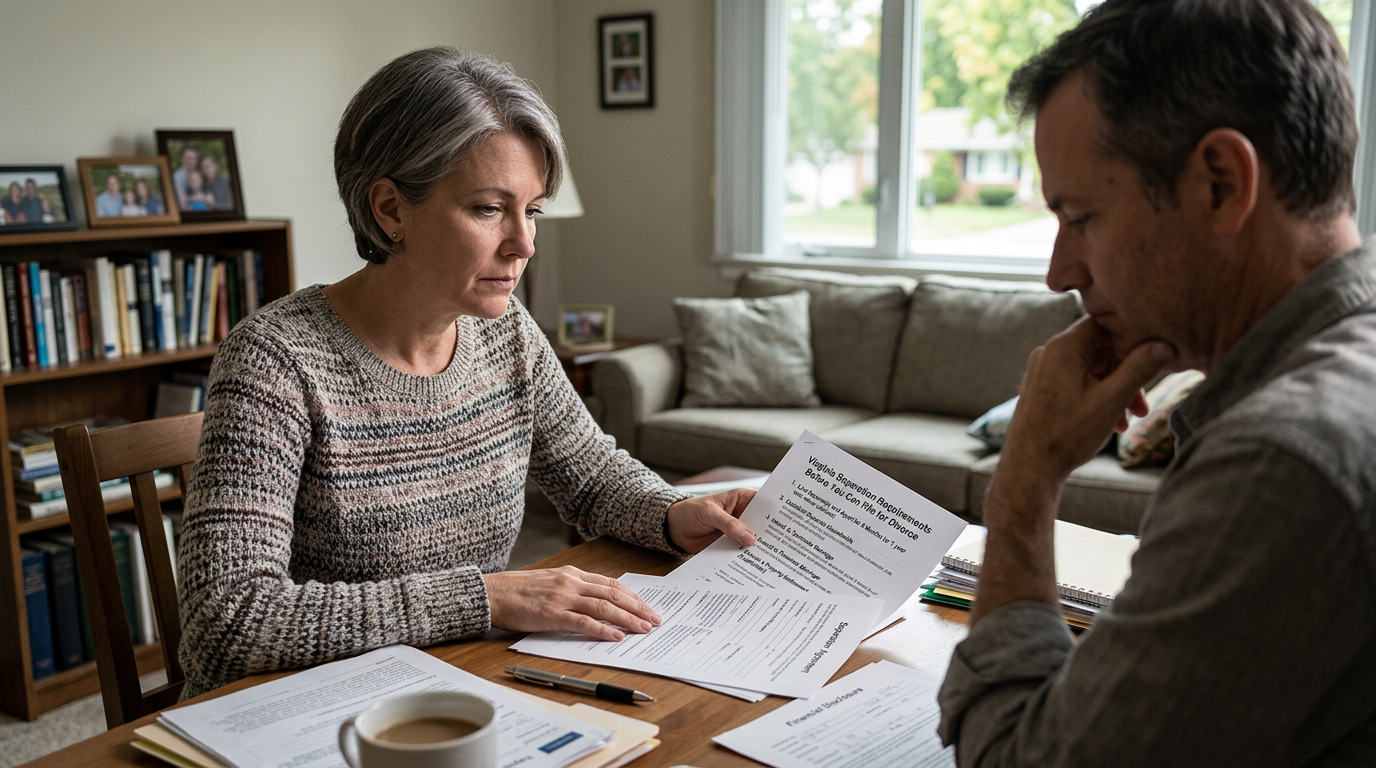
Many people in Virginia are surprised to learn they can't file for a no-fault divorce the moment they decide to end their marriage. Virginia law requires spouses to live separate and apart for a set period first. How long depends on your circumstances, and the details of how you separate can affect your case long after you file.
Understanding these rules helps you plan, avoid delays, and protect your interests from the start. A divorce lawyer Arlington VA residents work with can explain which requirement applies to you and how to document your separation properly.
This article covers the separation periods under Virginia law, what counts as living separate and apart, how fault grounds differ, and why the date of separation matters. It also explains when to speak with a divorce lawyer Arlington VA families trust before taking steps that could affect your rights.
The one-year rule
For a no-fault divorce in Virginia, the standard requirement is that spouses have lived separate and apart without cohabitation and without interruption for one year. Either spouse can file once that year has passed.
This rule applies to couples who have minor children together and to couples without children who haven't signed a separation agreement. It doesn't require both spouses to agree to the divorce. One spouse can file after a year of separation even if the other spouse objects. The year is counted from the date the spouses began living separate and apart with at least one of them intending the separation to be permanent.
The six-month rule
Virginia allows a shorter separation period in certain cases. If the spouses have no minor children and have entered into a written separation agreement, they can file for divorce after living separate and apart for six months.
Both conditions must be met. The six-month rule doesn't apply if the couple has minor children, including children born to both spouses or adopted. And it doesn't apply without a signed separation agreement.
For couples who qualify, the six-month path can save time. It also encourages spouses to resolve property, debt, and support issues early. Couples who take this path often finish the entire process with fewer court appearances, since the agreement already settles the issues a judge would otherwise decide.
What "separate and apart" means
Living separate and apart means more than living at different addresses, though that's the clearest way to show it. It involves ending the marital relationship and at least one spouse intending the separation to be permanent.
Couples sometimes separate while still living in the same home, often for financial reasons or to keep children's routines stable. Virginia courts have accepted separation under the same roof in some cases, but it's harder to prove. Spouses generally must show they stopped living as a married couple. That usually means sleeping in separate rooms, not sharing meals, not attending social events together as a couple, and keeping finances and household tasks separate.
If you plan to separate under the same roof, talk with your attorney first about how to document it. Clear evidence can prevent disputes later about when the separation began. Keep in mind that a judge may look closely at a same-roof separation, so the more consistent and visible your separate routines are, the better.
Interruptions can reset the clock
The separation must be uninterrupted. If spouses resume cohabitation during the separation period, the clock may start over. Brief contact, such as co-parenting exchanges or conversations about the children, usually doesn't count as resuming the marriage. But reconciling, living together again as a couple, or resuming a marital relationship can affect the timeline.
If you're unsure whether something might count as an interruption, ask your attorney before it happens.
Fault-based grounds
Virginia also allows divorce based on fault. Some fault grounds don't require a separation period before filing, while others do. The main fault grounds include the following:
- Adultery, or certain sexual acts outside the marriage
- Conviction of a felony with a sentence of more than one year and confinement, if cohabitation hasn't resumed since the confinement became known
- Cruelty or conduct causing reasonable fear of bodily harm, with divorce available one year after the act
- Willful desertion or abandonment, with divorce available one year after the act
Fault grounds can affect more than the timeline. In some cases, fault may influence spousal support or the division of property. But fault cases also require proof, can take longer, and often cost more. Many couples who could file on fault grounds choose a no-fault divorce instead. They often find the no-fault route quieter, faster, and less expensive overall.
A divorce lawyer Arlington VA clients consult can help you weigh whether fault grounds make sense in your situation, looking at the evidence available, the likely cost, and how fault might affect support or property in your case.
Why the date of separation matters
The date you separate does more than start the clock for filing. It can affect how property is classified and divided.
In Virginia, marital property generally includes property acquired during the marriage before the date of the last separation, when at least one spouse intended the separation to be permanent. Income earned, assets bought, and debts taken on after that date may be treated differently. That makes the separation date an important fact in many cases.
Disputes over the separation date are common. One spouse may claim the marriage ended months earlier or later than the other remembers. Clear records help resolve these questions. A dated message, a lease, or a change of address can carry real weight when spouses remember events differently.
How to document your separation
Good documentation protects you if questions come up later. Keep a record of the date you separated and the reasons. Save communications that reflect the separation, such as messages about moving out or dividing expenses. Keep copies of a new lease, utility bills, or mail at your new address. If you remain in the same home, write down how you're living separately.
Courts expect evidence of the separation when you file. Your attorney will explain what proof your case requires and how to present it.
Separation agreements
A separation agreement is a written contract between spouses that resolves issues such as property division, debt, spousal support, custody, and child support. It's required for the six-month path to divorce when there are no minor children, and it can be useful in any case.
A well-drafted agreement can make the divorce process faster and less expensive. It also gives both spouses certainty about their rights and responsibilities. Because it's a binding contract, it should be reviewed carefully before signing. Terms that seem fair today may have long-term consequences. For example, a waiver of spousal support is generally very difficult to undo once the agreement is signed and incorporated into the divorce decree.
Residency requirements
To file for divorce in Virginia, at least one spouse must have been a resident and domiciliary of Virginia for at least six months before filing. Military members stationed in Virginia may also be able to meet this requirement.
In the Washington area, many couples live and work across Virginia, DC, and Maryland. Each jurisdiction has different rules. The District, for example, removed its separation requirement in 2024. Where you file can affect timing and other issues, so it's worth discussing with your attorney before taking action. A short consultation can help you understand whether Virginia, DC, or another jurisdiction is the right place for your case.
What happens during the separation period
Couples often use the separation period to work out the terms of their divorce. Temporary arrangements for custody, support, and use of the home may be needed. If spouses can't agree, a court can enter temporary orders in some situations.
Use this time to gather financial records, understand your household budget, and think about your goals. It's also a good time to update the beneficiary designations and powers of attorney you control, since a spouse may still be named on them. Preparation during separation can make the divorce process smoother.
Common mistakes during separation
People sometimes make mistakes that complicate their divorce. They move out without a plan for the children or the home. They resume living together briefly and reset the separation clock. They sign agreements without legal review. They move money or make large purchases that raise questions later. And they fail to keep records of when the separation began.
Getting advice before you separate can help you avoid these problems. An hour with an attorney before you move out often costs far less than untangling a mistake later.
Taking the next step with Eris Law Group
Virginia requires most couples to live separate and apart before filing for a no-fault divorce, either for one year or for six months when there are no minor children and a separation agreement is in place. How and when you separate can affect property, support, and timing. Eris Law Group helps clients in Arlington and throughout Northern Virginia understand separation requirements, prepare separation agreements, and move through divorce with a clear plan.

 Arabic
 French
 Spanish
 Portuguese
 Deutsch
 Turkish
 Dutch
 Italiano
 Russian
 Romaian
 Portuguese (Brazil)
 Greek