


Laser Paint Remover: A Modern Solution for Efficient Surface Cleaning
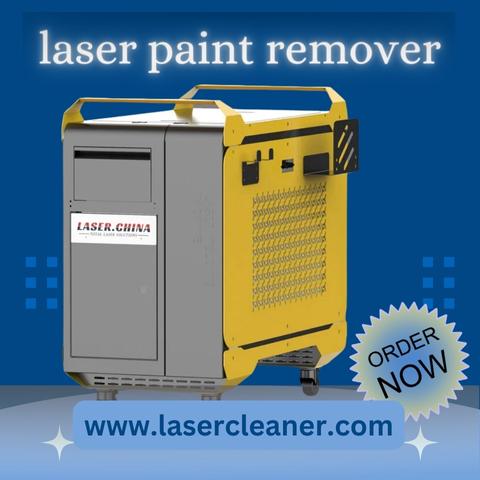
Removing old paint from metal surfaces can be a challenging task, especially in industrial environments where precision and surface quality are important. Traditional methods often involve chemical strippers, abrasive materials, or manual scraping, which may require considerable time and labor. Modern laser technology offers a more controlled approach to paint removal, helping businesses improve their surface preparation processes.
A laser paint remover uses concentrated laser energy to remove unwanted paint, coatings, and surface contaminants from different materials. This technology is increasingly used in manufacturing, automotive maintenance, metal fabrication, and industrial restoration projects.
How Does Laser Paint Removal Work?
Laser paint removal works by directing a high-energy laser beam onto a coated surface. The laser energy interacts with the paint layer, causing it to heat up and separate from the underlying material. Depending on the coating type and laser settings, the paint can be removed through vaporization, thermal decomposition, or controlled ablation.
The process can be adjusted according to the thickness of the coating, material type, and cleaning requirements. Operators can control parameters such as laser power, scanning speed, and frequency to achieve the desired cleaning results.
Applications Across Different Industries
Laser paint removal technology has applications in several industrial sectors. Automotive manufacturers and repair workshops use it to remove paint from vehicle components, metal panels, and selected restoration parts. It can also support maintenance operations where existing coatings need to be removed before repainting or welding.
In metal fabrication, this equipment helps prepare steel, aluminum, and other metal surfaces for further processing. Manufacturers can use it to remove protective coatings, old paint, and unwanted surface layers before applying new finishes.
The technology is also useful for industrial machinery maintenance, equipment refurbishment, and restoration projects involving metal structures. Its controlled operation makes it suitable for applications where maintaining the condition of the underlying material is important.
Choosing the Right Equipment
Selecting suitable equipment requires understanding the cleaning requirements of your business. Different paint types and surface materials may require different laser power levels and operating parameters.
Low-power systems may be suitable for lighter coatings and smaller components, while higher-power industrial systems can handle more demanding cleaning applications. Buyers should also consider the working area, scanning system, cooling method, operating controls, and available technical support.
A reliable laser paint remover should offer adjustable settings that allow operators to work with different coating thicknesses and surface conditions. Before purchasing, it is important to discuss your specific application with the equipment manufacturer and request a demonstration using similar materials.
Safety and Operating Considerations
Laser cleaning requires proper training and suitable safety arrangements. High-power laser beams can cause serious eye and skin injuries, so operators must use wavelength-appropriate protective eyewear and follow the manufacturer's safety instructions.
The working area should have appropriate laser safety controls, protective enclosures where required, and suitable ventilation or fume extraction. Removing certain paints may release hazardous fumes or particles, making proper exposure control essential.
Regular equipment inspections, cleaning of optical components, and maintenance of cooling systems can also help maintain consistent performance.
Why Businesses Are Exploring Laser Technology
Industrial companies are increasingly looking for modern surface preparation solutions that support accurate and repeatable results. Laser cleaning provides an alternative to several conventional paint removal techniques, particularly when controlled processing is required.
For businesses handling different materials and coating types, a laser paint remover can become a valuable part of their production or maintenance workflow. Its suitability depends on the application, coating composition, surface condition, and required cleaning quality.
Final Thoughts
Laser paint removal technology is changing how industries approach surface preparation and coating removal. With adjustable operating parameters and a controlled cleaning process, it offers an effective solution for many industrial applications.
Before investing in a laser paint remover, evaluate your production requirements, material compatibility, equipment specifications, and safety arrangements. Choosing a suitable system from a reliable manufacturer can help improve cleaning consistency and support long-term industrial operations.
 Spanish
 English
 Arabic
 French
 Portuguese
 Deutsch
 Turkish
 Dutch
 Italiano
 Russian
 Romaian
 Portuguese (Brazil)
 Greek