


Effective Strategies for Identifying the Right KOLs in the Pharmaceutical Industry
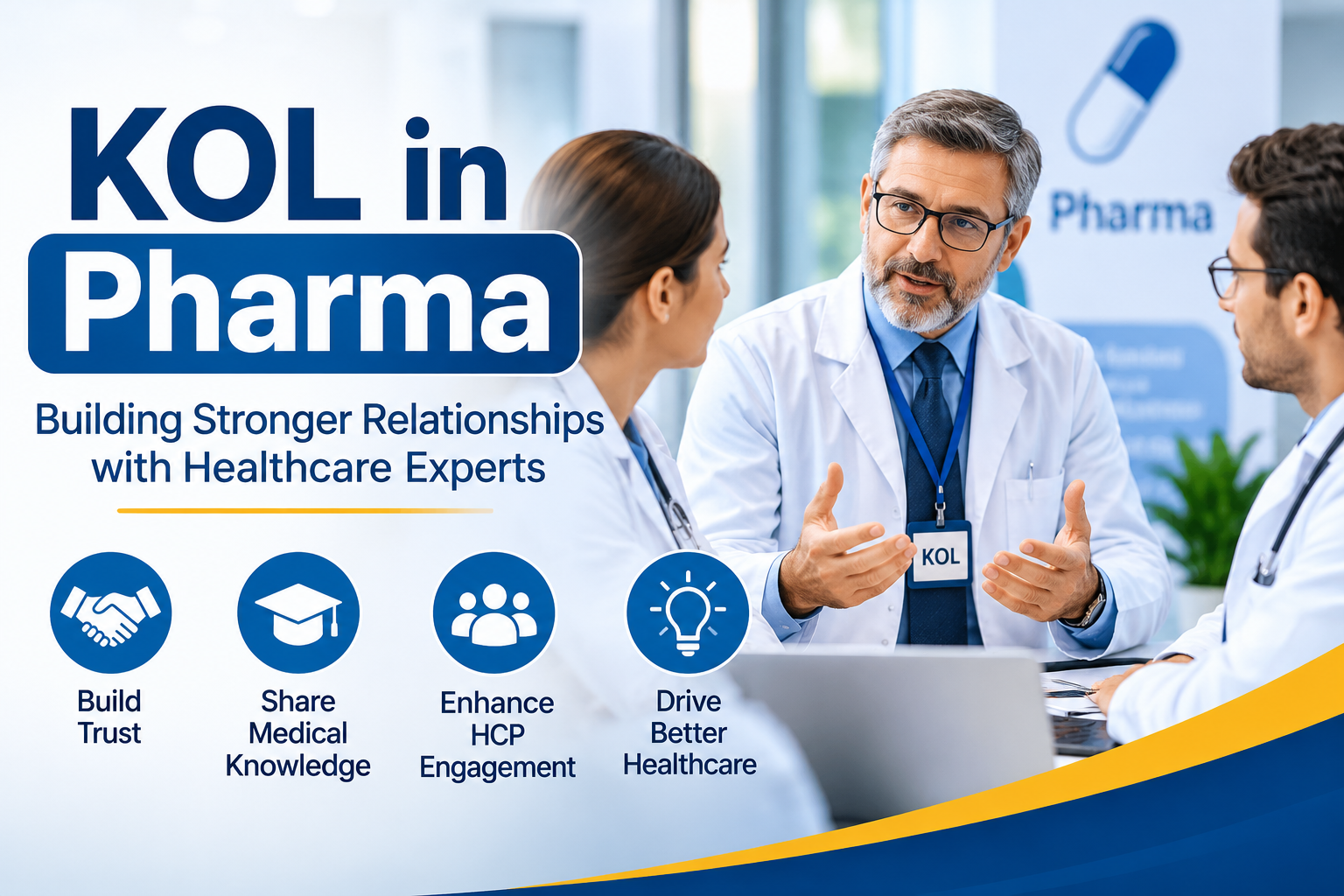
In the pharmaceutical industry, building strong relationships with healthcare professionals (HCPs) and medical experts is essential for successful communication, medical education, and industry growth. Key Opinion Leaders (KOLs) play an important role in sharing scientific knowledge, influencing clinical discussions, and helping pharmaceutical companies connect with the healthcare community. However, identifying the right experts requires more than simply looking at their professional titles or years of experience.
An effective KOL in Pharma strategy focuses on identifying individuals who have relevant medical expertise, professional credibility, strong communication skills, and influence within their therapeutic areas. Selecting the right KOLs can improve medical education initiatives, strengthen professional relationships, and support meaningful scientific engagement. Pharmaceutical companies should follow a structured approach to identify experts who align with their objectives.
1. Understand Your KOL Identification Objectives
Before searching for potential KOLs, pharmaceutical companies should clearly define their goals. Different projects require different types of medical experts.
For example, a company planning a medical education program may need experienced physicians who can explain complex clinical information. A scientific advisory board may require specialists with research experience and deep knowledge of a particular therapeutic area.
Define Your Therapeutic Area
Start by identifying the medical field relevant to your project, such as oncology, cardiology, neurology, immunology, or diabetes. This helps narrow the search to professionals with suitable expertise.
Establish Clear Selection Criteria
Develop selection criteria based on qualifications, clinical experience, research contributions, communication abilities, and professional reputation. Having clear objectives makes the KOL identification process more focused and effective.
2. Evaluate Clinical Expertise and Professional Experience
Clinical expertise is one of the most important factors when identifying pharmaceutical industry experts. A qualified KOL should demonstrate a strong understanding of their medical specialty and remain updated with developments in their field.
Review Educational Background and Qualifications
Examine medical degrees, specialist certifications, fellowships, and additional professional training. These qualifications provide useful information about an individual's knowledge and professional development.
Assess Clinical Experience
Consider the number of years a professional has worked in their specialty, the types of patients they treat, and their experience with relevant therapies or medical procedures.
An experienced specialist who actively works in clinical practice can provide valuable real-world perspectives during pharmaceutical discussions and educational programs.
3. Analyze Research Contributions and Scientific Publications
Research involvement is another important indicator when evaluating a potential KOL. Professionals who contribute to clinical research and scientific publications often have valuable knowledge of emerging treatments and medical advancements.
Examine Published Research
Review publications in recognized medical journals, including clinical studies, research papers, systematic reviews, and scientific articles. Look for contributions related to your therapeutic area.
Evaluate Clinical Trial Participation
Participation in clinical trials can demonstrate familiarity with treatment development, research methodologies, and patient outcomes.
Pharmaceutical companies should also consider involvement in research collaborations and scientific conferences when assessing a professional's expertise.
4. Assess Professional Influence and Industry Reputation
Not every experienced physician is necessarily an influential KOL. Professional influence can come from scientific contributions, leadership positions, academic involvement, and participation in healthcare communities.
Identify Leadership Positions
Look for professionals who serve as department heads, medical directors, professors, research leaders, or members of recognized medical associations.
These positions can indicate professional recognition and opportunities to contribute to important medical discussions.
Evaluate Industry Recognition
Consider awards, professional memberships, invitations to scientific conferences, and participation in expert panels. These indicators can help pharmaceutical companies understand an individual's standing within the medical community.
However, influence should always be evaluated alongside scientific credibility rather than professional visibility alone.
5. Use Digital Platforms and Data Analytics
Technology has made KOL identification more organized and efficient. Pharmaceutical companies can use digital platforms and data analytics tools to discover, evaluate, and compare medical experts.
Explore Professional Networks
Platforms such as LinkedIn, PubMed, Google Scholar, and professional medical association websites can help identify specialists and understand their professional contributions.
Use Data-Driven KOL Mapping
KOL mapping involves collecting and analyzing information about healthcare professionals based on their expertise, publications, research activity, professional networks, and engagement.
A structured approach to data analysis helps companies identify relevant experts and make informed selection decisions.
Consider Digital Influence
Some medical professionals actively share educational content, participate in webinars, and contribute to online medical discussions. Their digital presence can provide additional insights into their communication skills and professional engagement.
6. Evaluate Communication and Presentation Skills
Strong communication skills are essential for KOLs involved in medical education, advisory boards, conferences, and pharmaceutical speaker programs.
Even highly qualified medical experts need the ability to explain complex scientific information clearly and accurately.
Review Previous Speaking Experience
Check whether potential KOLs have participated in medical conferences, professional seminars, webinars, and educational sessions.
Their previous presentations can provide insights into their confidence, clarity, and ability to engage healthcare audiences.
Assess Scientific Communication
The right KOL should be able to communicate clinical evidence in an understandable and balanced manner. They should present scientific information accurately while addressing questions from healthcare professionals.
7. Consider HCP Networks and Professional Collaborations
A KOL's professional network can provide valuable information about their influence within the healthcare community.
Experts who collaborate with hospitals, universities, research organizations, and medical associations may have broader opportunities to contribute to scientific discussions.
Identify Professional Connections
Review collaborations, research partnerships, committee memberships, and participation in medical associations.
Understand Their Healthcare Community Engagement
Consider how actively the professional participates in educational initiatives, scientific discussions, and professional development activities.
These factors help pharmaceutical companies identify individuals who can support meaningful engagement with healthcare professionals.
8. Ensure Compliance and Ethical Transparency
Compliance is an essential part of KOL identification and engagement in the pharmaceutical industry. Companies must follow applicable laws, industry codes, and internal policies when selecting and working with medical experts.
Conduct Proper Due Diligence
Verify professional qualifications, licenses, institutional affiliations, and relevant disclosures. Review potential conflicts of interest before establishing professional relationships.
Follow Fair Market Value Principles
Compensation for legitimate services should be based on fair market value and documented appropriately. KOL selection should be driven by genuine expertise and business needs rather than prescribing behavior or commercial influence.
Maintain Transparent Documentation
Keep accurate records of selection criteria, engagement purposes, contracts, payments, and professional activities. Transparent processes support ethical relationships and responsible pharmaceutical operations.
9. Build a Long-Term KOL Relationship Strategy
Identifying the right KOL is only the beginning. Pharmaceutical companies should focus on building professional relationships based on mutual respect, scientific exchange, and shared educational objectives.
Maintain Regular Professional Communication
Keep experts informed about relevant scientific developments, educational opportunities, and upcoming professional activities.
Monitor Engagement and Performance
Evaluate participation, feedback, educational contributions, and the relevance of ongoing collaborations. Regular reviews help companies understand whether their KOL engagement strategy is achieving its objectives.
Update KOL Profiles Regularly
Medical expertise and professional responsibilities can change over time. Updating KOL profiles ensures that companies maintain accurate information and identify emerging experts in their therapeutic areas.
Conclusion
Identifying the right experts requires a strategic combination of clinical knowledge, research evaluation, professional influence, communication skills, and ethical due diligence. Pharmaceutical companies should move beyond basic professional credentials and assess the overall scientific contributions and relevance of potential experts.
An effective KOL in Pharma strategy uses structured identification methods, digital research tools, data-driven KOL mapping, and transparent selection criteria. By focusing on relevant expertise and meaningful professional engagement, pharmaceutical organizations can build stronger relationships with healthcare professionals, support medical education, and encourage valuable scientific exchange.
Ultimately, selecting the right KOLs helps create a more informed, collaborative, and responsible pharmaceutical industry.
 Italiano
 English
 Arabic
 French
 Spanish
 Portuguese
 Deutsch
 Turkish
 Dutch
 Russian
 Romaian
 Portuguese (Brazil)
 Greek