


Why Background Services Can Affect Your Gaming Experience
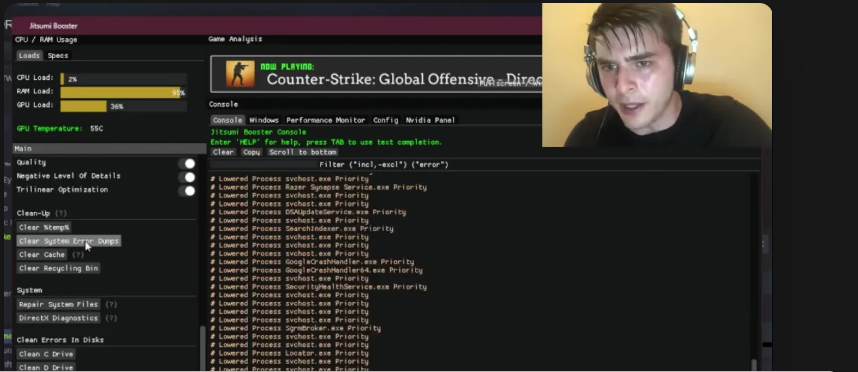
PC gaming is a fantastic experience, but getting smooth and consistent performance can sometimes be challenging, particularly when having an older computer or perhaps a low-spec Windows PC. Many gamers experience problems such as slow loading times, unexpected frame drops, background applications consuming system resources, and unnecessary processes running while playing demanding games. Fortunately, the right Windows gaming software and performance optimization tools will help users manage their systems more effectively. Game Booster utilities are particularly useful because they allow gamers to regulate unnecessary background applications and configure specific actions for individual gaming sessions. By reducing avoidable resource consumption, players can make smarter usage of their available CPU and memory capacity without immediately purchasing expensive hardware upgrades. Whether someone enjoys competitive multiplayer games, open-world adventures, racing simulators, or casual PC gaming, understanding how Windows works and using suitable optimization software can make the overall experience easier and enjoyable.
Among the most crucial aspects of improving PC gaming performance is understanding how background applications and Windows services affect system resources. Programs running in the back ground may consume CPU processing power, memory, storage activity, and network bandwidth even though users are not actively reaching them. Applications such as for instance web browsers, automatic update services, cloud synchronization tools, and unnecessary startup programs can contend with games for available resources. On computers with limited RAM or older processors, this competition may donate to performance interruptions, slower loading, and inconsistent gameplay. A passionate Game Booster might help users manage background applications prior to starting a game title and establish convenient actions for different gaming sessions. Rather than manually closing multiple programs each time they would like to play, gamers can work with a centralized utility to simplify their preparation process. However, not every background service must certanly be disabled, as essential Windows processes, security software, and hardware drivers are required for reliable system operation. Effective optimization targets identifying unnecessary resource consumption while maintaining system stability and protecting important functions.
Windows 10 and Windows 11 also include several built-in features that will influence gaming performance. Game Mode is designed to help prioritize gaming activity by managing certain system resources and reducing interruptions during gameplay. Power plans provide another important configuration option simply because they influence how Windows balances energy consumption and performance. Desktop computers and gaming laptops may benefit from different power configurations depending on the hardware, cooling capabilities, and usage requirements. Gamers must also review graphics settings, display refresh rates, startup applications, driver updates, and background activity when optimizing their systems. As an example, selecting appropriate in-game resolution settings and reducing demanding graphical effects can occasionally provide more noticeable improvements than changing several Windows settings. A well-maintained Windows installation, updated graphics drivers, and sensible power management can contribute to a far more consistent gaming environment. Combining these built-in options with dedicated Game Booster software gives users greater flexibility when preparing their computers for different games and performance requirements.
Monitoring system performance while playing is another essential part of fabricating an efficient gaming setup. CPU usage, memory consumption, and frames per second provide useful information about how a computer handles demanding gaming workloads. Without performance monitoring, players may struggle to understand why a certain game experiences stuttering, slowdowns, or unexpected frame-rate changes. A Gaming Overlay makes this information easier to get into by displaying important system statistics directly during gameplay. Rather than minimizing a game or switching between several desktop applications, users can check CPU and memory activity via an accessible in-game interface. Convenient application shortcuts can also help players open commonly used tools without interrupting their gaming jitsumi.com sessions. Audio controls provide additional flexibility, allowing users to manage sound settings while keeping their attention on the game. A well-designed overlay brings essential gaming utilities together in a single convenient location, helping users understand their system's behavior and make informed adjustments. By monitoring performance across different games and graphical settings, players can identify possible resource limitations and determine which configuration changes are worth making.
Gaming is not only about hardware performance and frame rates; comfort is also an essential element of a confident gaming experience. Many PC gamers spend many hours in front of their monitors, particularly during evening gaming sessions, competitive matches, or long single-player adventures. Extended screen exposure can subscribe to visual discomfort, dryness, and eye fatigue, particularly when along with poor lighting, long periods without breaks, or unsuitable display brightness. A Blue-Light Filter utility offers an additional display customization option by applying a milder screen tint according to the user's preferences. Scheduling features allow gamers to configure automatic changes at particular times, rendering it easier to ascertain consistent display settings throughout the day and evening. Users can select suitable tint levels and schedules based on the environment, monitor characteristics, and personal comfort. These features do not guarantee protection against eye strain or replace healthy screen habits, but they could make display customization more convenient. Taking regular breaks, adjusting monitor brightness, maintaining a cushty viewing distance, and using appropriate room lighting will also be valuable habits for anybody who spends significant time gaming on a Windows computer.
A whole PC gaming setup also advantages of proper platform configuration and regular maintenance. Steam users, for instance, can improve their gaming organization by managing their game libraries, checking download settings, organizing storage locations, and keeping installed games updated. Understanding Steam settings will help beginners create a more convenient gaming environment, while experienced players can explore controller configuration, cloud saves, launch options, and library management features. Regular PC maintenance is equally important because temporary files, outdated applications, unnecessary startup programs, and insufficient storage area can impact the overall usability of a computer. Gamers should periodically review installed software, maintain updated drivers, check available space, and ensure that their computers have adequate cooling and ventilation. Combining these maintenance practices with Game Booster, Gaming Overlay, and Blue-Light Filter utilities creates an even more organized approach to Windows gaming. Each application serves an alternative purpose: Game Booster helps manage background activity and gaming-session actions, Gaming Overlay provides convenient in-game shortcuts and performance monitoring, and Blue-Light Filter offers screen tint customization and scheduling. Together, these Windows utilities support a practical gaming environment dedicated to performance awareness, system management, convenience, and display comfort.
 Greek
 English
 Arabic
 French
 Spanish
 Portuguese
 Deutsch
 Turkish
 Dutch
 Italiano
 Russian
 Romaian
 Portuguese (Brazil)