


AI vs Human Intelligence: Comparing Cognitive Abilities, Emotional Understanding, Creativity, Adaptability, and the Future of Intelligent Technology
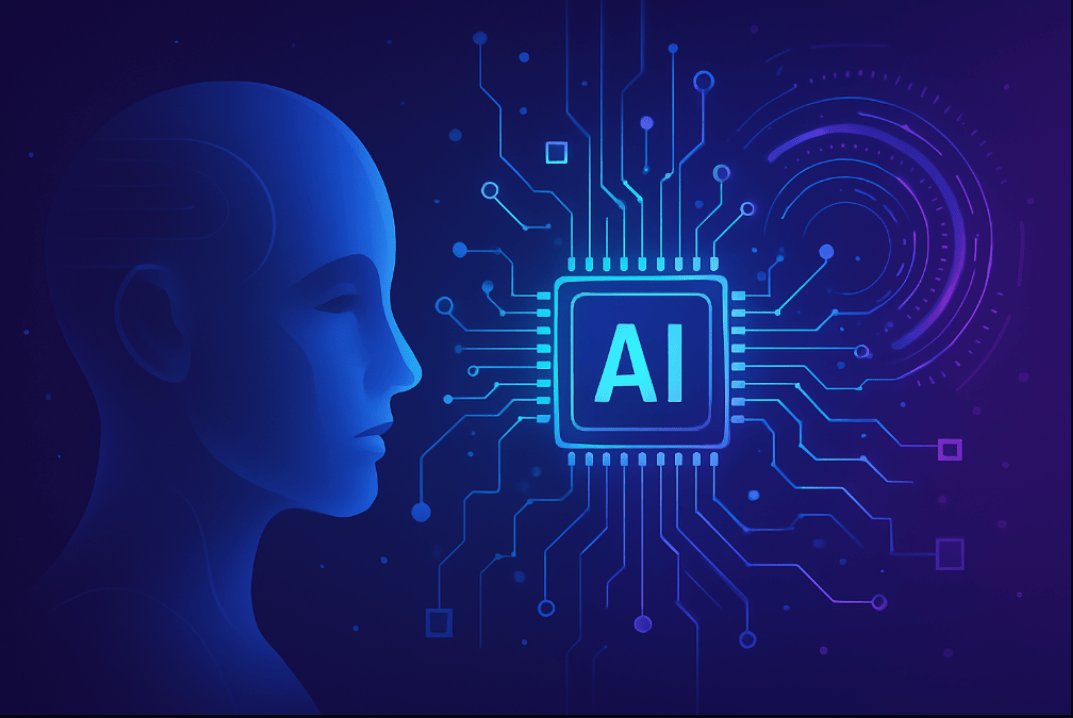
Artificial intelligence is transforming how people work, communicate, learn, and solve problems. From virtual assistants and recommendation systems to advanced language models and autonomous technologies, AI can now perform tasks that once required significant human effort. These developments have created an important discussion about AI vs human intelligence and how the two forms of intelligence differ.
Although artificial intelligence can process large amounts of information, recognize patterns, and generate responses quickly, human intelligence involves much more than information processing. People use emotions, experiences, intuition, imagination, social understanding, and personal judgment to navigate complex situations.
Understanding the relationship between artificial vs natural intelligence helps explain what machines can accomplish, where human abilities remain essential, and how both may contribute to future innovation.
What Is Artificial Intelligence?
Artificial intelligence refers to computer systems designed to perform tasks that typically require human-like cognitive abilities. These tasks may include understanding language, recognizing images, identifying patterns, generating content, and making predictions.
AI systems use algorithms, training data, mathematical models, and computational resources to produce results. Some technologies rely on predefined instructions, while modern machine learning systems identify patterns from examples and improve their performance through training.
Common applications of artificial intelligence include:
-
Natural language processing: Helps computers understand, interpret, and generate human language.
-
Machine learning: Allows systems to identify patterns and make predictions using data.
-
Computer vision: Enables machines to analyze images and visual information.
-
Generative AI: Produces text, images, audio, video, and other forms of content.
-
Robotics: Combines software, sensors, and physical systems to perform tasks in real-world environments.
These capabilities make AI useful across healthcare, education, finance, manufacturing, transportation, marketing, and many other industries.
However, AI performance depends on its training, design, available information, and operating environment. Producing an intelligent-looking response does not necessarily mean a system understands the world in the same way a person does.
What Is Human Intelligence?
Human intelligence is the natural ability to learn, reason, understand information, solve problems, communicate, and adapt to changing situations.
Unlike artificial intelligence, human intelligence develops through a combination of biological processes, personal experiences, education, social interaction, and environmental influences.
Human cognitive abilities include logical reasoning, memory, attention, imagination, emotional understanding, and decision-making. People can also use personal values and ethical considerations when responding to situations that do not have straightforward answers.
Some important characteristics of human intelligence include:
-
Emotional awareness: Understanding personal emotions and recognizing feelings in others.
-
Creativity: Developing original ideas and expressing imagination in different ways.
-
Adaptability: Responding to unfamiliar circumstances using experience and judgment.
-
Social understanding: Interpreting communication, relationships, and cultural differences.
-
Common sense: Applying everyday knowledge to situations that may not have been formally explained.
-
Moral reasoning: Considering responsibilities, consequences, and ethical principles.
These abilities allow humans to operate in unpredictable environments where information may be incomplete or circumstances may change unexpectedly.
AI vs Human Intelligence: Understanding the Major Differences
The comparison between AI and human intelligence becomes clearer when examining how each processes information, learns, creates, and makes decisions.
Learning and Information Processing
Artificial intelligence can analyze large datasets and identify patterns much faster than humans in many specific tasks. Machine learning systems can process information from numerous examples and use those patterns to make predictions or generate outputs.
Human learning works differently. People combine information with experiences, observations, emotions, and existing knowledge. They can learn through conversation, experimentation, mistakes, and practical activities.
Humans may not process information at the same computational speed as machines, but they can often understand new situations by connecting ideas across different areas of knowledge.
Creativity and Imagination
Creativity is another important area in the discussion of AI vs human intelligence.
Generative AI can produce articles, illustrations, music, designs, and other creative outputs by learning patterns from existing data. It can also help people explore ideas, develop concepts, and experiment with different styles.
Human creativity, however, is influenced by personal experiences, emotions, cultural backgrounds, curiosity, imagination, and individual perspectives.
A person may create something because of a meaningful memory, personal belief, social experience, or desire to communicate a particular feeling. AI can generate creative-looking results, but this does not establish that it experiences inspiration or emotions like a human creator.
Emotional Intelligence and Empathy
Emotional intelligence is one of the most significant differences between natural and artificial intelligence.
Humans can experience emotions such as happiness, sadness, fear, excitement, and empathy. They can interpret facial expressions, body language, tone of voice, and social context to understand how another person might feel.
AI systems can identify emotional patterns in text, speech, and images. They can also generate supportive responses that sound empathetic.
However, recognizing or imitating emotional language is not the same as personally experiencing emotions. AI does not have human feelings, personal relationships, or lived emotional experiences.
This distinction is especially important in areas such as counselling, healthcare, education, and customer support, where genuine human understanding can be essential.
Decision-Making and Critical Thinking
AI can support decision-making by analyzing information, identifying trends, comparing alternatives, and producing recommendations. Businesses use these capabilities to improve forecasting, detect unusual activities, and organize complex information.
Human decision-making involves additional considerations, including personal values, responsibilities, intuition, social consequences, and ethical judgment.
AI recommendations can also contain errors, reflect limitations in training data, or overlook important context. Human oversight is therefore important when decisions have significant financial, legal, professional, or personal consequences.
Adaptability and Common Sense
Artificial intelligence can perform extremely well in tasks for which it has been designed or trained. However, it may struggle when presented with unfamiliar situations, unexpected changes, or information outside its learned patterns.
Humans can often adapt by using common sense, observation, reasoning, and previous experiences. They can recognize when a situation requires a different approach and adjust their behaviour accordingly.
This ability to transfer knowledge across different environments remains an important distinction in the comparison of artificial vs natural intelligence.
Artificial vs Natural Intelligence: A Quick Comparison
|
Feature |
Artificial Intelligence |
Human Intelligence |
|
Learning |
Learns patterns from data and training |
Learns through experience, education, and interaction |
|
Processing |
Performs large-scale calculations quickly |
Processes information through biological cognitive abilities |
|
Creativity |
Generates outputs based on learned patterns |
Uses imagination, experiences, and personal perspectives |
|
Emotions |
Recognizes and imitates emotional expressions |
Experiences and understands emotions |
|
Decision-making |
Uses algorithms, patterns, and available information |
Combines reasoning, values, emotions, and judgment |
|
Adaptability |
Depends on design, training, and capabilities |
Can respond flexibly to unfamiliar situations |
|
Memory |
Stores and retrieves information through technical systems |
Uses complex biological memory processes |
|
Common sense |
May struggle with context and everyday assumptions |
Develops practical understanding through experience |
Neither form of intelligence is superior in every situation. Their effectiveness depends on the task, environment, available resources, and desired outcome.
Advantages of Artificial Intelligence
AI offers several advantages that make it valuable for individuals and organizations.
Speed and efficiency: AI can process information and complete repetitive digital tasks quickly, helping organizations improve productivity.
Automation: Businesses can automate routine activities such as data entry, document classification, scheduling, and customer enquiries.
Data analysis: AI systems can identify patterns in complex datasets and support research, planning, and forecasting.
Availability: Many AI-powered services can operate continuously, allowing users to access assistance outside normal business hours.
Consistency in defined tasks: Properly designed systems can perform repetitive processes consistently, although their outputs still require monitoring.
Advantages of Human Intelligence
Human intelligence provides abilities that remain essential across personal, social, and professional environments.
Emotional understanding: People can develop meaningful relationships, show empathy, and respond to emotional needs.
Original thinking: Human imagination and personal experience support creative ideas and new perspectives.
Ethical judgment: People can consider moral responsibilities, social consequences, and cultural values.
Flexible problem-solving: Humans can adapt their approaches when facing unexpected challenges.
Communication and collaboration: People can build trust, understand social relationships, negotiate, and work together toward shared goals.
These qualities are especially important when a task requires compassion, accountability, leadership, or a deep understanding of human needs.
How AI and Human Intelligence Can Work Together
Instead of treating artificial intelligence and human intelligence as competing technologies, organizations can combine their strengths.
AI can handle information-heavy and repetitive activities, while people provide direction, creativity, context, and final judgment.
For example, healthcare professionals can use AI tools to assist with medical image analysis and organize patient information. Human clinicians remain responsible for interpreting results within the patient's overall circumstances and making appropriate care decisions.
In education, AI can support personalized learning materials and provide practice activities, while teachers offer mentorship, encouragement, and an understanding of individual student needs.
In business, AI can help analyze customer trends, while human teams use those insights to develop marketing strategies, build relationships, and make informed decisions.
This collaborative approach can improve efficiency without removing the importance of human expertise.
The Future of Artificial and Natural Intelligence
The future of AI vs human intelligence will likely involve closer collaboration between people and intelligent technologies.
AI systems are becoming more capable in language processing, reasoning assistance, automation, and creative support. As these tools develop, organizations will need employees who understand how to use them responsibly and evaluate their results.
Human skills such as critical thinking, communication, adaptability, leadership, creativity, and ethical reasoning will remain important.
Education and professional training may increasingly focus on combining technical knowledge with human capabilities. Businesses will also need policies that address privacy, transparency, security, bias, and accountability when implementing AI systems.
The most valuable approach will not necessarily be replacing human abilities with machines. Instead, it will involve identifying which tasks benefit from automation and where human involvement is essential.
Conclusion
The comparison of AI vs human intelligence reveals two different approaches to learning, reasoning, creativity, and problem-solving. Artificial intelligence offers speed, automation, and powerful data-processing capabilities, while human intelligence provides emotional understanding, imagination, common sense, adaptability, and ethical judgment.
Understanding artificial vs natural intelligence is important as AI becomes more integrated into everyday life and professional environments. Rather than viewing these forms of intelligence as direct replacements for one another, individuals and businesses can use their complementary strengths to achieve better outcomes.
The future of intelligent technology will depend not only on how advanced AI becomes but also on how responsibly people develop, manage, and use it.

 English
 French
 Spanish
 Portuguese
 Deutsch
 Turkish
 Dutch
 Italiano
 Russian
 Romaian
 Portuguese (Brazil)
 Greek