


Planning for an EV or Heat Pump? How Residential Solar Installers Plan for Future Energy Use
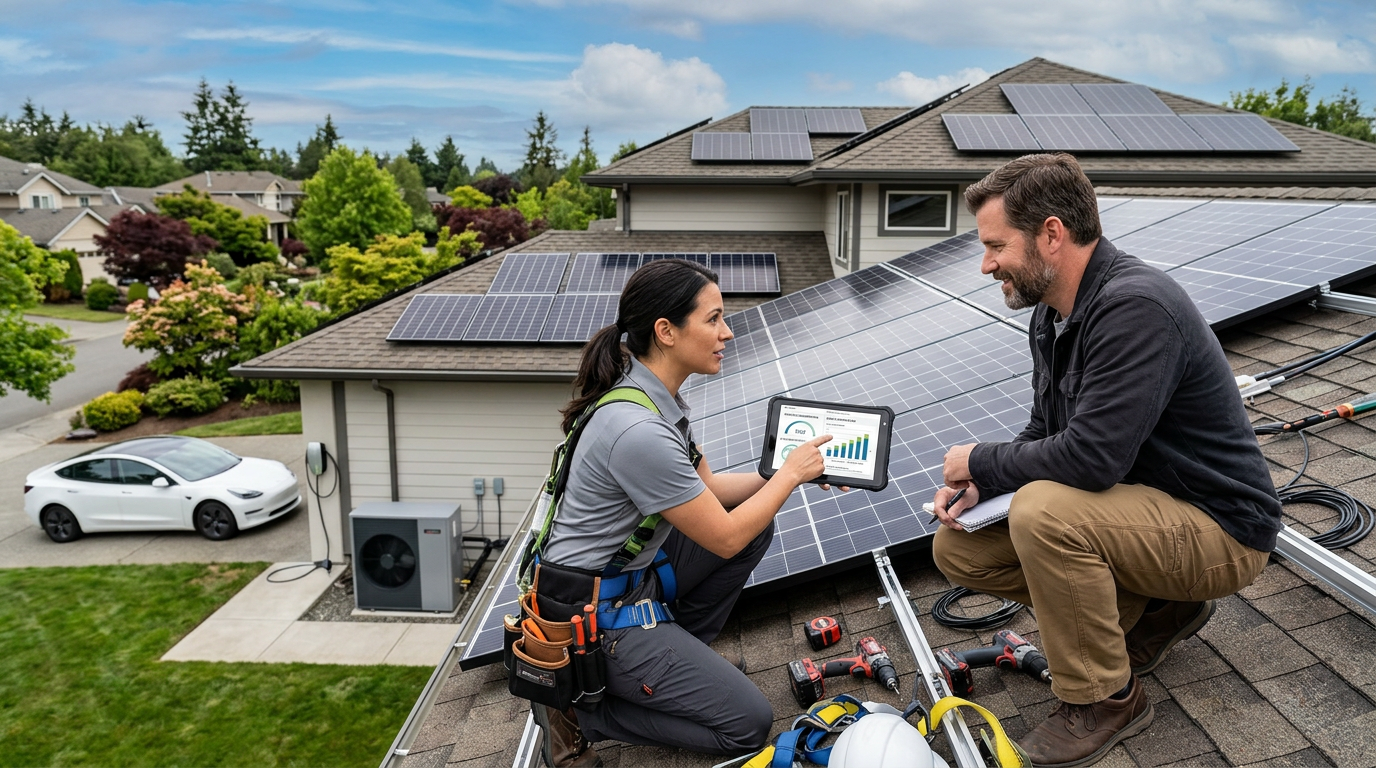
Most solar systems are sized around the past. An installer pulls a year of electric bills, totals the usage, and designs a system to cover it. That works well if your home stays the same. Many homes don't.
Electric vehicles and heat pumps are showing up in more driveways and basements every year. Both can raise household electricity use by thousands of kilowatt-hours. Experienced residential solar installers in Maryland ask about these plans during the first conversation, because a system sized only for last year's bills may come up short once a new car starts charging in the garage.
This article explains how residential solar installers in Maryland account for future energy use, what they look at during design, and what you should share before your system is finalized. A little planning now can spare you from expensive add-ons and rework later.
Why past bills don't tell the whole story
Your utility history is still the starting point. It shows how much power your home uses, when usage peaks, and how it shifts across seasons. A typical Maryland home uses more electricity in summer for air conditioning, and homes with electric heat see winter spikes too.
But that history only reflects how you live today. It doesn't know you plan to trade in a gas car next year. It doesn't know your aging oil furnace is on borrowed time. It doesn't know a family member is moving in or that you're thinking about finishing the basement.
A system designed purely from old bills covers old usage. If your consumption jumps by a third after adding an EV and a heat pump, your solar offset drops, and your utility bill climbs back up. Tell your installer what's coming so the design reflects where your home is headed.
How much power does an electric vehicle add?
The answer depends on how much you drive and how efficient your vehicle is. Many electric cars travel roughly three to four miles per kilowatt-hour. A driver covering about 12,000 miles a year might use somewhere around 3,000 to 4,000 kilowatt-hours annually for charging. Larger vehicles, trucks, and SUVs use more.
For comparison, that can equal a significant share of a typical home's yearly electricity use. Two EVs can push the number much higher.
Charging patterns matter too. Most EV owners charge overnight, when panels aren't producing. That's fine if you have net metering, since daytime surplus production earns credits that offset nighttime use. It does mean your system needs enough annual production to cover the added load, even though the timing doesn't match directly.
How much power does a heat pump add?
Heat pumps move heat instead of generating it, which makes them very efficient. Still, switching from a gas, oil, or propane furnace to an electric heat pump moves your heating load onto your electric bill.
The added usage varies widely. Home size, insulation, air sealing, the heat pump's efficiency rating, and your thermostat habits all play a role. A well-insulated home in a milder part of the state will use far less than a drafty older house in Western Maryland, where winters run colder and longer.
Residential solar installers in Maryland often estimate heat pump load using the home's current heating fuel use. If you know how many gallons of oil or therms of gas you burn each winter, an installer can convert that into an approximate electricity figure. If you replace an older electric resistance heating system, your usage may actually drop, since heat pumps use far less power for the same warmth.
What installers look at when planning ahead
Future-ready design involves more than adding a few extra panels. A thoughtful installer reviews several parts of your home and system.
System size
The first question is simple: how much more energy will you need? Installers combine your current usage with estimated future loads to arrive at a target annual production. They may recommend building to that full target now or sizing for today and leaving room to expand.
Maryland net metering rules and utility interconnection limits can influence this decision. Utilities may cap system size based on expected consumption, so documenting your planned EV or heat pump purchase can help justify a larger system.
Inverter capacity
If you plan to add panels later, the inverter setup matters. A string inverter sized exactly for today's array may not have room for more panels. Expanding could mean adding a second inverter or replacing the first one.
Microinverter systems expand more easily, since each new panel comes with its own inverter. Installers can also choose a slightly larger string inverter upfront to allow for growth.
Electrical panel and service capacity
This one surprises many homeowners. Your main electrical panel has a limited capacity, often 100 or 200 amps. Solar, EV chargers, heat pumps, and batteries all need space and capacity on that panel.
Older homes with 100-amp service can run out of room quickly. A Level 2 EV charger alone often needs a dedicated circuit of 40 amps or more. Add a heat pump and a solar connection, and the panel may need an upgrade. Residential solar installers in Maryland check panel capacity during the site visit and can plan for an upgrade at the same time as the solar installation. Doing both together usually costs less than handling them separately.
Roof space
Your roof can only hold so many panels. If you plan to expand later, installers should design the first phase so it doesn't block the best remaining space. Placing panels strategically now keeps good roof area open for a future addition.
If roof space is tight, higher-efficiency panels can fit more production into a smaller area. A ground-mounted array may also be an option on larger properties.
Experienced residential solar installers in Maryland also think about which roof faces to save. South-facing space is the most productive, so they may fill it first and keep east or west sections in reserve for later. Others reverse that logic when a homeowner knows an EV is coming soon and wants every possible kilowatt-hour from day one. The right call depends on your timeline and budget, and a good installer will walk you through both paths with real production numbers.
Battery readiness
Batteries pair well with EVs and heat pumps, especially for homeowners who want backup power during outages. Even if you don't install a battery now, choosing compatible equipment and planning space for one makes adding it later far simpler.
Questions to answer before your design is final
Share as much detail as you can with your installer. These questions are a good place to start:
- Are you planning to buy an electric vehicle, and how many miles a year do you drive?
- Will you have one EV or two?
- Is your current heating system gas, oil, propane, or electric, and how old is it?
- Are you planning major renovations or an addition?
- Do you expect more people living in the home over the next few years?
- What size is your electrical service, and is the panel full?
- Do you want battery backup now or in the future?
The more accurate your answers, the more closely your system will match real future use.
Build now or expand later?
Both approaches have merit.
Building to full future size now usually costs less per watt. You pay for one design, one permit, one installation, and one round of utility paperwork. Your system starts covering future loads from day one.
Expanding later spreads out the cost and avoids paying for capacity you might not use if plans change. The downside is a second project with its own permits, labor, and paperwork. Matching new panels to older ones can also be tricky if panel models change over the years.
Many homeowners land in the middle. They size for confirmed near-term plans, like an EV already on order, and design the system so adding more later is straightforward.
How net metering ties it together
Net metering lets your system send extra power to the grid during sunny hours and earn credits. Those credits offset power you pull from the grid at night or on cloudy days. This arrangement is what makes overnight EV charging work with solar.
Maryland's net metering rules shape how large a system makes financial sense. Producing far more than you use may not pay off as well as producing close to your annual need. Accurate load planning helps you land on the right size.
Planning for the home you'll have
Solar works best when it fits the way you'll live over the next 25 years, and that may look very different from today. Telling your installer about future EVs, heat pumps, and other changes leads to a system that keeps your bills down as your home evolves.
Energy Select designs solar systems with future energy needs in mind, from system size and inverter choice to electrical panel planning. The team also installs EV chargers and battery backup, so your home can grow into its system instead of outgrowing it. To start planning, reach out to Energy Select for an energy analysis built around where your home is headed.

 English
 French
 Spanish
 Portuguese
 Deutsch
 Turkish
 Dutch
 Italiano
 Russian
 Romaian
 Portuguese (Brazil)
 Greek