


Does a Blast Proof Door Work?
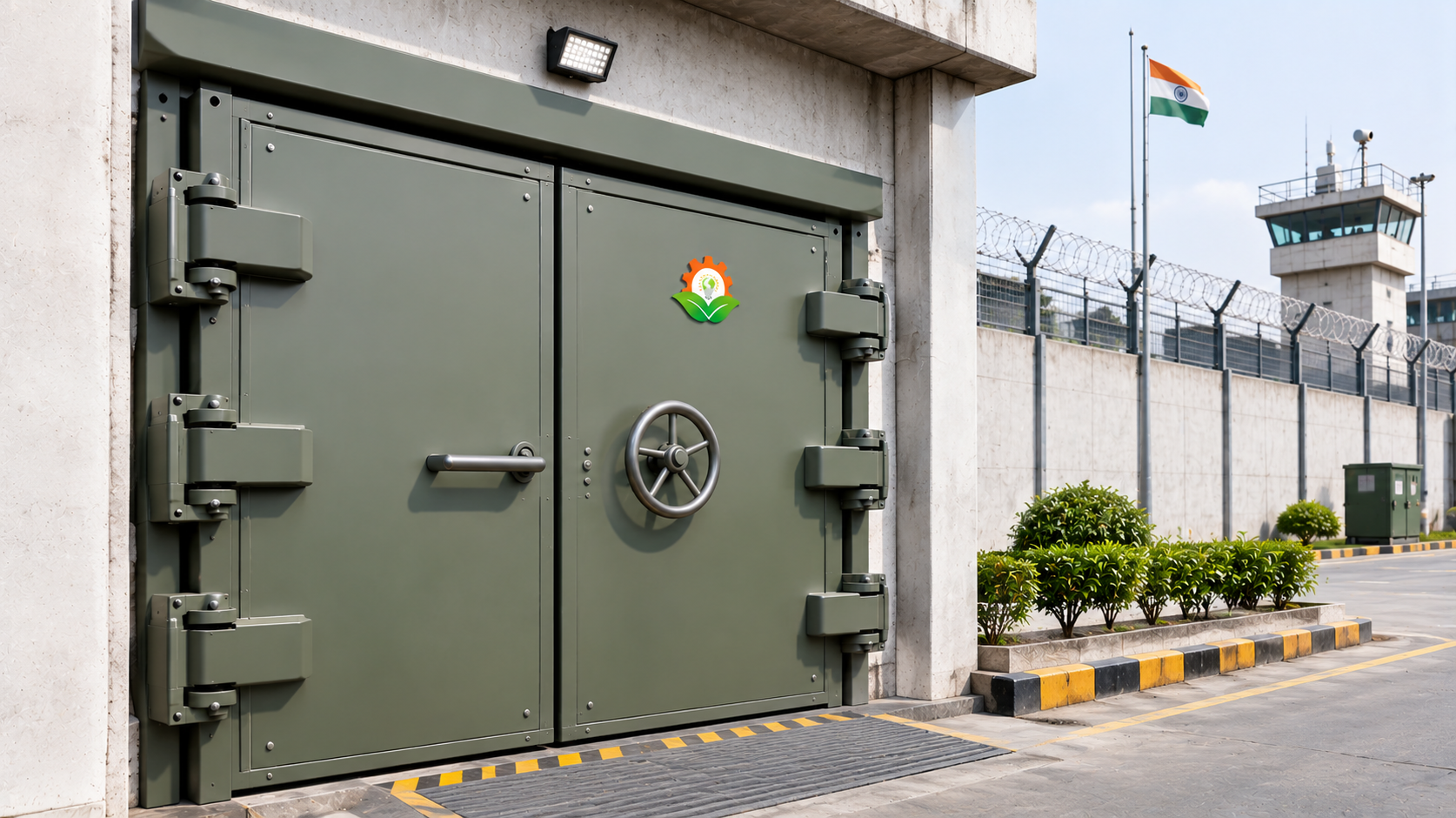
An explosion occurs near the entrance of a petrochemical control building following an equipment failure. Within milliseconds, a powerful pressure wave strikes the facility. While standard access doors would buckle or detach from their frames, the blast proof door absorbs the force, remains anchored to the structure, and helps protect personnel, equipment, and critical operations inside. Understanding how this engineered system works is essential for anyone responsible for securing high-risk facilities.
Modern industrial plants, defence installations, embassies, and power infrastructure depend on blast-resistant construction to reduce the impact of accidental or intentional explosions. A blast proof door is far more than a reinforced steel panel—it is a complete structural system engineered to resist explosive loads, maintain controlled access, and protect life during extreme events. Its performance depends on careful design, rigorous testing, proper installation, and ongoing maintenance.
How Does a Blast Proof Door Work?
A blast proof door works by managing the enormous forces generated by an explosion rather than attempting to eliminate them entirely. When a blast wave reaches the door, the pressure is distributed across the door leaf, internal reinforcements, hinges, locking mechanisms, frame, and surrounding wall structure.
Instead of failing suddenly, the door is engineered to deform within controlled limits while remaining securely attached to its frame. This controlled behaviour prevents dangerous fragmentation, maintains the integrity of the protected space, and reduces the likelihood of structural collapse around the doorway.
Blast Proof Door Engineering Explained
The effectiveness of a blast proof door begins with its engineering.
Unlike conventional industrial doors, blast doors incorporate thick structural steel plates, internal stiffeners, reinforced hinges, heavy-duty locking systems, and specially designed frames. Every component is selected to transfer explosive forces safely into the surrounding reinforced concrete or structural steel wall.
Proper blast door design also considers the expected blast pressure, stand-off distance, reflected pressure, impulse duration, and structural response of the entire building.
Blast Pressure Ratings and Certification
Not every facility requires the same level of blast protection. The required rating depends on the potential explosive threat and the consequences of structural failure.
Manufacturers evaluate doors using advanced structural analysis, computer simulations, and physical testing. Certification verifies that the complete door assembly—including hinges, locks, frame, and anchors—can perform within specified deformation limits during a blast event.
When comparing blast proof door manufacturers in India, buyers should always request evidence of engineering calculations, independent testing, and compliance with recognised IS/BIS requirements and international blast standards.
Why the Frame Is Just as Important as the Door
One of the biggest misconceptions is that blast resistance depends only on the steel door.
In reality, the frame and surrounding wall are equally critical. During an explosion, enormous loads transfer from the door into the frame and then into the building structure. Weak anchors or poorly reinforced walls can fail even if the door itself remains intact.
Proper installation includes:
- Reinforced frame anchoring
- Structural wall assessment
- Correct anchor spacing
- Weld quality verification
- Concrete strength evaluation
- Load path analysis
Without proper structural integration, even high-quality blast resistant doors cannot deliver their intended level of protection.
Fire Resistance and Multi-Hazard Protection
Many explosions are followed by fire, smoke, or hazardous chemical release. For this reason, modern blast resistant door systems are frequently designed to provide multiple layers of protection.
Additional features may include:
- Fire-resistant construction
- Airtight sealing
- Smoke containment
- Corrosion-resistant coatings
- Chemical-resistant finishes
- Security-grade locking systems
These combined capabilities improve resilience during complex emergency situations rather than addressing blast loads alone.
Automation and Security Integration
Today's critical infrastructure demands more than physical strength.
Modern blast doors can integrate with:
- Electronic access control
- Biometric authentication
- Building Management Systems (BMS)
- CCTV surveillance
- Emergency lockdown systems
- Remote monitoring platforms
Automation improves operational security without compromising emergency response or controlled evacuation procedures.
Key Features of a High-Quality Blast Proof Door
When evaluating a blast protection solution, buyers should focus on engineering performance rather than appearance.
Key features include:
- High structural strength
- Certified blast pressure rating
- Corrosion-resistant construction
- Fire resistance
- Airtight sealing
- Heavy-duty hinges
- Security-grade locking systems
- Durable protective coatings
- Low maintenance requirements
- Compliance with recognised certification standards
These features collectively determine the reliability of the complete protection system.
Where are Blast Proof Doors Used?
Blast protection is required wherever explosions could threaten personnel, assets, or critical operations.
Typical applications include:
- Defence and military installations
- Government and administrative buildings
- Embassies and consulates
- Oil & gas facilities
- Petrochemical processing plants
- Power generation stations
- Data centres
- Ammunition depots
- Hazardous industrial process units
Although explosion proof doors are often mentioned alongside blast doors, the two terms may refer to different engineering objectives depending on the application. Buyers should always confirm the exact performance requirements for their project.
What Influences Blast Door Price?
The final blast door price depends on much more than the size of the opening.
Important cost factors include:
- Required blast pressure rating
- Door dimensions and configuration
- Steel grade and plate thickness
- Frame engineering
- Testing and certification
- Automation and access control
- Locking systems
- Installation complexity
- Site-specific structural assessment
- Long-term maintenance requirements
Selecting a lower-cost product without proper engineering validation may increase operational risk and lifecycle costs.
Buyer's Guide: Choosing the Right Manufacturer
Selecting among blast proof door manufacturers in India should involve more than comparing quotations.
Look for manufacturers that provide:
- Proven engineering expertise
- Independent testing credentials
- Compliance with recognised standards
- Custom design capability
- Precision manufacturing
- Professional installation services
- Technical support
- Preventive maintenance programmes
- Strong project experience
Working with a company that serves as both manufacturer and service provider often results in better coordination throughout the project lifecycle. Sigma Power Tech blast door solutions are supported by Sigma Power Tech manufacturer and service provider capabilities, combining engineering, manufacturing, installation, and long-term maintenance for critical infrastructure applications.
Common Mistakes to Avoid
Several common decisions can reduce the effectiveness of a blast protection system.
Avoid:
- Choosing solely based on price
- Ignoring site-specific blast assessments
- Using inadequate frame anchoring
- Overlooking fire and corrosion exposure
- Failing to verify certification
- Neglecting maintenance planning
- Ignoring future security and automation upgrades
A properly engineered solution always begins with a comprehensive risk assessment rather than a standard product selection.
Conclusion
Understanding how a blast proof door works makes it clear that its performance depends on far more than heavy steel construction. Effective blast protection requires accurate engineering, certified testing, robust frame integration, proper installation, and regular maintenance working together as one complete system.
Whether protecting defence facilities, government buildings, industrial plants, or critical infrastructure, organisations should prioritise the correct blast rating, verified certification, and long-term structural reliability instead of focusing only on upfront costs. Investing in a professionally engineered blast door system provides lasting protection, operational continuity, and confidence when safety matters most.
 Romaian
 English
 Arabic
 French
 Spanish
 Portuguese
 Deutsch
 Turkish
 Dutch
 Italiano
 Russian
 Portuguese (Brazil)
 Greek