


The Role of Real-Time Monitoring in Cold Chain Logistics
Introduction
The transportation of temperature-sensitive products requires more than a vehicle and a delivery schedule. Businesses dealing with pharmaceuticals, healthcare products and other sensitive cargo need to maintain suitable conditions throughout the journey. Even a short period of exposure to unsuitable temperatures can affect product quality, safety and usability.
This is why cold chain logistics has become an important part of modern supply chain management. It combines temperature-controlled transportation, shipment monitoring, planned handling and coordination between different stages of delivery.
For businesses, real-time monitoring provides better visibility into shipment movement and temperature conditions. It helps logistics teams identify potential issues, review shipment progress and take action according to agreed operating procedures.
Why Real-Time Monitoring Matters in Cold Chain Logistics
Traditional transportation tracking mainly focuses on shipment location and delivery progress. Temperature-sensitive shipments require additional information because their condition during transit is just as important as their arrival time.
Real-time monitoring can help businesses understand:
-
Whether the shipment is moving along the planned route.
-
Whether recorded temperatures remain within the agreed range.
-
Whether unexpected delays may affect the transportation plan.
-
When a shipment reaches important handling or delivery points.
-
Whether further investigation is required after an unusual event.
For pharmaceutical and healthcare products, these details support better shipment oversight. However, monitoring technology must work alongside suitable equipment, trained handling teams and product-specific transportation instructions.
How Temperature Monitoring Supports Shipment Quality
Temperature monitoring helps create a record of the conditions experienced by a shipment during transportation. Depending on the shipment requirements, suitable data loggers and monitoring systems can record temperature information at defined intervals or provide live visibility.
A well-planned monitoring process generally involves the following steps.
1. Understanding the Required Temperature Range
Every temperature-sensitive product has its own storage and transportation requirements. A vaccine, pharmaceutical ingredient, diagnostic product and frozen item may require different conditions.
Businesses should establish the approved temperature range before dispatch. This information should come from the product's authorised documentation, stability information and the shipper's quality requirements.
2. Preparing the Vehicle Before Loading
The vehicle must be suitable for the shipment and its specified transportation conditions. Pre-conditioning, equipment checks and inspection procedures help prepare the vehicle before loading begins.
3. Recording Temperature During Transportation
Data loggers and suitable monitoring systems help record temperature conditions during transit. GPS-enabled tracking can also provide information about vehicle location and movement.
4. Checking Conditions During Loading and Unloading
Loading and unloading are important stages because opening vehicle doors and transferring packages can expose products to changing environmental conditions.
Reducing unnecessary handling time and following planned procedures can help minimise avoidable temperature exposure.
5. Reviewing Records After Delivery
Temperature records and delivery information can help businesses review whether the shipment followed the agreed transportation process. If an excursion is recorded, the authorised quality team should assess its impact using product-specific information.
The Importance of GPS and Tracer-Enabled Vehicles
Temperature information becomes more useful when it can be considered alongside shipment location and route progress.
GPS technology helps logistics teams monitor vehicle movement, while tracer-enabled systems can provide access to temperature and location information, depending on the service arrangement.
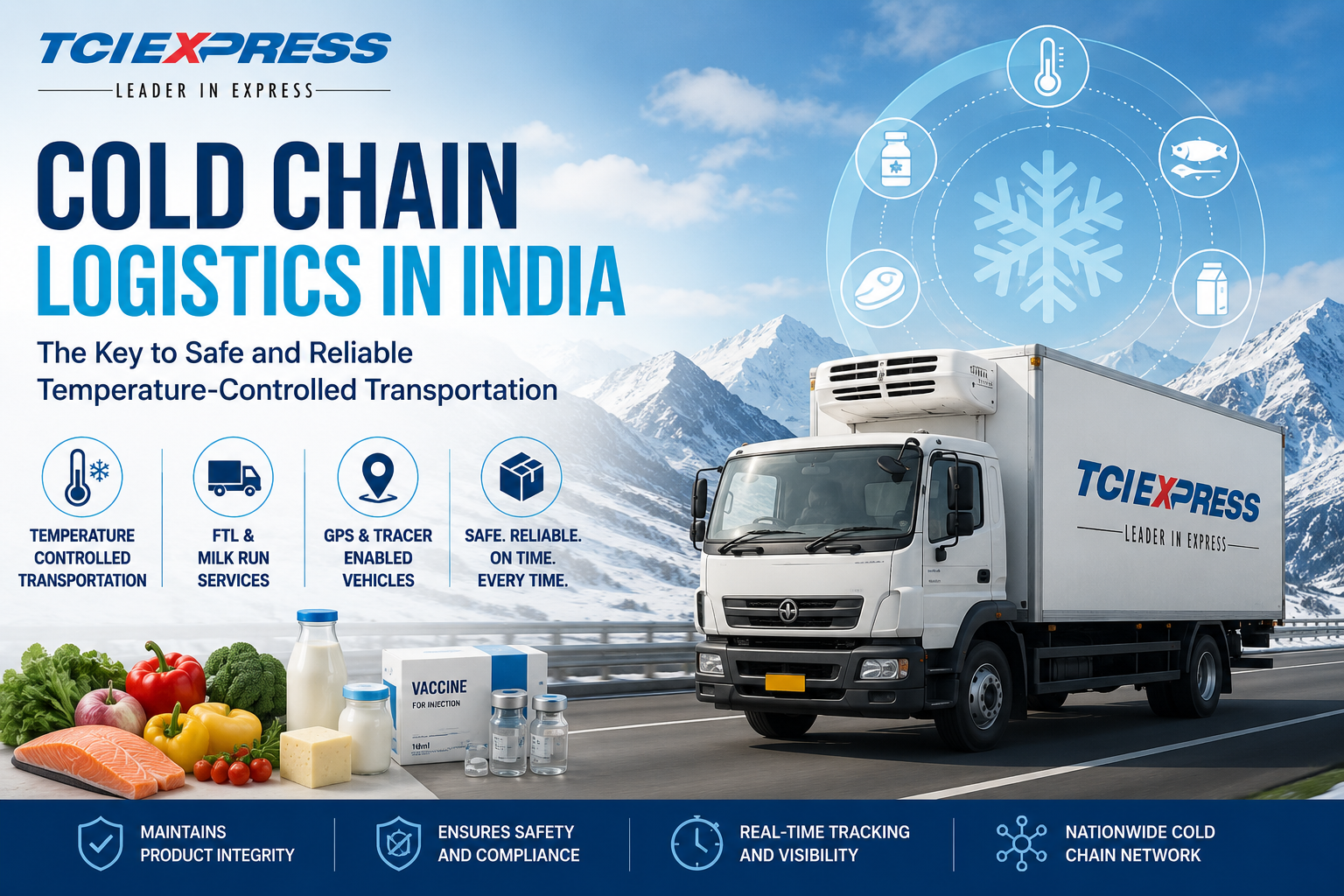
TCI Express Cold Chain Express includes GPS and tracer-enabled vehicles that support access to temperature and vehicle-location information.
The service also offers temperature-controlled transportation through Full Truck Load (FTL), Milk Run and secondary transportation. Vehicles are available in capacities ranging from 1 ton to 18 tons, subject to operational requirements.
These capabilities can support businesses that need greater visibility while transporting temperature-sensitive consignments.
Cold Chain Monitoring Across Different Transportation Stages
A shipment does not face temperature-related risks only during its main journey. Different stages of the supply chain require proper coordination.
Pickup and Initial Handling
Before dispatch, the shipper and logistics provider should confirm the product details, packaging, temperature requirements and pickup schedule. Proper preparation helps reduce waiting time and unnecessary exposure.
Primary Transportation
During the main transportation stage, suitable temperature-controlled vehicles and monitoring systems help maintain oversight of shipment conditions and movement.
Secondary Transportation
Secondary transportation may involve transferring shipments between distribution points or moving goods closer to the final delivery location. These handovers need clear operating procedures and coordination.
Final Delivery
The receiving location should be prepared before the vehicle arrives. A planned unloading process and timely handover help reduce unnecessary waiting and handling.
Businesses can also explore Surface Express, Domestic Air Express and Rail Express when evaluating other transportation requirements for their supply chains.
Why Pharmaceutical Shipments Need Special Attention
Pharmaceutical products can be sensitive to temperature variations, handling conditions and transportation delays. Their logistics requirements must therefore be established before movement begins.
A reliable pharmaceutical cold chain plan should consider:
-
Product-specific temperature requirements.
-
Suitable packaging and transportation equipment.
-
Temperature monitoring and documentation.
-
Vehicle preparation and inspection.
-
Planned pickup and delivery schedules.
-
Controlled loading and unloading.
-
Clear escalation procedures for unusual events.
TCI Express has described monitoring procedures for pharmaceutical cold chain movements, including data loggers, tracer technology, GPS tracking, temperature checks during loading and unloading, and vehicle inspection processes.
The specific operating conditions depend on the product and agreed shipment requirements. A single temperature setting should not be assumed suitable for every pharmaceutical consignment.
For further reading, businesses can explore Pharma Cold Chain Logistics in India: Planning Temperature-Controlled Shipments on TCI Express Insights. The article explains why shipment planning must consider product requirements, monitoring, packaging, handovers and excursion response.
How Technology Improves Cold Chain Coordination
Technology supports better coordination between shippers, transport teams and receiving locations. It does not replace operational planning, but it can make shipment information easier to review.
Some important applications include:
GPS tracking: Helps monitor vehicle location and route progress.
Temperature data loggers: Record temperature conditions during transportation.
Tracer-enabled systems: Support access to temperature and location information.
Digital shipment records: Help maintain information about dispatch, movement and delivery.
Communication systems: Support coordination when delays, route changes or other operational issues arise.
Businesses can learn more about the role of technology in logistics through TCI Express Insights, which covers transportation, supply chain management and industry developments.
Choosing the Right Cold Chain Logistics Partner
Selecting a logistics provider is an important decision for businesses that regularly move temperature-sensitive products. The provider should understand the nature of the cargo and be able to plan transportation around its specific requirements.
Before selecting a service, businesses should evaluate the following factors:
-
Temperature-controlled capabilities: Check whether the provider can support the required transportation conditions.
-
Vehicle availability: Understand the available vehicle capacities and their suitability for the shipment.
-
Monitoring facilities: Ask about temperature recording, GPS tracking and shipment visibility.
-
Handling procedures: Review the processes followed during loading, unloading and transfers.
-
Network capability: Evaluate whether the provider can support the required origin, destination and route.
-
Communication: Confirm how shipment updates and unexpected events are communicated.
-
Documentation: Understand what monitoring records and delivery information can be provided.
TCI Express provides multiple transportation solutions through its Express Services portfolio. Businesses can also review International Air Express for international transportation requirements and E-Commerce Express for relevant distribution needs.
Chander Agarwal's Perspective on Logistics Development
The growth of specialised logistics services requires investment in operational processes, network capabilities and technology. As supply chains become more demanding, businesses increasingly need transportation partners that understand the importance of timely movement, shipment visibility and service coordination.
Chander Agarwal, Managing Director of TCI Express, has been associated with the company's development and expansion in the express logistics sector.
The broader development of logistics infrastructure and technology remains important for businesses seeking dependable transportation solutions. You can also read the TCI Express leadership profile of Chander Agarwal for more information about his professional journey.
Building a More Visible and Reliable Cold Chain
Cold chain logistics depends on a combination of suitable transportation equipment, temperature monitoring, route planning and disciplined handling. Real-time visibility can help businesses understand where their shipments are and review recorded transportation conditions.
However, technology alone cannot protect sensitive cargo. Businesses must define product-specific requirements, select suitable transportation arrangements and establish clear procedures for every stage of the shipment.
With its temperature-controlled transportation through FTL, Milk Run and secondary transportation, along with GPS and tracer-enabled vehicle capabilities, TCI Express supports businesses with specialised cold chain transportation requirements.
Companies planning temperature-sensitive shipments can explore TCI Express Cold Chain Express, review their transportation needs and request a shipment estimate.
Frequently Asked Questions
1. What is real-time monitoring in cold chain logistics?
Real-time monitoring refers to the use of suitable technology to review shipment information such as vehicle location and temperature conditions during transportation.
2. Why is temperature monitoring important during transportation?
It helps businesses review whether recorded conditions remain within the agreed transportation range and identify events that may require investigation.
3. What is the role of GPS in cold chain transportation?
GPS helps logistics teams monitor vehicle location and route progress. When used alongside temperature monitoring, it provides a more complete view of shipment movement.
4. What are data loggers used for in cold chain logistics?
Data loggers record temperature information during transportation. These records can support shipment reviews and quality investigations.
5. Does every pharmaceutical product require the same temperature?
No. Temperature requirements vary by product. They should be established using approved product information, stability data and the shipper's quality instructions.
6. What is secondary transportation in cold chain logistics?
Secondary transportation refers to the movement of goods from distribution points towards regional destinations, retailers, healthcare facilities or other receiving locations.
7. What cold chain services does TCI Express provide?
TCI Express offers temperature-controlled transportation through FTL, Milk Run and secondary transportation. Its cold chain offering also includes GPS and tracer-enabled vehicle capabilities.
8. How can businesses enquire about TCI Express Cold Chain services?
Businesses can visit the TCI Express website, review the Cold Chain Express service and submit their transportation requirements through the enquiry facility.
Conclusion
Real-time monitoring has an important role in improving visibility and coordination across temperature-controlled supply chains. From vehicle location to temperature records, shipment information helps businesses review transportation performance and respond to operational concerns.
For companies handling pharmaceuticals and other temperature-sensitive products, a planned cold chain process can support better shipment oversight and more organised distribution.
Explore TCI Express Cold Chain Express and discuss your temperature-controlled transportation requirements with the team.
 Portuguese (Brazil)
 English
 Arabic
 French
 Spanish
 Portuguese
 Deutsch
 Turkish
 Dutch
 Italiano
 Russian
 Romaian
 Greek