


PWM Current Mode Controllers: What Makes Them Effective for High-Performance Power Conversion?
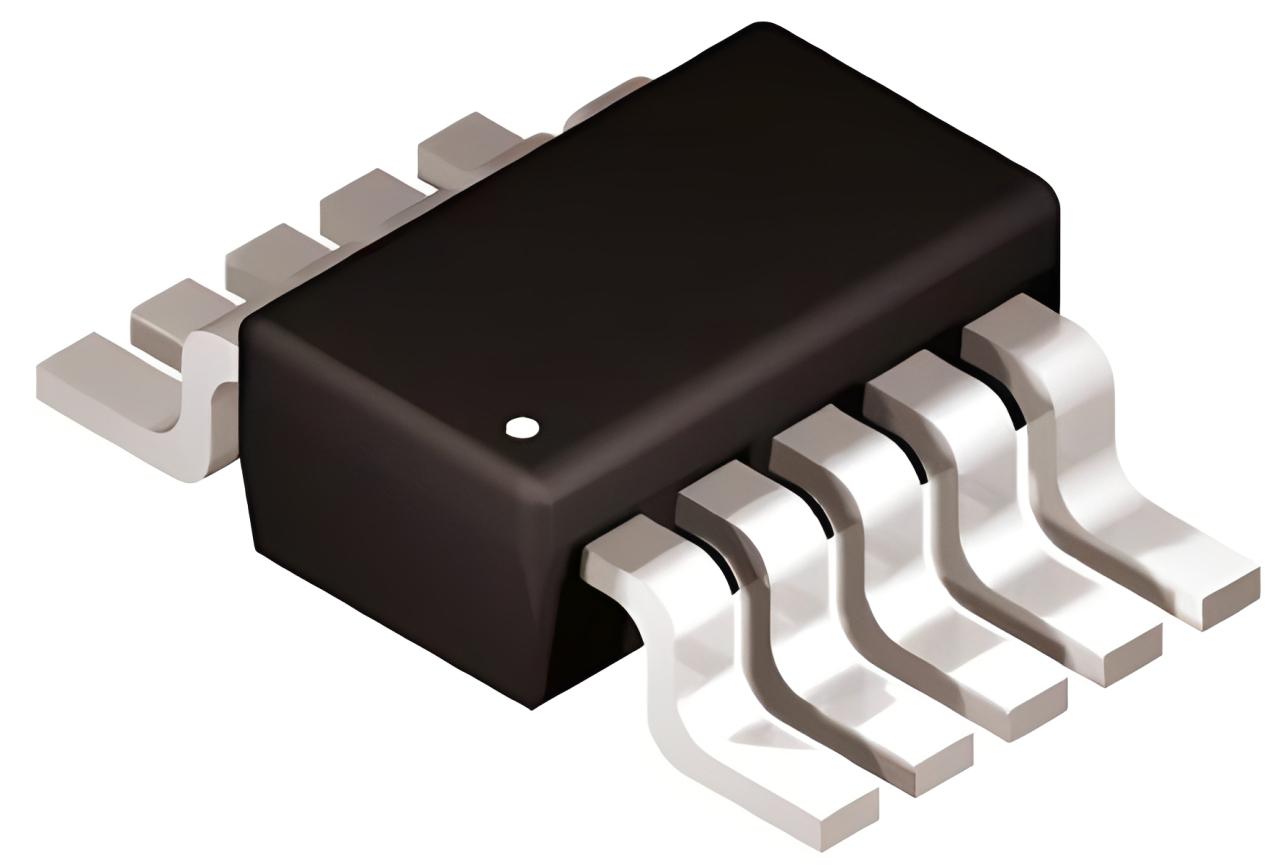
Electronic systems are becoming smaller, faster, and more power intensive, which places greater pressure on power supplies to deliver stable voltage under constantly changing conditions. Designers need control methods that can react quickly, protect power components, and maintain efficient energy transfer without adding unnecessary complexity.
PWM Current Mode Controllers address these requirements by combining pulse-width modulation with direct current feedback. Instead of depending only on output-voltage information, they monitor current inside the power stage during every switching cycle. This allows the controller to regulate energy flow with greater precision and react rapidly when operating conditions change.
Why Do PWM Current Mode Controllers Offer Better Control Over Power Delivery?
PWM Current Mode Controllers use current information as part of the switching decision. During each cycle, the power switch turns on and current begins to rise through the converter. The controller measures this current and compares it with a command level generated by the voltage-regulation loop.
When the current reaches the required threshold, the switching pulse ends. This process repeats continuously, allowing the controller to control how much energy enters the power stage on a cycle-by-cycle basis.
This approach is particularly useful because the current flowing through the converter is closely connected to the amount of energy being transferred. By controlling current directly, the circuit gains a faster and more immediate way to manage power.
How Does Current Mode Control Create a Two-Loop Regulation System?
Current mode architectures typically use two control loops working together.
The outer loop monitors output voltage and determines whether the load requires more or less energy. The inner loop monitors current and controls each switching pulse.
Why Are Two Control Loops Better Than One?
The voltage loop maintains long-term output accuracy, while the current loop provides fast short-term response.
This combination can offer several advantages:
- Faster reaction to changing load demand
- Better control of energy during each switching cycle
- More predictable peak-current behaviour
- Improved response to input-voltage changes
- Stronger protection during overload conditions
- Simplified compensation in suitable converter designs
The inner loop reacts quickly, while the outer loop ensures the output remains close to the required voltage.
How Do These Controllers Respond When the Load Changes Suddenly?
Load changes are common in practical electronic equipment.
A communication circuit may suddenly transmit data. A processor may enter a high-performance state. A motor controller may demand more current during acceleration. Industrial electronics may activate several loads at once.
When these events occur, the power supply must respond quickly enough to prevent the output voltage from moving outside acceptable limits.
Current mode control can detect the increased current requirement almost immediately. The controller adjusts the switching behaviour so that additional energy reaches the output.
When demand decreases, the opposite occurs and the controller reduces energy transfer.
This rapid response makes the architecture useful in systems that experience dynamic electrical loads.
Why Is Cycle-by-Cycle Regulation Important for Reliability?
Cycle-by-cycle control means that every switching period can be adjusted independently according to actual current conditions.
If an abnormal event causes current to rise too quickly, the controller can stop the pulse before the next switching cycle begins.
Which Components Can Benefit From This Protection?
Fast current limiting can help reduce stress on:
- Power transistors
- Transformers
- Inductors
- Rectifiers
- Current-sense components
- PCB conductors
- Output stages
- Connected loads
This immediate response can prevent excessive current from continuing long enough to cause serious component damage.
How Does Input Voltage Affect Current Mode Operation?
Power converters do not always receive a perfectly stable input voltage.
Battery voltage changes as the battery discharges. Industrial supplies may vary under load. Rectified AC sources can also experience fluctuations.
Current mode controllers naturally react to many of these changes because the current slope inside the power stage changes with the input voltage.
If the input rises, current may reach the control threshold more quickly, causing the switching pulse to end earlier. If the input falls, the current may rise more slowly.
This behaviour can improve the converter's response to line-voltage variations.
Where Can PWM Current Mode Controllers Be Used Most Effectively?
These devices can be used across many types of electronic power systems.
Typical applications include:
- Telecom power modules
- Industrial control equipment
- Embedded electronics
- Battery-powered systems
- Automotive power circuits
- Networking hardware
- LED power supplies
- DC-DC converters
- AC-DC adapters
- Measurement equipment
- Automation systems
- Auxiliary power supplies
Their flexibility makes them suitable for applications ranging from compact low-power circuits to more demanding industrial power designs.
Which Converter Architectures Can Benefit From Current Mode Control?
Current mode control is compatible with several common switching topologies.
How Does It Support Flyback Conversion?
In a flyback converter, energy is stored in the transformer during the switch-on period and transferred to the output when the switch turns off. Monitoring primary current gives the controller a direct indication of stored energy.
Why Is It Useful in Buck and Boost Designs?
In buck converters, current mode control helps regulate inductor current while reducing the input voltage.
In boost converters, it helps manage the inductor current while the circuit raises the output voltage above the input level.
Forward, push-pull, and other converter architectures may also use current mode techniques depending on the controller and design requirements.
What Should Engineers Evaluate When Comparing Controllers?
Controller selection should begin with the electrical requirements of the complete power system rather than one isolated specification.
Important factors include:
- Supply-voltage range
- Switching-frequency range
- Maximum duty cycle
- Current-sense threshold
- Gate-drive capability
- Startup behaviour
- Reference accuracy
- Operating temperature range
- Package format
- Protection functions
- Soft-start options
- Frequency synchronisation
These specifications influence compatibility, efficiency, and overall system performance.
Why Does Gate-Drive Capability Matter?
The controller often drives a MOSFET or another switching device.
Each switching event requires the gate to charge and discharge. If the controller cannot provide enough drive current, switching transitions may become slower.
Slow switching can increase power loss and heat generation.
A controller with appropriate drive capability helps the transistor switch efficiently and reduces the time spent in high-loss transition regions.
How Can Engineers Manage Switching Noise?
Switching converters naturally generate electrical noise because voltage and current can change very rapidly.
The current-sense input can be particularly sensitive because the signal may be relatively small.
What Layout Practices Can Improve Signal Integrity?
Useful design practices include:
- Place the controller close to relevant power components
- Keep current-sense traces short
- Reduce large switching-current loops
- Separate sensitive feedback paths from noisy nodes
- Use proper bypass capacitors
- Maintain a controlled grounding strategy
- Apply filtering where appropriate
Careful layout can improve both electrical stability and electromagnetic compatibility.
Why Can Slope Compensation Improve Stability?
Peak current mode systems can become unstable under certain duty-cycle conditions.
This instability may cause current peaks to alternate between switching cycles.
Slope compensation introduces a controlled ramp into the current-control process. This helps stabilise the loop and maintain more consistent operation.
Some controllers include this feature internally, while others allow designers to implement it externally.
How Can PWM Current Mode Controllers Support Energy-Efficient Systems?
Efficient power conversion reduces energy waste, operating temperature, and cooling requirements.
PWM switching already improves efficiency by operating the power transistor mainly in its fully on and fully off states. Current mode control adds more precise energy regulation by controlling current in every switching cycle.
Efficiency still depends on the entire design, including the switching device, magnetic components, capacitors, rectifiers, PCB layout, and operating frequency.
When these elements are optimised together, current mode control can support highly efficient power-conversion systems.
Why Are These Controllers Useful in Compact Electronic Products?
Modern designs often need higher power density within smaller physical dimensions.
Current mode controllers can support compact architectures by combining switching control, current limiting, fault protection, and regulation functions within a single IC.
Higher switching frequencies may also allow smaller transformers and inductors, although designers must carefully manage additional switching losses.
This combination can help reduce PCB space while maintaining dependable power performance.
How Will PWM Current Mode Controllers Adapt to Future Power Requirements?
Future electronic systems are expected to require higher efficiency, better power density, faster response, and more intelligent protection.
PWM Current Mode Controllers are well suited to these trends because their architecture already combines real-time current monitoring with accurate PWM regulation.
Newer controller generations can offer improved current-sense accuracy, broader operating ranges, enhanced fault management, programmable functions, and compatibility with faster power semiconductor technologies.
Why Do PWM Current Mode Controllers Remain a Practical Power-Control Solution?
PWM Current Mode Controllers provide a balanced approach to power regulation by combining accurate voltage control with fast current feedback.
Their ability to make switching decisions on every cycle helps improve transient response, current limiting, and overall reliability. At the same time, their compatibility with multiple converter architectures makes them suitable for a wide variety of electronic applications.
For designers seeking responsive, efficient, and well-protected power conversion, PWM current mode control remains a strong foundation for modern switched-mode power supply design.
 Deutsch
 English
 Arabic
 French
 Spanish
 Portuguese
 Turkish
 Dutch
 Italiano
 Russian
 Romaian
 Portuguese (Brazil)
 Greek