


Does Birth Control Affect Menopause Symptoms After You Stop Taking It?
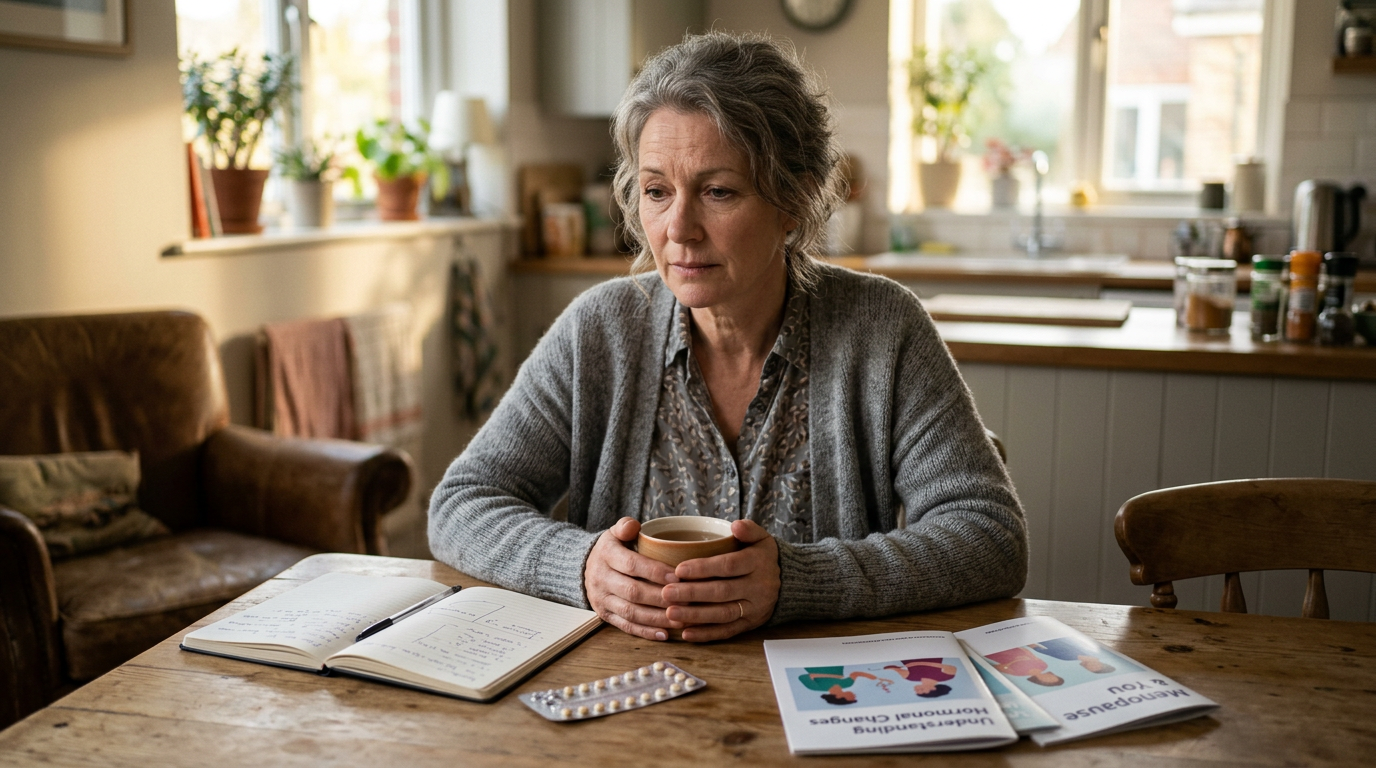
A woman takes the pill for twenty years without much thought. At 51, she and her doctor decide it's time to stop. Within a few weeks, she's waking up drenched in sweat, snapping at her family, and wondering whether quitting the pill caused all of it. It's one of the most common questions gynecologists hear from women in their late 40s and early 50s.
The honest answer is that birth control doesn't create new symptoms or make the transition harder in the long run. What it often does is hide what was already happening. Menopause and the years leading up to it can go on quietly in the background while hormonal contraception keeps your cycle steady. Once you stop, the masking lifts, and the changes can seem to arrive all at once.
This article explains how birth control interacts with menopause, why symptoms can feel sudden after you stop, which methods matter most, and how to plan the switch so the change feels less like falling off a cliff.
Birth control doesn't delay menopause
A common belief holds that birth control "saves" eggs and pushes menopause later. It doesn't. Your ovaries lose eggs every month through a natural process, whether or not you ovulate. Hormonal birth control pauses ovulation, but it doesn't stop that background loss.
So the age at which you reach menopause is set mostly by genetics, along with factors such as smoking and certain medical treatments. Years of pill use won't move it meaningfully in either direction. If your mother reached menopause at 50, that's a better clue to your timing than your contraceptive history.
Why symptoms can seem to appear overnight
Combined hormonal methods, including the pill, the patch, and the ring, deliver a steady dose of estrogen and progestin. That steady supply does two things. It produces a predictable monthly bleed, and it smooths over the hormone swings that cause many perimenopause symptoms.
While you're on these methods, your ovaries may already be slowing down. You just can't see it. Hot flashes stay quiet because your body is getting estrogen from the method. Your "period" arrives on schedule because it's a withdrawal bleed during the hormone-free week, not a true menstrual cycle.
When you stop, you lose that outside estrogen. If your own ovaries are already producing less, symptoms surface quickly. It can feel as though stopping caused them. In reality, they were waiting underneath.
Symptoms women commonly notice after stopping
The symptoms that show up after stopping are the same ones every woman in the menopause transition may face. They include:
- Hot flashes and night sweats
- Irregular periods, or no period at all for several months
- Trouble falling or staying asleep
- Mood swings, irritability, or low mood
- Vaginal dryness and discomfort with sex
- Return of acne or oily skin
- Heavier or more painful bleeding if periods return
Some of these, such as acne, cramps, or heavy bleeding, may be problems the pill controlled for years. They can return when you stop, whether or not menopause is near.
How different methods change the picture
Not every type of birth control affects menopause symptoms the same way. The method you use shapes what you notice and when.
Combined pills, patches, and rings have the strongest masking effect because they contain estrogen. Women on these methods often learn they're in late perimenopause only after stopping.
The hormonal IUD works mostly inside the uterus. It releases a small amount of progestin, and most users still ovulate, especially with the lower-dose devices. Because it doesn't add estrogen, women with a hormonal IUD often feel hot flashes and sleep changes while the device is still in place. The IUD may keep periods light or absent, though, which hides one of the main signs of the transition.
The contraceptive shot suppresses ovulation for months at a time. After the last injection, it can take many months for cycles to return. In a woman near 50, that delay can blur the line between the shot wearing off and the start of menopause.
The implant and progestin-only pills fall in between. They can cause irregular bleeding or no bleeding at all, which makes your natural pattern hard to read.
The copper IUD contains no hormones. Women who use it see their natural cycle and natural symptoms the whole way through. Nothing is masked, so nothing is unmasked later.
Is there a rebound effect?
Some women notice a short burst of symptoms in the first few weeks after stopping a combined method, even if they're nowhere near menopause. Headaches, mood changes, spotting, and breast tenderness can happen as the body adjusts. These usually settle within a few months as natural cycles resume.
What doesn't happen is a lasting "rebound" that makes menopause worse than it would have been. Research has not shown that long-term birth control use leads to more severe or longer-lasting menopause symptoms. Your experience of the transition depends far more on your own hormone levels, genetics, overall health, and lifestyle.
What about bone and heart health?
Estrogen protects bone. During the menopause transition, bone loss speeds up as estrogen falls. Women who used the contraceptive shot for years may have had some temporary bone loss, which usually recovers after stopping. Still, if you used the shot long term and are nearing menopause, ask your doctor whether a bone density test makes sense.
Heart health matters too. Estrogen-containing birth control raises the risk of blood clots and stroke a little, and that risk grows with age, smoking, high blood pressure, and certain migraines. This is one reason many doctors move women off combined methods in their late 40s or early 50s and onto progestin-only or non-hormonal options.
How your doctor tells the difference
After you stop a hormonal method, it can take time to know what's driving your symptoms. Your gynecologist will usually look at the whole picture instead of relying on one test.
Age is the first clue. A woman who stops the pill at 38 and has a few rough weeks is most likely adjusting. A woman who stops at 51 and has hot flashes most nights is more likely in late perimenopause or past menopause.
Your bleeding pattern is the second clue. If regular cycles return within two or three months, your ovaries are still active. If periods come rarely or not at all, and symptoms such as night sweats keep building, the transition is probably well underway.
Hormone blood tests can sometimes add information, but levels swing widely in the years before menopause, so one result rarely settles the question. A symptom diary kept for three to six months often tells your doctor more than a single lab value. Bring it to your visit, along with a list of any medications or supplements you take, since some of those can cause flushing, sleep problems, or mood changes on their own.
Planning the switch off birth control
You don't have to guess your way through this. A planned approach makes the change easier to handle and easier to interpret.
Start the conversation with your gynecologist in your late 40s. Together, you can decide whether to stay on your current method, switch to one that masks less, or set a date to stop. Some women move from the combined pill to a progestin-only method or a hormonal IUD. That keeps them protected against pregnancy while letting natural symptoms show, so they know where they are in the transition.
After you stop, track your cycle and symptoms for several months. Note hot flashes, sleep problems, mood shifts, and any bleeding. That record helps your doctor tell whether you're in perimenopause, past menopause, or simply adjusting after stopping. Remember to use another form of contraception until your doctor confirms you no longer need it.
Treatment options if symptoms are strong
If symptoms disrupt your sleep, work, or relationships after stopping, effective help exists. Menopausal hormone therapy uses lower doses of hormones than birth control and is designed to relieve symptoms. For many healthy women under 60, or within ten years of their final period, its benefits outweigh the risks.
Non-hormonal options are available too. Certain prescription medications can reduce hot flashes. Vaginal moisturizers, lubricants, and low-dose vaginal estrogen can ease dryness. Cooler bedrooms, regular exercise, limiting alcohol, and a steady sleep routine also help.
Some women in their 40s choose to stay on low-dose birth control partly because it controls symptoms. That can be a reasonable choice for healthy, non-smoking women, and your doctor can help you decide when to switch to dedicated menopause treatment.
Signs that need a doctor's attention
Call your gynecologist if bleeding is very heavy, lasts more than seven days, comes more often than every three weeks, or happens after sex. Any bleeding after 12 months without a period also needs a visit. These signs aren't always serious, but they should be checked to rule out conditions such as polyps, fibroids, or changes in the uterine lining.
A smoother path through midlife
Stopping hormonal contraception near the end of your reproductive years often reveals changes that were already underway. With the right plan, you can understand what your body is doing, stay protected until you no longer need to be, and find relief when symptoms flare.
Raleigh Gynecology and Wellness, PA helps women plan the move off hormonal contraception, sort out what's causing new symptoms, and choose treatments that fit their health and goals. To talk through your next step, book a visit with Raleigh Gynecology and Wellness, PA.
 Spanish
 English
 Arabic
 French
 Portuguese
 Deutsch
 Turkish
 Dutch
 Italiano
 Russian
 Romaian
 Portuguese (Brazil)
 Greek